Tag Archives: antimicrobial

A Seed of Secrets and The Rest of the Story

It began in silence — tucked away in tombs beneath the Egyptian sands. Not gold, not frankincense, not even papyrus, but something far humbler: a handful of small, round seeds. These seeds were placed with care beside royalty, not as decoration but as preservation, perhaps even protection. The ancients didn’t have journals full of reasons. They simply knew, as if by instinct, that this seed mattered.

As empires rose and fell, that same seed followed quietly. The Greeks gave it a name. The Romans gave it a recipe. Centuries later, it wandered its way into Eastern Europe, the Middle East, India, and Latin America — adapted in cuisines, stories, and old-world traditions. It was found in market stalls and temple incense, boiled in broths and ground into spice blends. A plant with two distinct gifts: leaf above, seed below. And somehow, both found their place in medicine and mealtime alike.

But it wasn’t until recently that science began to catch up. In laboratory settings, researchers discovered this seed’s essential oil had noteworthy properties. Studies revealed its natural compounds showed antioxidant potential, helping neutralize unstable molecules in controlled environments. Other research observed antimicrobial effects, where the oil inhibited the growth of certain bacteria and fungi on contact. In preclinical models, some scientists even noted a calming influence on mood and behavior — an observation that sparked further study into its aromatic compounds.

At Texas A&M and institutions abroad, researchers explored its bioactive profile, breaking down terpenes and alcohols like linalool and α-pinene — compounds already known for their presence in some of the world’s most calming botanicals. These were not claims for healing, but they were clues, patterns, echoes of what traditional cultures had always believed: that this tiny seed had something more to offer than just flavor.

Today, thanks to careful sourcing programs — like those supported by doTERRA’s Co-Impact Sourcing® — this plant continues its journey. It grows in nutrient-rich soil, harvested by hands that understand patience, distilled into oil by people who respect the process. It’s not mass produced. It’s crafted. And with every drop, there’s a whisper of history, a reminder that the old world may have known a few things we’re just beginning to rediscover.

And now you know the rest of the story. You’ve known it in the kitchen, tasted it in meals, and perhaps even seen its green leafy cousin on your dinner plate. But the seed — the golden round one that yields a complex, peppery oil — has another name. You may call it cilantro when it’s fresh and leafy. Or coriander when it’s round, dry, and full of mystery. Either way, its story isn’t over. Not even close.
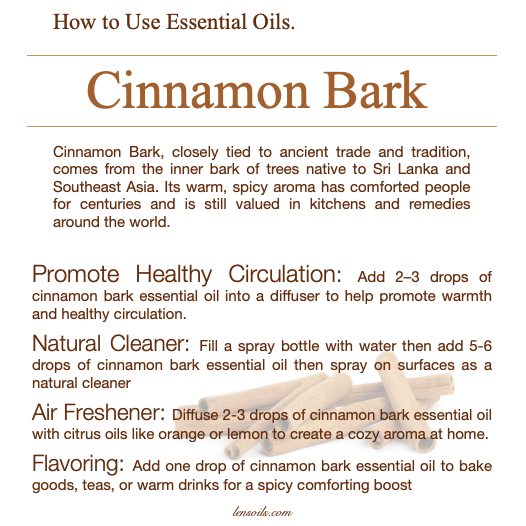
How to Use Essential Oils: Cinnamon Bark

Cinnamon Bark essential oil, distilled from the inner bark of the cinnamon tree, is treasured for its rich, spicy aroma that evokes warmth and comfort. Native to Sri Lanka and parts of Southeast Asia, cinnamon has been valued for thousands of years in trade, medicine, and ritual. Its essential oil carries strong cleansing properties, making it popular in natural home sprays and cleaners. Diffused, its bold scent creates a cozy, welcoming atmosphere that can support a sense of energy and alertness.

Beyond its household uses, cinnamon bark oil has been studied for its powerful antimicrobial qualities, which are linked to its high cinnamaldehyde content. This makes it a favorite in DIY blends for supporting a healthy environment, especially during seasonal changes. A drop is sometimes used in recipes like spiced teas or baked goods for an extra kick of flavor, though it must be used sparingly because of its strength. In aromatherapy, its stimulating aroma can help awaken the senses and lift feelings of fatigue.

Did You Know? Cinnamon was once so prized that it was considered more valuable than gold in ancient trade. Arab traders kept its true source a secret for centuries, weaving myths that it was gathered from nests of giant birds to protect its rarity. Today, the “true” cinnamon most associated with high quality comes from Cinnamomum verum of Sri Lanka, while other species like Cinnamomum cassia are more widely available but have slightly different chemical compositions.

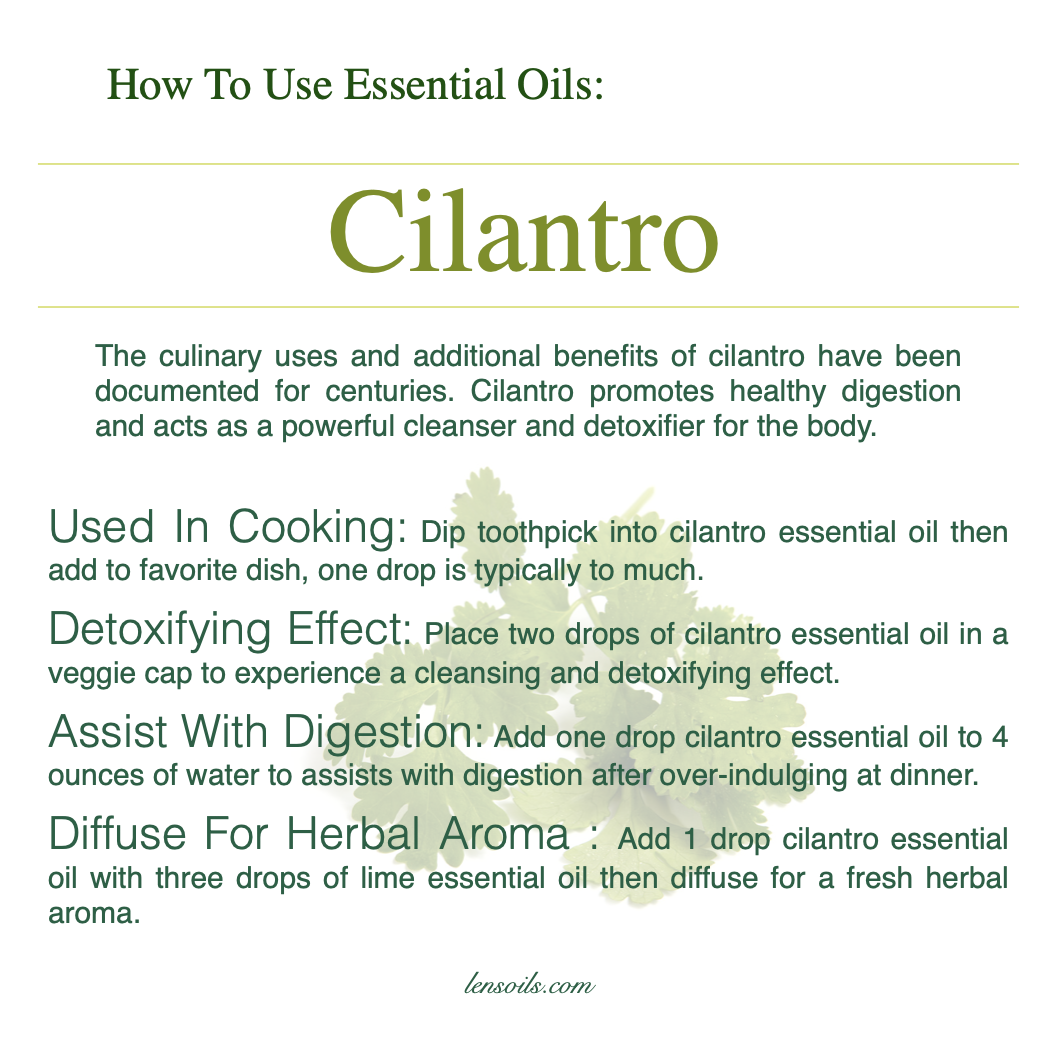
How to Use Essential Oils: Cilantro

Cilantro (Coriandrum sativum) has been used in culinary and medicinal traditions for centuries, valued for both its distinctive flavor and health-supporting properties. Known for its fresh, herbaceous aroma, cilantro is widely used in cooking, particularly in Mexican, Middle Eastern, and Asian cuisines. The essential oil, derived from cilantro leaves, is highly concentrated, and a small amount goes a long way. A common method for culinary use is dipping a toothpick into cilantro essential oil and stirring it into dishes, as even one full drop may be too strong. Beyond its culinary appeal, cilantro essential oil is believed to promote digestion and help detoxify the body. Some practitioners suggest placing two drops of cilantro essential oil in a veggie capsule to support natural cleansing processes. While cilantro has been traditionally used for detoxification, more scientific studies are needed to validate its direct impact on heavy metal removal and long-term detox benefits.

Cilantro essential oil is also frequently used for digestive support. Many individuals add one drop to four ounces of water to assist digestion after a heavy meal, a practice based on cilantro’s traditional use in easing bloating and occasional stomach discomfort. Additionally, diffusing one drop of cilantro essential oil with three drops of lime essential oil can create a refreshing herbal aroma, often used to promote a sense of freshness and mental clarity. Some aromatherapists believe that cilantro’s invigorating scent may also contribute to emotional balance and stress reduction. While these benefits are widely supported by holistic wellness practices, further clinical research is required to fully understand cilantro essential oil’s physiological effects on digestion and mood enhancement.

Beyond its culinary and detoxifying properties, cilantro essential oil is being explored for its potential antibacterial and antimicrobial effects. Some studies suggest that cilantro oil contains compounds that may help inhibit certain bacteria, making it a potential natural preservative. It has also been traditionally used in folk medicine for immune support, though its efficacy compared to standard antimicrobial treatments remains an area of study. Despite these uncertainties, cilantro essential oil remains a highly versatile oil, offering culinary, digestive, and aromatic benefits, making it a valuable addition to natural wellness practices.