Salvatore Battaglia is an Australian aromatherapist and author, best known for writing The Complete Guide to Aromatherapy. First published in 1995, the book has since gone through several editions and is widely used in professional training and education. It contains detailed essential oil profiles, therapeutic applications, historical background, and safety guidelines that remain standard references for students and practitioners.
He is the founder of Perfect Potion, an Australian company established in the early 1990s. The business produces essential oils, natural skincare, and aromatherapy products for retail and professional use. Perfect Potion has become recognized for emphasizing holistic health, sustainable production, and environmentally responsible practices that align with Battaglia’s interest in natural wellness.
Battaglia has been a consistent advocate for sustainable and ethical sourcing of essential oils within the international industry. His work through Perfect Potion, along with his writing and speaking, has drawn attention to the importance of fair trade, transparency in supply chains, and ecologically conscious methods of harvesting. These priorities are reflected in the company’s partnerships and policies.
In addition to his role as an entrepreneur, Battaglia has remained active as a lecturer and educator in aromatherapy. He has spoken at conferences, workshops, and professional training gatherings both in Australia and overseas. His lectures often combine practical therapeutic information with references to available research, providing reliable resources for students, practitioners, and interested members of the community.
His career demonstrates a combination of authorship, entrepreneurship, and education in aromatherapy. Through his books, company, and teaching activities, Battaglia has contributed to awareness of professional standards and ethical approaches to the use of essential oils. While others have also advanced the field, his steady involvement for more than three decades has established him as a recognized figure in modern aromatherapy.
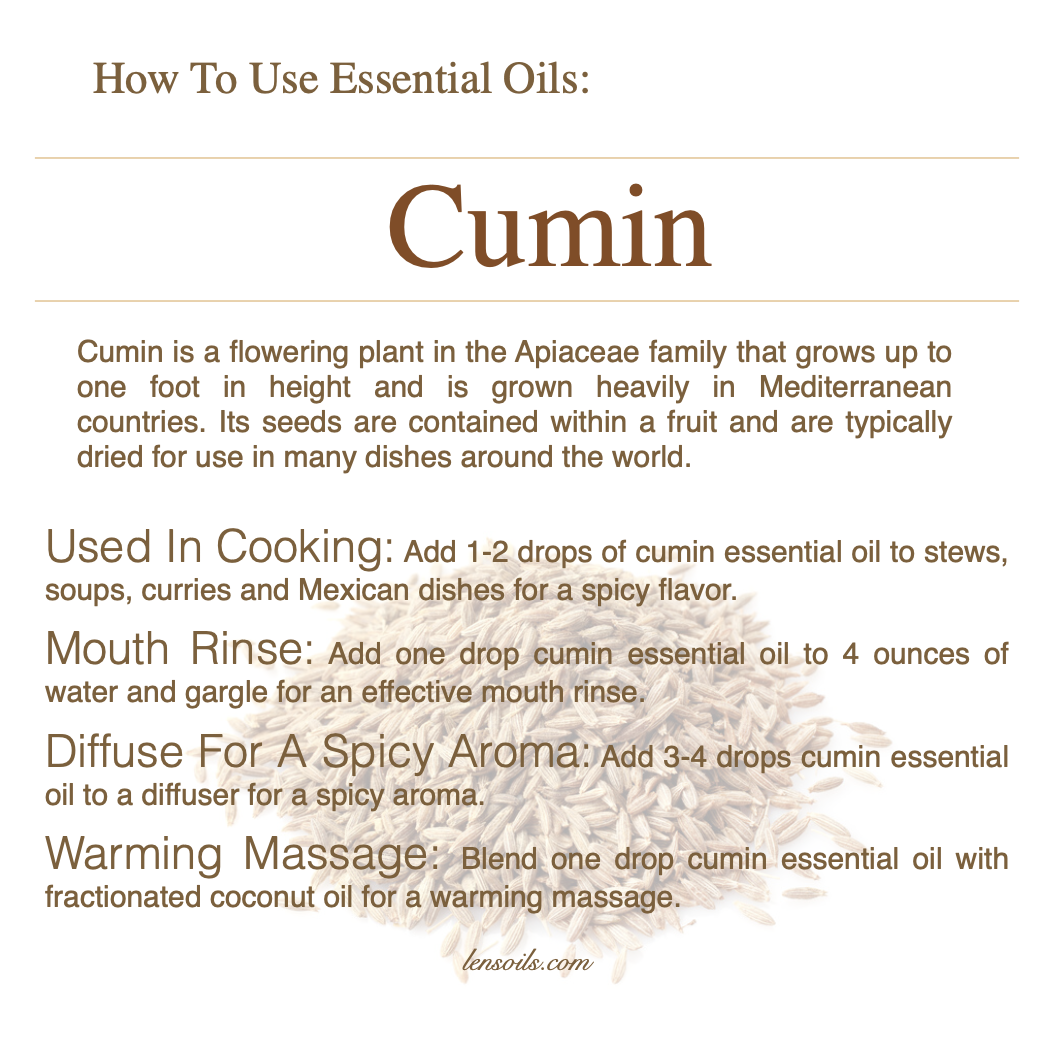
Cumin essential oil, distilled from the seeds of the Cuminum cyminum plant, carries a warm, spicy, and slightly earthy aroma that has been valued for thousands of years. Native to the Mediterranean and parts of the Middle East, cumin has been used both as a culinary spice and a traditional remedy. In essential oil form, it is often appreciated for its digestive support and its ability to bring depth and richness to blends. Diffused in small amounts, cumin’s strong scent can create a grounding and comforting atmosphere.
Beyond its culinary heritage, cumin essential oil is sometimes used to help promote relaxation after heavy meals or to ease occasional feelings of tension. When blended with citrus oils such as orange or lemon, it takes on a brighter, more refreshing quality, balancing its deep, spicy base. Properly diluted, cumin oil may also be added to massage blends to help comfort muscles and joints, though its potency means it is used sparingly. Its distinct aroma makes it a bold addition to both diffuser recipes and wellness routines.
Did You Know? Cumin seeds have been discovered in ancient Egyptian pyramids, showing they were treasured as far back as 2000 B.C. The seeds were used in cooking, medicine, and even as part of the mummification process. Cumin is also mentioned in the Bible—in Isaiah 28:25–27, it is noted as one of the spices carefully sown and harvested by farmers. Today, India produces the majority of the world’s cumin, highlighting its continued importance in both global cuisine and cultural traditions.
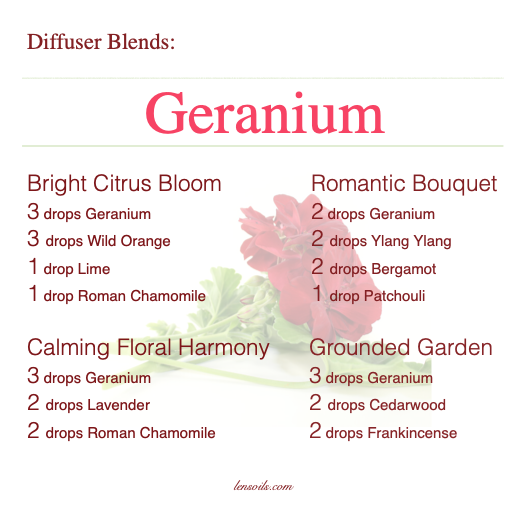
Geranium diffuser blends carry a fragrance that feels both comforting and inspiring, wrapping the room in a sweet floral scent with a hint of fresh herbs. This oil is known for balancing emotions, easing tension, and lifting the spirit on a cloudy day. Blended with calming oils like lavender or chamomile, it softens stress and encourages peace. With grounding partners such as cedarwood or frankincense, geranium creates a steady, focused atmosphere.
When paired with citrus oils like orange or lemon, geranium brings a burst of brightness that clears away heaviness and refreshes the air. In romantic mixes, it blends smoothly with jasmine or ylang ylang, adding warmth and connection. Many describe its aroma as heart-lifting and joyful, turning simple moments into special ones. Whether for rest, energy, or cheer, geranium blends make the air feel alive and welcoming.
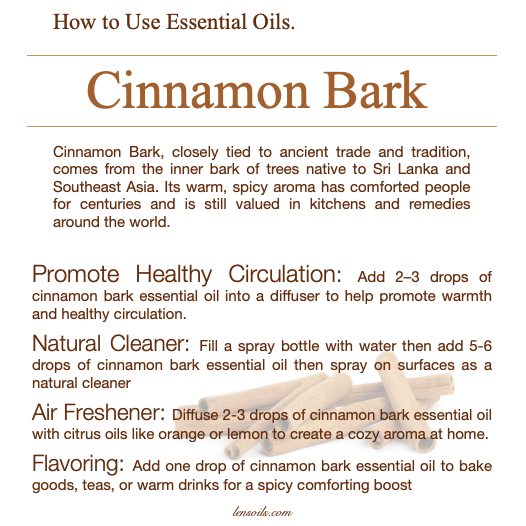
Cinnamon Bark essential oil, distilled from the inner bark of the cinnamon tree, is treasured for its rich, spicy aroma that evokes warmth and comfort. Native to Sri Lanka and parts of Southeast Asia, cinnamon has been valued for thousands of years in trade, medicine, and ritual. Its essential oil carries strong cleansing properties, making it popular in natural home sprays and cleaners. Diffused, its bold scent creates a cozy, welcoming atmosphere that can support a sense of energy and alertness.
Beyond its household uses, cinnamon bark oil has been studied for its powerful antimicrobial qualities, which are linked to its high cinnamaldehyde content. This makes it a favorite in DIY blends for supporting a healthy environment, especially during seasonal changes. A drop is sometimes used in recipes like spiced teas or baked goods for an extra kick of flavor, though it must be used sparingly because of its strength. In aromatherapy, its stimulating aroma can help awaken the senses and lift feelings of fatigue.
Did You Know? Cinnamon was once so prized that it was considered more valuable than gold in ancient trade. Arab traders kept its true source a secret for centuries, weaving myths that it was gathered from nests of giant birds to protect its rarity. Today, the “true” cinnamon most associated with high quality comes from Cinnamomum verum of Sri Lanka, while other species like Cinnamomum cassia are more widely available but have slightly different chemical compositions.
Patricia Davis: A Pioneer in Aromatherapy Education and Advocacy
Patricia Davis is a well-respected figure in the field of education and research, particularly in aromatherapy. She is best known for her book, Aromatherapy: An A-Z, which has become a widely used reference among practitioners. With years of experience in the study and application of essential oils, Davis played a key role in shaping modern aromatherapy practices. Her work focused not only on the benefits of essential oils but also on their safe and effective use, ensuring that both professionals and the general public could use them responsibly.
Davis’s interest in aromatherapy was driven by a passion for natural health and well-being. Throughout her career, she sought to bridge the gap between traditional herbal medicine and modern scientific research. By compiling detailed information on a wide range of essential oils, their properties, and their applications, she provided a reliable resource for practitioners, students, and enthusiasts. Her book remains one of the most trusted guides in the field, helping people make informed choices about essential oils.
One of Davis’s significant contributions was her emphasis on safety. At a time when essential oils were gaining popularity, misinformation was widespread, and many people used them without understanding their potential risks. Davis worked to educate the public on proper dilution methods, contraindications, and responsible usage. Her efforts helped establish guidelines that have since become standard in aromatherapy practice, preventing misuse and ensuring that essential oils are used in a way that promotes health rather than harm.
In addition to her writing, Davis was a strong advocate for public awareness of aromatherapy’s benefits. She conducted lectures, workshops, and training sessions to share her knowledge with both professionals and those new to the practice. By making complex scientific information accessible, she empowered individuals to incorporate essential oils into their daily lives safely and effectively. Her ability to communicate technical details in a clear and engaging manner made her an influential educator in the field.
Davis also played a role in fostering a more evidence-based approach to aromatherapy. She encouraged further research into the therapeutic effects of essential oils, advocating for scientific studies that could validate traditional knowledge. While much of aromatherapy was historically based on anecdotal evidence, Davis believed that integrating research-based findings would strengthen the field and increase its credibility within the medical and scientific communities.
Her contributions extended beyond her book. Davis collaborated with various organizations and practitioners to promote ethical sourcing and sustainability in the production of essential oils. She emphasized the importance of using high-quality, pure essential oils and warned against synthetic additives or low-quality products that could compromise the therapeutic effects. This advocacy helped set higher industry standards and encouraged responsible practices in the essential oil market.
Although much of Davis’s work was centered on essential oils, her broader impact was in holistic health education. She supported a balanced approach to wellness, integrating aromatherapy with other natural therapies such as massage, herbal medicine, and mindfulness practices. Her approach was holistic, recognizing that true well-being involves physical, emotional, and mental health. This perspective resonated with many practitioners and contributed to the growing acceptance of complementary and alternative medicine.
Patricia Davis resides in the Southwest of England, where she has dedicated many years to the practice and teaching of aromatherapy. Beyond her professional endeavors, she has authored several best-selling books, including Subtle Aromatherapy, A Change for the Better, and Astrological Aromatherapy. While specific details about her personal life remain private, her extensive work and publications reflect a deep commitment to holistic health and natural therapies.
Patricia Davis’s legacy continues to influence the field of aromatherapy today. Her dedication to education, research, and public awareness has left a lasting mark, ensuring that essential oils are used knowledgeably and safely. Aromatherapy: An A-Z remains a valuable resource for both beginners and experienced practitioners, a testament to her lifelong commitment to sharing accurate, well-researched information about the power of essential oils.
In the misty highlands of a distant land, a small, unassuming shrub grew wild among the rolling hills. Its glossy green leaves sheltered clusters of tiny red berries, overlooked by most but quietly holding a secret that would one day change the world.
For centuries, the people who lived near these plants had little use for them. They watched as animals plucked the ripe fruit, feasting on the bright berries with an energy that seemed almost unnatural. Shepherds and travelers observed how their livestock, after nibbling on the berries, became livelier, their weariness vanishing as they climbed steep terrain with renewed vigor. It was a mystery—one that would soon capture the curiosity of an unlikely figure.
One of the most famous stories surrounding this discovery is that of Kaldi, a goat herder in Ethiopia. According to legend, which is believed to have originated in the 9th century (800s AD), Kaldi noticed his goats behaving strangely after eating the berries. They leaped and danced through the hills, seemingly tireless, their energy boundless. Intrigued, Kaldi sampled the fruit himself and felt the same surge of vitality. He brought his discovery to a local monastery, where the monks, skeptical at first, brewed the berries into a drink. Soon, they found themselves able to stay awake through long hours of evening prayer. The secret was out.
While the story of Kaldi has endured for centuries, historical records suggest that the first verifiable use of these berries as a beverage appeared much later, in 15th-century Yemen. There, Sufi monks used them to stay alert during extended prayer sessions, refining the practice of roasting and brewing the beans. By the 17th century, European writers documented Kaldi’s tale, most notably Antoine Faustus Nairon, a Roman professor who, in 1671, published one of the earliest books on the subject. Though likely a myth, the Kaldi legend remains a charming part of this berry’s fascinating history.
News of the energizing berries spread. Merchants carried them across trade routes to the Arabian Peninsula, where they were roasted and brewed into a bold, dark beverage. In the bustling markets of the Middle East, it became a drink of scholars, poets, and thinkers. It was said to sharpen the mind, lift the spirit, and invigorate the body. By the 15th century, its use had expanded from religious devotion to social gatherings. Entire establishments—called qahveh khaneh—emerged, serving this newfound elixir to merchants, philosophers, and political leaders.
But what exactly was this mysterious plant? It defied simple classification. The plant itself produced small, cherry-like fruits in clusters along its branches. These fruits, often called cherries or berries, contained two seeds inside, protected by layers of skin, pulp, mucilage, and parchment. Yet once extracted, dried, and roasted, those very seeds took on an entirely new identity. Though not true legumes, they resembled beans in shape and function, and so the world called them beans instead of berries. A fruit by nature, a bean by name—this remarkable plant blurred the lines between botanical classification and everyday experience.
Beyond its role as a beloved beverage, this plant has also found its way into the world of essential oils. The oil, extracted through cold pressing, captures the deep, rich aroma of roasted beans, filling a room with warmth and energy when diffused. Used in aromatherapy, a few drops can uplift mood and promote mental clarity. When blended with coconut oil, it can be applied to the skin, helping to reduce imperfections and revitalize dull skin. Its bold, earthy scent pairs well with vanilla and ylang-ylang, creating an indulgent fragrance blend that is both comforting and invigorating. Whether used for respiratory support, relaxation, or skincare, its benefits extend far beyond the morning cup.
By the 17th century, it had made its way to Europe. At first, some viewed it with suspicion, calling it the “bitter invention of Satan.” But when Pope Clement VIII tasted the dark, aromatic drink, he declared it too delightful to be forbidden. With his blessing, it spread rapidly across the continent. In London, gathering houses became known as “penny universities,” where patrons could exchange a penny for a steaming cup and stimulating conversation. The Age of Enlightenment was fueled, quite literally, by this miraculous beverage.
Despite its humble origins, it has shaped economies, fueled revolutions, and inspired countless innovations. It became a daily ritual, a necessity for millions across the globe. Wars were fought over it, fortunes built upon it, and cultures forever changed by it. It was no longer just a berry from the highlands—it was a global phenomenon.
The berry that woke the world? Coffee Bean. A discovery made by an observant herder—perhaps real, perhaps legend—refined by centuries of cultivation, and embraced by generations seeking energy, clarity, and connection. It is poured into cups in every corner of the world, its aroma filling homes, offices, and cafés alike. Whether sipped in quiet solitude, diffused for its rich scent, or applied to the skin for renewal, it remains one of history’s greatest gifts. And now, you know the rest of the story.
John 19:39 describes Nicodemus, a Pharisee who had once visited Jesus secretly at night (John 3:1-2), now openly honoring Him after His crucifixion. In this moment, Nicodemus, along with Joseph of Arimathea, brought a mixture of myrrh and aloes, about a hundred pounds in weight, to prepare Jesus’ body for burial. This act of devotion was significant because these fragrant resins and oils were costly and used in ancient Jewish burial practices to anoint and preserve the body. Nicodemus, who had once been hesitant in his faith, now publicly expressed his love and respect for Jesus, showing his transformation from a secret follower to a bold disciple.
This verse highlights the importance of essential oils and natural resins in biblical times. Myrrh, a resin extracted from trees, was commonly used in perfumes, anointing oils, and embalming. It was one of the gifts brought to Jesus at His birth (Matthew 2:11), symbolizing both His kingship and suffering. Aloes, often associated with sandalwood oil, were used for their preserving and healing properties. The mixture of myrrh and aloes that Nicodemus brought was an extravagant gift, emphasizing the reverence and care shown to Jesus even after His death. These essential oils not only had practical purposes but also carried deep spiritual significance, symbolizing purification, honor, and preparation for eternity.
For us today, John 19:39 reminds us of the depth of love and devotion we should have for Jesus. Just as Nicodemus used myrrh and aloes to care for Jesus’ body, we can see these biblical essential oils as symbols of sacrifice, healing, and reverence in our own faith journey. This passage also challenges us to consider our relationship with Jesus—do we follow Him in secret, or are we willing to openly show our love and commitment, just as Nicodemus did in the end? Through this verse, we are reminded that Jesus’ sacrifice was the ultimate act of love, and He deserves our deepest devotion.
Dr. Daniel Pénoël’s journey into the world of essential oils began long before his professional career, rooted in a childhood filled with curiosity about nature and science. Growing up in the picturesque countryside of France, he was surrounded by fragrant lavender fields and the gentle hum of bees. His early years were spent exploring the natural world, collecting wildflowers, and observing the rhythms of the environment. Encouraged by his parents, who valued both education and the beauty of nature, young Daniel developed a fascination with the healing properties of plants. This passion for understanding the natural world laid the foundation for his future as a pioneer in the study and application of essential oils.
As Dr. Pénoël pursued higher education, his academic path led him to medicine, where he excelled in both traditional and holistic approaches to health. He graduated with a medical degree from France’s esteemed Faculty of Medicine in Montpellier, one of the oldest medical schools in the world. His training in conventional medicine gave him a firm understanding of the human body, but he quickly realized there was more to healing than pharmaceuticals. His passion for natural therapies, particularly the use of plant-based remedies, steered him toward aromatherapy and essential oils—a field he would come to revolutionize.
Dr. Pénoël’s research into essential oils began with a desire to bridge the gap between science and nature. He was fascinated by the idea that essential oils, with their complex chemical compositions, could offer profound therapeutic benefits. He devoted years to studying the biochemistry of essential oils, analyzing their components and how they interact with the human body. This scientific rigor set him apart, as he sought to bring evidence-based practices to a field that was often dismissed by the medical establishment.
Through his studies, Dr. Pénoël discovered the wide-ranging applications of essential oils, from supporting emotional well-being to addressing chronic physical conditions. He became particularly interested in the antimicrobial properties of oils like oregano and thyme, as well as the calming effects of lavender. His research demonstrated how essential oils could be used not only to alleviate symptoms but also to address underlying imbalances in the body, offering a truly holistic approach to health.
In addition to his groundbreaking research, Dr. Pénoël was a gifted educator. He traveled the world, sharing his knowledge with healthcare professionals and aromatherapy enthusiasts alike. His lectures combined scientific depth with practical application, making complex topics accessible to diverse audiences. He believed in empowering others with the knowledge to use essential oils safely and effectively, fostering a global community of informed practitioners.
Dr. Pénoël’s work extended beyond academia and lectures; he was also a prolific author. His books, including L’Aromathérapie Exactement (Aromatherapy Exactly), became essential resources for anyone serious about essential oils. These works provided a detailed exploration of the therapeutic potential of essential oils, supported by scientific evidence and real-world case studies. His writing not only educated but also inspired, sparking a deeper appreciation for the synergy between science and nature.
As a clinician, Dr. Pénoël integrated essential oils into his medical practice, using them alongside conventional treatments to address a wide range of health issues. He demonstrated how essential oils could complement traditional medicine, whether in managing infections, reducing inflammation, or promoting emotional resilience. His success in combining these approaches earned him the respect of both his patients and his peers, further cementing his reputation as a pioneer in the field.
One of Dr. Pénoël’s most significant contributions was his role in developing quality standards for essential oils. He worked tirelessly to ensure that the oils used in therapy were pure, unadulterated, and sourced ethically. His advocacy for transparency and accountability in the industry helped raise the bar for essential oil production and usage, ensuring better outcomes for consumers and practitioners alike.
Dr. Pénoël’s holistic philosophy extended beyond essential oils to embrace the interconnectedness of health and the environment. He emphasized the importance of sustainability and ethical sourcing, advocating for practices that respected both the planet and the people involved in producing essential oils. This vision of harmony between human health and environmental stewardship became a cornerstone of his work.
Today, Dr. Daniel Pénoël’s influence can be felt across the world of aromatherapy and natural medicine. His research, education, and advocacy have transformed essential oils from a niche interest into a respected tool for holistic health. Through his dedication and vision, he has inspired countless individuals to explore the power of nature in healing, leaving a legacy that continues to shape the field of aromatherapy.
Essential oils can be a natural and effective way to soothe sore muscles, reduce tension, and promote relaxation. One popular method is to create a muscle-relieving massage oil by diluting essential oils in a carrier oil, such as coconut, jojoba, or almond oil. Oils like Peppermint, Eucalyptus, and Wintergreen are known for their cooling properties, which can help reduce inflammation and ease discomfort. Simply mix 3–5 drops of your chosen essential oil with a tablespoon of carrier oil and gently massage it into the affected area. For deeper relief, consider adding warming oils like Ginger or Black Pepper, which can stimulate circulation and relax tight muscles.
Another effective way to use essential oils for muscles is through a warm bath or compress. Add 5–10 drops of essential oils like Lavender, Marjoram, or Rosemary to a warm bath, combining them first with a tablespoon of Epsom salt to help the oils disperse evenly in the water. This combination not only soothes sore muscles but also promotes overall relaxation. Alternatively, create a warm compress by soaking a towel in warm water mixed with a few drops of essential oil, wringing it out, and applying it to the affected area. Whether you’re recovering from a tough workout or relieving everyday tension, essential oils provide a natural and holistic approach to muscle care.