Category Archives: Inspirational

The Letter That Wouldn’t Be Burned

Story 2 of 10 — Marking 250 Years of American Freedom
When Courage Refused to Let Hope Be Destroyed

February 9, 1776 came during a harsh New England winter, when fear and uncertainty weighed heavily on the colonies. British forces were still active in Massachusetts, and many families worried about what continued resistance might cost them. Independence had not yet been declared, and no one knew how the conflict would end. In this tense environment, communication between patriot leaders was both dangerous and necessary.

Couriers played an important role during this time. Often young and unnoticed, they traveled long distances on foot or horseback, carrying sealed letters through snow-covered roads and guarded towns. If caught, they could be arrested or punished. Without these messengers, the colonies would struggle to coordinate their actions or share vital information.

One such courier stopped at a farmhouse to escape the winter weather. Homes relied on open fires for warmth, which made accidental blazes a constant danger. When a fire broke out unexpectedly, there was little time to save belongings. As the building filled with smoke, the courier escaped with nothing but the letter pressed tightly under his coat.

In wartime, losing possessions was common, but losing information could be far more serious. Letters often contained instructions, warnings, or plans that could not easily be replaced. If destroyed, they could delay decisions, expose weaknesses, or leave leaders unprepared for what lay ahead.

After weeks of difficult travel, the message reached its destination. No single letter decided the course of the Revolution, but each successful delivery helped maintain cooperation between colonies facing enormous pressure. Resistance depended not only on soldiers and battles, but on steady communication that allowed leaders to respond wisely.

This moment reflects the deeper fears many colonists faced. People worried about losing homes, livelihoods, and family safety if resistance failed. Hesitation was often rooted in responsibility, not weakness. Courage during this time was not always loud or dramatic.

The survival of that letter did not end fear, but it protected hope. Bravery appeared quietly, when someone chose to preserve what mattered most under difficult circumstances. Independence moved forward through such choices, when refusing to let hope be destroyed became an act of strength.


References

  1. Massachusetts Historical Society, Revolutionary War Correspondence and Courier Accounts
  2. Ray Raphael, The First American Revolution: Before Lexington and Concord
  3. George C. Daughan, If By Sea: The Forging of the American Navy from the Revolution to the War of 1812

These stories are grounded in documented historical events and primary sources, with limited interpretive synthesis used to connect facts and reflect lived experience where the historical record does not capture every detail.

THE SEASONS OF LIFE

There was once a thoughtful man who had four sons, each strong-willed and quick to form opinions. Wanting them to understand patience, perspective, and the danger of judging too quickly, he devised a lesson rooted not in lectures, but in lived experience and time.

He sent his sons, one by one, on a long journey to observe a single pear tree growing far away. Each son was sent during a different season, so none of them would see the tree under the same conditions or circumstances.

The first son traveled during the depths of winter, when the air was cold and the ground was bare. When he returned, he described the tree as ugly, twisted, and lifeless, its branches bent and stripped of anything worth admiring.

The second son was sent in early spring, when the earth was slowly waking. He returned with a different account, explaining that the tree was alive with green buds and fresh shoots, quietly full of promise and unseen potential.

The third son went during the height of summer, when warmth and growth were everywhere. He spoke passionately of blossoms covering the tree, filling the air with sweet fragrance, calling it graceful, vibrant, and the most beautiful thing he had ever witnessed.

The youngest son made the journey in autumn, when the year was nearing its close. He returned describing a tree heavy with ripe fruit, drooping under its own abundance, alive with fulfillment, nourishment, and the reward of time patiently endured.

The father listened carefully to each son, then gently explained that none of them were wrong. Each had simply seen the tree in a single season, never realizing that every phase was necessary to complete its full story.

He told them that a tree, like a person, cannot be judged by one moment, one struggle, or one appearance. The true measure of a life is revealed only after all seasons have passed and their lessons are complete.

If you abandon hope during winter, you will never see the promise of spring, the beauty of summer, or the fulfillment of fall. Do not let one difficult season define an entire life, or steal the joy that still lies ahead.

The Winter Printer

Story 1 of 10 — Marking 250 Years of American Freedom
Printing Courage in a Season of Doubt

January 10, 1776 became clear when the pamphlet Common Sense was published in Philadelphia by Thomas Paine. Written in plain language, it argued that monarchy was unjust and that independence was not only possible, but necessary. The colonies were already at war, yet independence had not been declared, and many people still hoped for reconciliation with Britain. Fear and uncertainty shaped daily life, and unity remained fragile.

During these winter weeks, printed words became one of the most powerful tools available. Pamphlets, broadsides, and newspapers carried arguments, warnings, and appeals across colonial towns. Printing presses worked long hours despite shortages of paper, ink, and money. Printers understood that what they produced could influence public opinion, even as it placed them under scrutiny.

One such printer worked late into the night, setting type by hand in a cold shop lit by candles. British patrols still moved through nearby streets, and printing political material carried real risk. Yet presses continued to run, producing pamphlets that called for shared purpose rather than submission or fear. These pages did not promise victory. They asked readers to consider responsibility.

The words traveled far beyond the city. Farmers read them by firelight, shopkeepers shared them with customers, and soldiers passed them between camps. Many readers had never seen the members of Congress or spoken with colonial leaders. What reached them instead were ideas—arguments about liberty, self-rule, and the cost of hesitation.

At the time, these printed appeals did not create immediate agreement. Colonies remained divided, and opinions shifted slowly. But the steady circulation of ideas helped establish a common language. Even among disagreement, people began to recognize shared concerns and shared risks. Unity, when it appeared, did so gradually.

This period shows that independence did not advance only through declarations or battles. It also moved through quiet, persistent effort by ordinary people willing to act without certainty. Long before July 1776, freedom was carried forward by those who chose truth over comfort, even when the outcome was unknown.

What happened in those winter print shops did not resolve the colonies’ disagreements, but it made honest debate unavoidable. Words carried responsibility before freedom carried celebration. Long before independence was declared, people were already practicing it by choosing to think, question, and speak for themselves. That quiet discipline, repeated day after day, prepared a divided people to face the harder decisions still ahead.

References
David McCullough, 1776
Thomas Paine, Common Sense (1776), Library of Congress
Pauline Maier, American Scripture: Making the Declaration of Independence

These stories are grounded in documented historical events and primary sources, with limited interpretive synthesis used to connect facts and reflect lived experience where the historical record does not capture every detail.

The Quiet Experiment

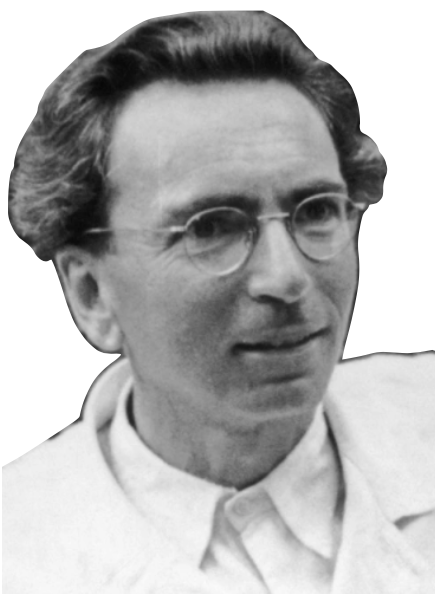
 In 1942 Vienna, Viktor Frankl was a respected psychiatrist with a growing practice, a nearly complete manuscript, and a wife named Tilly whose laugh could fill a room and brighten the darkest days. He had a visa to escape to America, but his elderly parents couldn’t come—so he stayed. Within months, the Nazis came for them all. Theresienstadt. Then Auschwitz. Then Dachau. The manuscript he had sewn into his coat was torn away within hours. His name erased. His number: 119104. 

But what the guards didn’t understand was this: you can take a man’s manuscript, his name, his possessions—but not what he knows. Frankl knew something about the human mind that would change psychology forever. In the camps, men didn’t just die from starvation or disease; they died from giving up. When a prisoner lost his reason to live—his why—his body followed soon after. But those who held onto meaning—a promise to keep, a family to find, a purpose unfinished—found strength to endure.

Frankl began a quiet experiment in the barracks. He couldn’t offer food or freedom, but he whispered to the hopeless: “Who is waiting for you?” “What work is left unfinished?” “What would you tell your son about surviving this?” He helped men remember their purpose. One thought of his daughter and survived to find her. Another recalled a scientific problem and lived to solve it. Frankl himself survived by mentally reconstructing his lost manuscript, line by line, in the darkness.

When liberation came in April 1945, Viktor weighed only 85 pounds. His wife, mother, and brother were gone. Everything he loved—gone. Yet, instead of collapsing, he began writing again. In just nine days, he recreated the manuscript from memory, now filled with something new: proof. He called his theory Logotherapy—therapy through meaning—and showed that humans can survive almost anything if they have a reason to live.

Published in 1946 as “Man’s Search for Meaning,” the book was first rejected as too grim. But slowly it spread. Therapists wept. Prisoners found hope. Ordinary people facing illness, grief, or loss discovered that their pain could still hold purpose. The book has sold over 16 million copies, translated into more than 50 languages, and remains one of the most influential works ever written about resilience and the human spirit.

Because Viktor Frankl proved what the Nazis could not destroy: that even when everything is taken—freedom, family, food, future—one final freedom remains: the freedom to choose what it all means. His words still guide those in despair: “When we are no longer able to change a situation, we are challenged to change ourselves.” Prisoner 119104 didn’t just survive. He turned suffering into healing—and taught the world that meaning is the one thing no one can ever take away.

Life is Like a Train

Life Is Like a Train
Credit – Echoes of Insight

My grandma had a saying she repeated often: “Life is like a train, child. You don’t stay at every stop, and not everyone rides with you until the end.” As a child, I didn’t really understand what she meant, but now, as the years pass and my own hair turns gray, I see the deep truth in her words.

When you’re young, the train is loud, fast, and crowded. Everyone seems to be on board—friends from school, neighbors, coworkers, and family. The compartments are filled with laughter, excitement, and plans that make it feel like the ride will last forever.

As the journey continues, people begin to get off at different stops. Some leave because their path takes them elsewhere, while others are lost suddenly, leaving behind empty seats we can’t bear to look at. With time, the train feels quieter, and we start to understand how precious every shared mile truly was.

That’s when Grandma’s wisdom comes alive inside me. She said the secret wasn’t to mourn every passenger who leaves, but to treasure the ones still sitting beside you. Her voice reminds me to look out the window and notice the scenery that’s always changing.

There are sunrises, fields, cities, mountains, and long stretches of open sky—all part of the same ride. Each moment, like each passenger, has its own season and beauty. The view outside keeps shifting, teaching us to appreciate what’s here before it’s gone.

Now, when I visit her memory in my heart, I can almost hear her voice again. “Don’t be afraid when the train empties out,” she said gently. “Be grateful you had company for as long as you did, and when your stop finally comes, step off with peace.”

Life truly is like a train—filled with comings and goings, goodbyes and reunions. It carries moments of noise and stretches of silence that teach us who we are. By the time we reach the last station, we realize the ride was beautiful not because it was perfect, but because it was ours.

Whispers and Mirrors

It begins softly, like a breeze brushing the edge of a curtain—someone’s name, spoken too easily, carried just far enough to change its shape. Gossip never enters loudly; it slips in disguised as connection, as curiosity, as “just something I heard.” Yet what begins in casual conversation can end in quiet destruction. A life reduced to fragments of rumor. A heart weighed by stories it never told.

We tell ourselves it’s harmless, that sharing makes us part of something, that being “in the know” gives us worth. But every whisper takes from the soul, a small withdrawal from our better selves. When we pass along a scandal, we hold the same shovel that digs another’s hole. The thrill of telling fades fast, and all that’s left is the echo of what we’ve broken.

The Tao says, “What is a bad man but a good man’s job?” I think of that often. How many times I’ve been both—the one who faltered and the one who judged. It’s easy to point a finger; it’s harder to hold a hand. To see the “bad” in someone else is to forget the lessons written quietly into our own scars.

Once, I heard someone laugh, “If a friend’s mad at me, I just say, ‘I have some juicy gossip.’” My heart sank. How sad, I thought, that healing has been replaced by distraction, that love could be bought with cruelty. We trade compassion for a moment of attention, unaware that every careless word widens the distance between us.

When I hear, “I don’t repeat gossip, so listen carefully,” I feel a shiver of shame for all the times I’ve listened too long. Because gossip is not about others—it’s a mirror. What we say reflects who we are, what we value, and what kind of peace we’re willing to sacrifice.

So let’s be the stillness in the noise, the voice that speaks only love. Let’s choose silence when words can wound. In a world eager to talk, may we become the rare souls who listen with compassion, who lift with language, and who walk gently through the fragile stories of others.

Learning From Skip Ross

This is a tribute to Skip Ross, a wonderful man I had the privilege of knowing 44 years ago. His passing not long ago deeply saddened me, as the world lost someone truly special. Skip was not only admired but loved by everyone who knew him. His kindness, wisdom, and generous spirit left a lasting impact on so many lives, including mine. He will be missed dearly, but his legacy lives on in the countless people he inspired.

One of the saddest things in life is seeing someone with low self-esteem. I understand this pain all too well. When I was in elementary school, I struggled as a slow learner. This label, given to me by my peers, became a heavy burden to carry. It made me question my worth and abilities, causing me to retreat inward and doubt myself even more. Those early years of self-doubt were tough, but they shaped my journey in profound ways.

Although many students at school knew who I was, I didn’t form close connections with most of them. I had one good friend who became my lifeline during those lonely years. Before school, we would wander the halls together, chatting and waiting for the bell to ring. Still, there were moments when I felt utterly alone. At home, I often found solace in talking to our family’s pet goats. That little farm was my sanctuary, a peaceful place where I could be myself. It was my small piece of heaven in an otherwise challenging time.

Looking back, I am deeply grateful for the incredible teachers, church leaders, community members, and, most importantly, my parents. They saw potential in me even when I couldn’t see it myself. Their encouragement and belief in me helped me begin to reshape my self-image. Slowly but surely, I started to become more confident and outgoing, breaking free from the shadows of self-doubt.

My journey toward self-confidence took a pivotal turn when my parents joined the Amway business. At the heart of their business was a focus on personal growth and self-improvement. This is where Skip Ross entered my story in a meaningful way. Alongside weekly product orders, my dad would bring home a cassette tape called “The Tape of the Week.” These tapes were filled with motivational messages from speakers like Zig Ziglar, Rich DeVos, and Skip Ross. Listening to them became a routine, and Skip’s powerful messages resonated deeply with me. His words made me believe that I could rise above my struggles and accomplish great things.

When my parents told me that Skip Ross was coming to town, I couldn’t contain my excitement. To me, it was like going to see a rock star perform. Skip Ross wasn’t just a motivational speaker; he was a beacon of hope, radiating self-confidence, humor, and talent. Hearing him speak live was transformative. Watching him captivate the audience and inspire everyone in the room, I thought to myself, I want to be like that someday—a person who radiates positivity and confidence.

The impact Skip had on me didn’t stop there. My parents also told me about his youth camp in Rockford, Michigan, and I was determined to attend. Saving up $800 on a $3.15-an-hour job was no easy feat, but I worked tirelessly for a year to make it happen. That camp became a defining moment in my life.

It was my first airplane ride and my first time being so far from home, surrounded by strangers. I was nervous but excited. Each day at camp, Skip Ross taught us how to unlock our full potential, weaving lessons of self-love and perseverance into every session. He didn’t just teach us to dream—he showed us how to act on those dreams. Between these lessons, we engaged in activities like swimming, horseback riding, and barn chores that reminded me of home. These moments taught me that growth often happens when we step outside our comfort zones.

One memory that stands out was a trip to Lake Michigan. I had the privilege of sitting in the front seat with Skip during the drive. He had a cassette tape of himself singing, and when I asked if we could listen to it, he agreed. That small moment of connection made a lasting impression on me. It reminded me that even someone as accomplished as Skip Ross was still relatable and genuine.

That camp didn’t just teach me how to dream big—it gave me the tools to overcome my self-doubt and take meaningful steps toward those dreams. One lesson in particular stuck with me: “Love yourself, for if you don’t, how can you expect anyone else to love you?” Those words have guided me through many challenges in life, reminding me that self-love is the foundation for all growth and success.

This message has deeply influenced my journey, even beyond Skip Ross’s teachings. I think often about how far I’ve come since my early struggles with self-esteem. Today, I write, teach, and share my passion for essential oils—something I find incredibly fulfilling. Essential oils have become a part of my story, helping me find focus and balance in ways I never imagined. They represent a journey of healing, much like the one Skip inspired in me.

What would you do if you knew you couldn’t fail? Would you stay in the same job? Go back to school? Pursue a long-forgotten dream? I believe we’d all live with greater courage, healthier habits, and deeper self-love if we embraced the possibility of success. Skip’s lessons remind me that the greatest love of all is learning to love yourself—because everything else flows from that foundation.

There are so many ways to express love, both for ourselves and for others. One simple but powerful step is to remove the word “hate” from our vocabulary. By doing so, we open ourselves to greater compassion, understanding, and connection. Skip Ross taught me to see the world through a lens of positivity and possibility, and his legacy continues to inspire me every day.

This tribute to Skip Ross is also a tribute to the power of generosity, self-love, and the belief that we all have the potential to rise above our challenges. His teachings changed my life, and I hope they inspire others to dream, grow, and embrace the incredible possibilities within themselves.



Health Proverb

The proverb “In health there is liberty. Health is the first of all liberties, and happiness gives us the energy which is the basis of health” comes from Henri-Frédéric Amiel, a 19th-century Swiss philosopher and poet. Amiel, deeply influenced by his introspective nature and the Romantic movement, often reflected on the relationship between the human spirit, well-being, and freedom.

Amiel lived during a time of profound social and political change, including the rise of individualism and the importance of personal fulfillment. He recognized that true freedom—liberty to pursue one’s goals and passions—depends on good health. Illness or physical limitation, in his view, could constrain not just the body but also the mind and spirit, depriving individuals of the ability to live fully and independently.

Happiness, for Amiel, was closely tied to energy and vitality, which he believed were essential components of health. A joyful outlook on life fosters resilience and physical well-being, creating a cycle where happiness sustains health, and health enables freedom. This perspective reflects Amiel’s broader philosophical themes: the interconnectedness of mind, body, and soul, and the importance of nurturing all three to achieve a life of balance, liberty, and fulfillment.

Make the World a better Place

When we think of talents, we often think of people who can run the fastest, sing amazingly well, or play a musical instrument. Many talents that people have include having patience, being very positive, or getting along with people easily. Each one of us is blessed with talents to share with others. Who can we reach out to with our talents today?

My daughter Jessie is a very compassionate person. She will help people in need and go out of her way to lighten the burdens of our family and neighbors. One of Jessie’s greatest talents is her ability to sense when someone is in need. She jumps right in without being asked. Her love for little children is heartwarming. We had backyard neighbors who had small children that just loved Jessie. Hunter, who was two, would sneak over to our house and just walk in and ask to play with Jessie.

This world is a better place because Jessie is in it. I believe we all have special talents that only we can use to reach certain people. Let’s make this world a better place by sharing our talents.