Category Archives: Essential Oil Information

How to Use Essential Oils: Household Tips

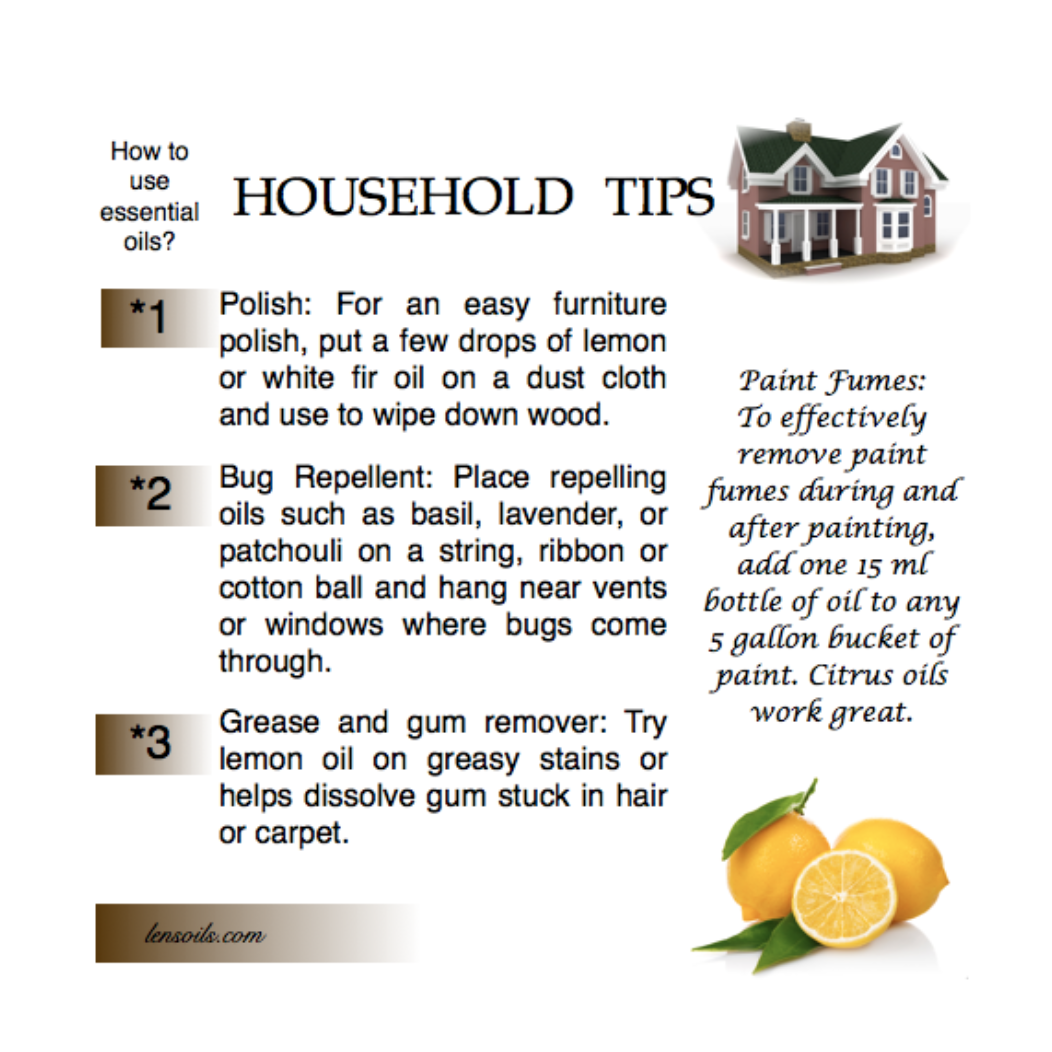
Essential oils can be a powerful addition to household cleaning and maintenance routines. One of the easiest ways to incorporate them is by using them as a natural furniture polish. Simply add a few drops of lemon or white fir oil to a dust cloth and wipe down wooden surfaces to bring out their shine and leave behind a fresh, clean scent. Essential oils also work well as grease and gum removers—applying a few drops of lemon oil to greasy stains on surfaces or fabric can break down stubborn residue. It can even help dissolve gum stuck in hair or carpet without the need for harsh chemicals.

Another practical household use for essential oils is to reduce paint fumes during and after painting. Adding one 15ml bottle of citrus essential oil—such as lemon or orange—to a five-gallon bucket of paint can help neutralize strong odors while also adding a subtle, refreshing scent to the space. Citrus oils work especially well in this application, as they have natural air-purifying properties. Additionally, essential oils can serve as a natural bug repellent. Placing a few drops of basil, lavender, or patchouli oil on a string, ribbon, or cotton ball and hanging it near vents, doors, or windows can help keep insects from entering the home.

An often-overlooked use of essential oils in the home is their ability to eliminate stubborn odors from kitchen surfaces. A few drops of eucalyptus or tea tree oil mixed with baking soda can be sprinkled onto cutting boards, garbage disposals, or even inside the trash can to neutralize lingering smells. Letting the mixture sit for a few minutes before wiping or rinsing it away ensures a fresh, clean scent throughout the kitchen. By incorporating essential oils into everyday household tasks, homeowners can enjoy a more natural, chemical-free approach to cleaning and maintenance.

How to Use Essential Oils: Sleep

Recently, I have been rubbing vetiver from a roller bottle mixed with fractionated coconut oil on the bottom of my feet at night. As a result, I have been able to sleep through the entire night for several nights in a row. I love waking up feeling well-rested and refreshed. Sleep is essential for overall well-being, as it allows the body and mind to recover, repair, and function optimally. Essential oils have been used for centuries to promote relaxation and improve sleep quality naturally.

There are several ways to use essential oils to promote sleep. Diffusing oils into the air can create a calming atmosphere; for example, adding one drop each of lavender, Roman chamomile, and marjoram to 1 oz. of distilled water in a spray bottle can be misted onto linens before bed. Applying 1-2 drops of lavender oil to the spine, the bottom of the feet, or the back of the neck may also encourage relaxation. Another effective method is to combine 5 drops of lavender, 3 drops of geranium, and 1 drop of Roman chamomile with 1 cup of Epsom salt, 2 tablespoons of witch hazel, 2 tablespoons of baking soda, and 1 tablespoon of olive oil. Dissolving this blend in warm water for an evening bath can help promote a restful night’s sleep.

In addition to these methods, essential oils can be incorporated into nightly self-care routines in other ways. A warm compress with a few drops of lavender or cedarwood oil applied to the forehead or chest can help ease tension and prepare the body for sleep. Placing a drop of vetiver or sandalwood oil on the pulse points before bed can provide a grounding and soothing effect. Massaging diluted essential oils into the hands, wrists, and temples can also enhance relaxation, especially when combined with deep breathing techniques. By integrating essential oils into bedtime rituals, individuals may experience a deeper, more restorative sleep, leading to improved overall health and well-being.

How to Use Essential Oils: Memory

Memory is the mental capacity to retain and recall facts, events, past experiences, and impressions, and aroma plays a significant role in enhancing memory. Essential oils like peppermint, frankincense, and rosemary can support memory and focus through their stimulating and grounding properties. Diffusing peppermint oil is particularly effective for creating a refreshing environment that promotes mental clarity.

To use essential oils for memory, try inhaling directly from the bottle, applying a few drops to your hands and inhaling, or wearing them as a cologne. For targeted application, dilute 1-2 drops of essential oil with fractionated coconut oil and apply to the temples or back of the neck. You can also place 1-2 drops under your tongue or add them to a beverage. Incorporating these methods into your routine can help enhance memory and concentration naturally.

How to Use Essential Oils: Massage

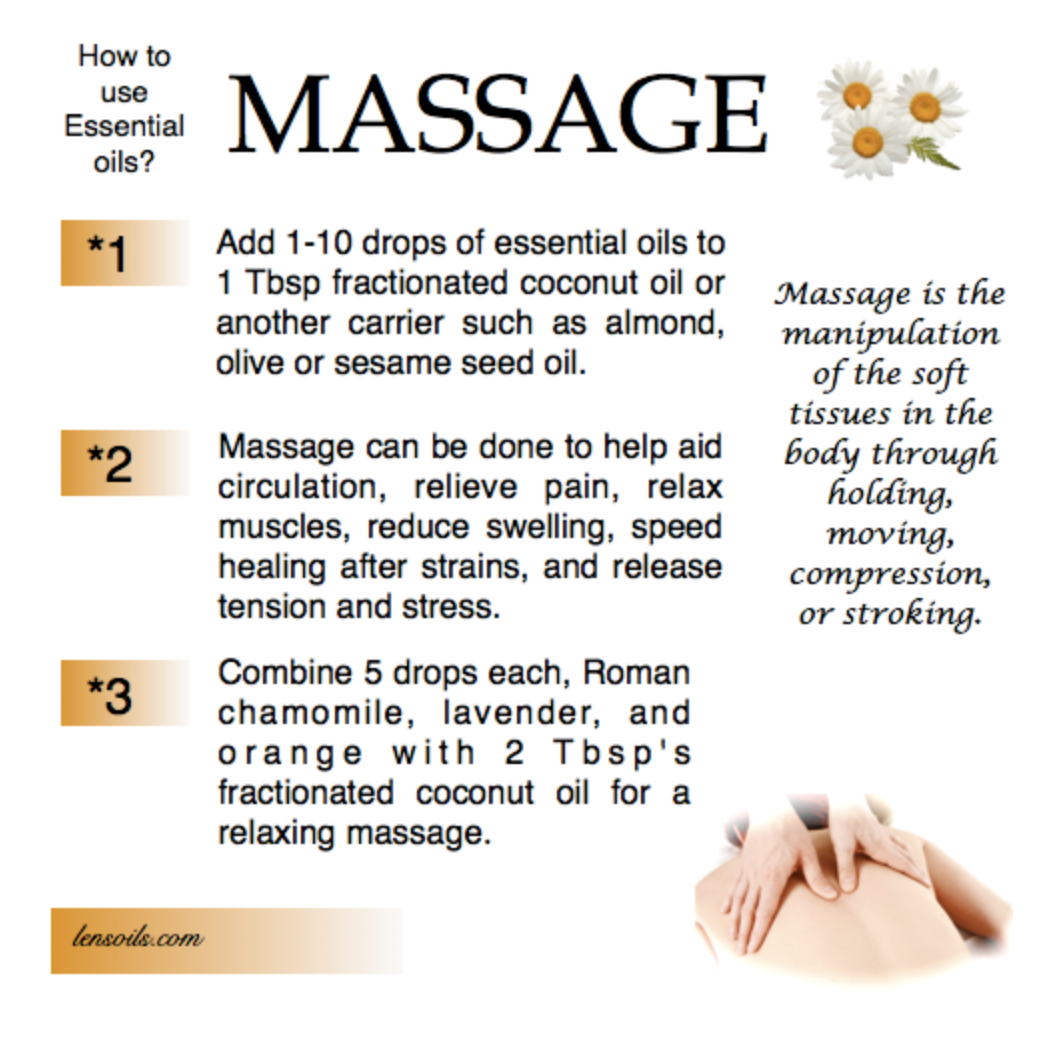
Massage is the manipulation of the body’s soft tissues through techniques such as holding, moving, compressing, or stroking. It can help improve circulation, relieve pain, relax muscles, reduce swelling, speed healing after strains, and release tension and stress. Essential oils can enhance the benefits of massage by adding therapeutic properties and soothing aromas. To use, dilute 1-10 drops of essential oil in 1 tablespoons of a carrier oil such as fractionated coconut, almond, olive, or sesame seed oil to ensure proper application and avoid skin irritation.

For a relaxing massage blend, combine 5 drops each of Roman chamomile, lavender, and orange essential oils with 2 tablespoons of carrier oil. This calming mixture can promote relaxation and ease tension. Massage the blend into the skin using gentle, purposeful strokes to maximize its benefits. Whether used for relaxation or targeted relief, essential oils can make your massage experience even more effective and enjoyable.

How to Use Essential Oils: Jet Lag

Jet lag occurs when your body’s internal clock is disrupted due to rapid changes in daylight and nighttime while traveling across time zones. To help your body adjust, use invigorating essential oils like peppermint and eucalyptus in the morning to promote alertness. At night, calming oils such as lavender and geranium can encourage relaxation and restful sleep. This approach helps ease the transition between different time zones.

To apply, mix 2-3 drops of your chosen essential oil with 1 tablespoon of fractionated coconut oil. Massage this blend onto your back, legs, shoulders, and feet to experience its benefits. This practice can be especially helpful during long flights or upon arrival in a new destination, making your journey more comfortable and rejuvenating.

The Slippery Slope

The -Slippery Slope

The slippery slope of prescription drugs with their harmful side effects can be hard to recover from.

Do you want to take back your health using natural essential oils?
If you would like a Free Sample please do one of the following.

Please text Free Sample or call me at 801-661-4786
I will be sure to get back to you as soon as possible.
Or
Send me an email with the heading Free Sample to lfish64@yahoo.com
It will be an honor to help you in any way that I can.
Or
Write me a letter requesting a Free Sample to
image


Leonard Fish
5075 Rushton Acres Court
West Valley City, Utah
84120 USA

How to Use Essential Oils: Hot

When using essential oils, it’s essential to understand that everyone’s sensitivity differs. What feels “hot” to one person may not feel the same to another. A “hot” oil refers to an essential oil that may cause a warming or burning sensation on the skin, feel spicy if consumed, or cause discomfort if it comes into contact with sensitive areas like the eyes. To avoid irritation, always dilute “hot” oils with a carrier oil, typically in an 8:2 ratio (8 parts carrier oil to 2 parts essential oil).

Exercise caution when using “hot” oils such as Cassia, Cinnamon Bark, Clove, Hyssop, Lemongrass, Ocotea, Oregano, and Thyme. Proper dilution is crucial to ensure safety and comfort during use. Additionally, be mindful when applying essential oils to sensitive areas or ingesting them, as undiluted use can lead to discomfort or irritation. Always follow recommended guidelines and test oils on a small patch of skin to check for reactions before broader application.

How to Use Essential Oils: Cooking

How to Use Essential Oils in Cooking

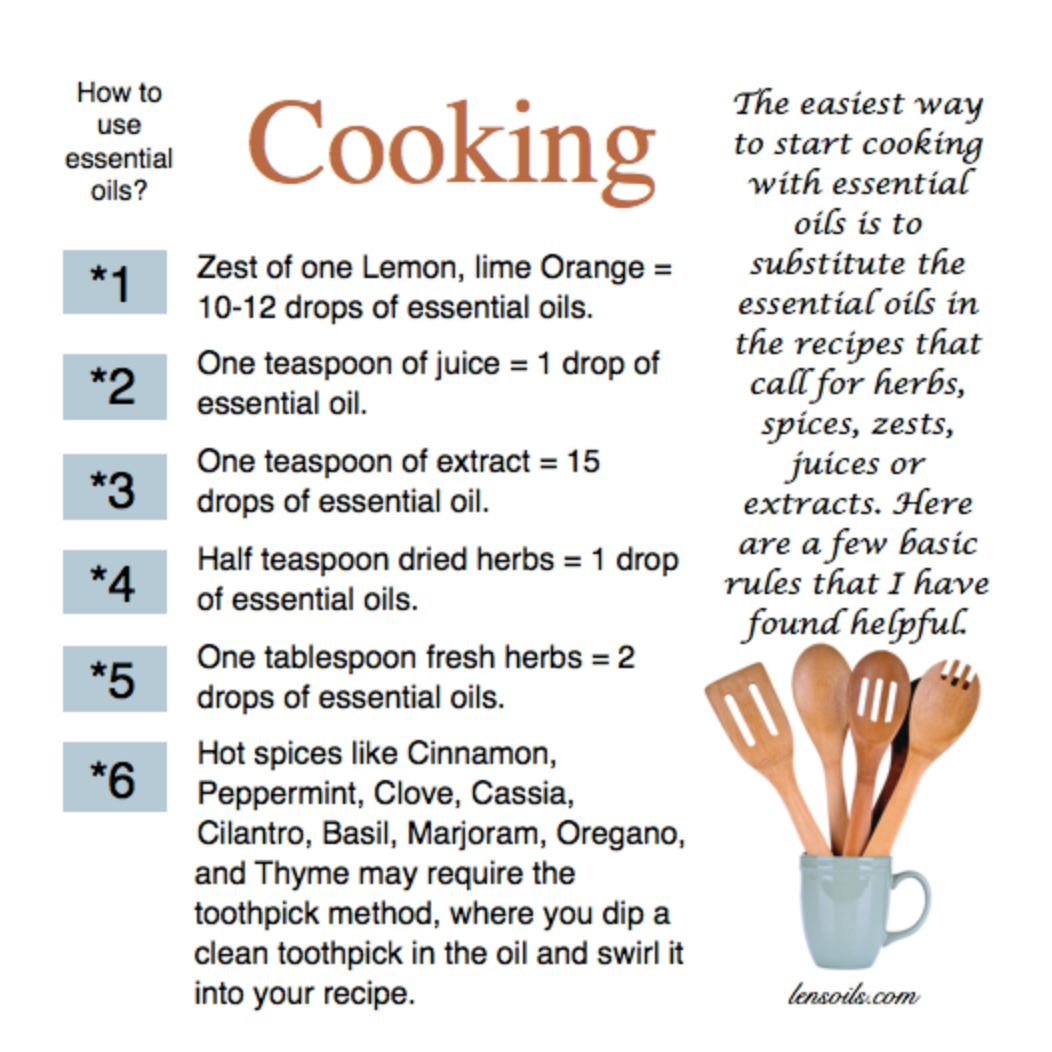
Cooking with essential oils is a flavorful and creative way to elevate your dishes, but it’s important to use them correctly for the best results. Here’s a simple guide to help you incorporate essential oils into your culinary adventures:


Cooking with Essential Oils: Basic Rules

  1. Zest Substitutes
  • Zest of one lemon, lime, or orange = 10-12 drops of essential oil.
  1. Juice Substitutes
  • One teaspoon of juice = 1 drop of essential oil.
  1. Extract Substitutes
  • One teaspoon of extract = 15 drops of essential oil.
  1. Dried Herbs Substitutes
  • Half teaspoon of dried herbs = 1 drop of essential oil.
  1. Fresh Herbs Substitutes
  • One tablespoon of fresh herbs = 2 drops of essential oil.
  1. For Potent or Hot Spices
  • Oils like cinnamon, peppermint, clove, cassia, cilantro, basil, marjoram, oregano, and thyme are very concentrated.
  • Use the toothpick method: Dip a clean toothpick into the oil and swirl it into your recipe. Add more as needed.

Quick Tips for Cooking with Essential Oils

  • Start Small: Essential oils are highly concentrated, so begin with a small amount and adjust to taste.
  • Mix with Fat or Liquid: Blend oils with a fat (butter, oil) or liquid (broth, sauce) to distribute the flavor evenly.
  • Add at the Right Time: For strong flavors, like oregano or thyme, add early in cooking. For delicate oils, like citrus or basil, add just before serving.
  • Avoid Overheating: Essential oils can lose their potency with excessive heat. When possible, add them to warm (not boiling) dishes.

Substitute and Elevate

The easiest way to start cooking with essential oils is to replace herbs, spices, zests, juices, or extracts with essential oils. They’re especially great for sauces, marinades, baked goods, beverages, and dressings!


Why Cook with Essential Oils?

  • They provide a fresh, potent flavor.
  • They’re often more cost-effective than buying fresh or dried herbs regularly.
  • A single drop delivers the health benefits of the plant, enhancing both flavor and wellness.

With these guidelines, you can turn simple recipes into culinary masterpieces while enjoying the aromatic and therapeutic benefits of essential oils. Start experimenting with your favorite dishes today!

How to Use Essential Oils: Bee & Wasp Stings

Essential oils can provide soothing relief for stings and help reduce discomfort when used correctly. Here’s how you can incorporate them into your care routine:


1. Apply Lavender or Tea Tree Oil Neat

Out of all essential oils, lavender and tea tree can be safely applied directly to the skin (neat). Simply place a drop of either oil on the sting area to help reduce swelling and soothe irritation.


2. Create a Venom-Absorbing Clay Mask

For a deeper detox, use a homemade clay mask to absorb toxins from the sting area. Here’s what you’ll need:

  • 2 tsp bentonite clay
  • 1 tsp activated charcoal powder
  • 2 drops lavender essential oil
  • 2 drops rosemary essential oil

How to use it:

  • Mix the ingredients with enough water to make a thick paste.
  • Apply the paste to the sting area.
  • Allow it to dry for 15 minutes.
  • Rinse off thoroughly with warm water.

This mask not only draws out toxins but also soothes the skin.


3. Explore the 9 Best Essential Oils for Stings

These oils can be used individually or blended for their calming, antiseptic, and soothing properties:

  • Roman Chamomile: Calms inflammation and soothes irritation.
  • Eucalyptus: Reduces swelling and provides cooling relief.
  • Lavender: Known for its soothing and healing properties.
  • Melissa: Helps reduce redness and irritation.
  • Peppermint: Provides a cooling sensation for immediate comfort.
  • Rosemary: Assists with circulation and detoxification.
  • Tea Tree: Offers antiseptic and anti-inflammatory benefits.
  • Thyme: Helps prevent infection.
  • Vetiver: Soothes the skin and calms irritation.

By using essential oils thoughtfully and safely, you can turn a sting into a moment of care and healing. Learn more about essential oils at lensoils.com.

Winter Diffuser Blends

Winter Diffuser Blends for a Fresh Start to the New Year

As we say goodbye to the holidays and embrace the fresh opportunities of the new year, these winter diffuser blends will fill your home with warmth, energy, and comfort. Try these blends to create a cozy, inviting atmosphere or a bright and invigorating vibe to start 2025 off right!


Crystal Snow

For a crisp, refreshing scent that mimics the cool air of a snowy day:

  • 5 drops Peppermint
  • 2 drops Ylang Ylang

Frosted Trees

Bring the fresh, forest-like aroma of evergreens into your space:

  • 4 drops Siberian Fir
  • 2 drops Peppermint
  • 1 drop Wintergreen

Tea Time

Perfect for chilly afternoons, this warm and spicy blend creates a cozy, tea-like atmosphere:

  • 1 drop Cardamom
  • 2 drops Cinnamon Bark
  • 3 drops Wild Orange
  • 1 drop Clove

Mittens

Wrap yourself in the warmth of this comforting, citrusy blend:

  • 2 drops Cinnamon Bark
  • 4 drops Wild Orange
  • 2 drops Cedarwood

New Year’s Fresh Start (Bonus Blend for January 1st)

Infuse your space with optimism and clarity for the year ahead:

  • 3 drops Lemon
  • 2 drops Eucalyptus
  • 3 drops Frankincense

Start the new year with scents that inspire joy, calm, and motivation. These blends are perfect for winter days when you want to unwind, reflect, or set new intentions.

Learn more about essential oils and creative diffuser blends at lensoils.com. Here’s to a bright and aromatic 2025!