All posts by lfish64

Unknown's avatar

About lfish64

I love sharing my knowledge of essential oils, healthy living, and positive thinking with others.

Cedarwood-Did You Know?

Cedarwood
Did you know cedarwood is the oil of community bringing people together who struggle to form bonds within social groups? Cedarwood supports people in seeing that they are not alone. It invites people to both give and receive and experience the joy of relationships.

Cedarwood Juniperus Virginiana is an important ornamental and timber tree of eastern North America whose fragrant wood is made into cabinets, fence posts, and pencils. Juniperus Virginiana is a dense slow-growing coniferous evergreen tree that may never become more than a bush on poor soil, but can grow up to 100 ft tall, The oldest tree reported, from Missouri, was 795 years old.

Cedarwood is used by Native American Indians to treat respiratory infections, rheumatism, arthritis, skin rashes, kidney infections and used as an insect repellent. Known for its rich hue and warm, woody scent, Cedarwood essential oil provides a myriad of health benefits that date back to biblical times.

Cedarwood is native to cold climates, thriving in high altitudes. Reminiscent of its size and strength, Cedarwood has a grounding aroma that evokes feelings of wellness and vitality. Additionally, Cedarwood is frequently used in massage therapy to relax and soothe the mind and body.

Myrrh-Did You Know?

MyrrhDid you know Myrrh essential oil is the oil of mother earth? This oil nurtures the soul’s relationship with it’s maternal mother and with the earth. This oil also supports people who have a breakdown of their peaceful connection with the mother-child bond. When this bond has been broken apart, the soul may loose its childlike ability to trust.

Myrrh is nature’s miracle herb. It was one of the three gifts given to Jesus by wise men at His birth. Referenced in the Bible as the Balm of Gilead, Myrrh has been used throughout history as a perfume, incense, and medicine. It was also employed in embalming and religious ceremonies. The name Myrrh is derived from the Arab word ‘morr’ which means ‘bitter’.

Myrrh, botanically, is an aromatic gum resin, an oleoresin to be specific. Oleoresin happens to be a natural blend of a resin and an essential oil. It is obtained from thorny trees of the ‘Commiphora’ genus when a wound in the tree trunk causes it to secrete a resin. The resin has a waxy texture and once harvested, it becomes glossy and hard. The trees are native to regions of Somalia and Ethiopia.

Ancient records show that Myrrh was deemed so valuable that at times it was valued at its weight in gold. Myrrh essential oil is derived from the gummy resin of the small, thorny Myrrh tree and has been used for centuries for its internal and external health benefits. Myrrh has powerful cleansing properties, especially for the mouth and throat. It is also soothing to the skin—promoting a smooth, youthful looking complexion—and promotes emotional balance and well-being.

Cilantro-Did You Know?

Coriander:cilantroDid you know Cilantro essential oil is the oil of Releasing Control? Cilantro makes the detoxification of emotions and debris. It is helpful in lightening your load through the release of issues buried in the body, heart and soul. Those in need of cilantro may attempt to obsessively control other people or manage their surrounding and conditions.

It is a mystery as to where Cilantro originated, but it is thought by many to be from the Mediterranean region of Europe. No one knows exactly, but it appears that cilantro has been used for at least 5000 years. The seeds, also known as coriander, have even been found in ancient Egyptian tombs. Perhaps this was because the coriander seeds were thought by the ancient herbalists to be an aphrodisiac.

The therapeutic and culinary uses of Cilantro have been documented for centuries. Cilantro contains antioxidants known to protect the body’s cells from oxidative stress. Cilantro promotes healthy digestion and acts as a powerful cleanser and detoxifier for the body’s systems. Applied topically, Cilantro is very soothing and cooling to the skin, and it adds a fresh, herbal aroma to any essential oil blend when diffused.

There is also a large amount of literature speculating that cilantro may be an effective chellation therapy for people who have excess mercury in their systems. Some think that mercury poisoning could be the result of metallic teeth fillings. Every time a person with fillings chews, the fillings release minute amounts of mercury gas that may be breathed into the system. Of course, this is all speculative and disputed. Nevertheless, many people who have suffered from mercury poisoning and the “brain cloud” it causes have reported fairly rapid relief by the consistent consumption of cilantro over a period of just a few weeks.

Cilantro’s culinary uses are endless, adding a flavorful twist to meats, salads, dips, and guacamole. A small amount goes a long way, sometimes a drop is too much and overpowering. Just dipping a toothpick into an essential oil bottle, then using the toothpick for stirring is sufficient.

Sandalwood-Did You Know?

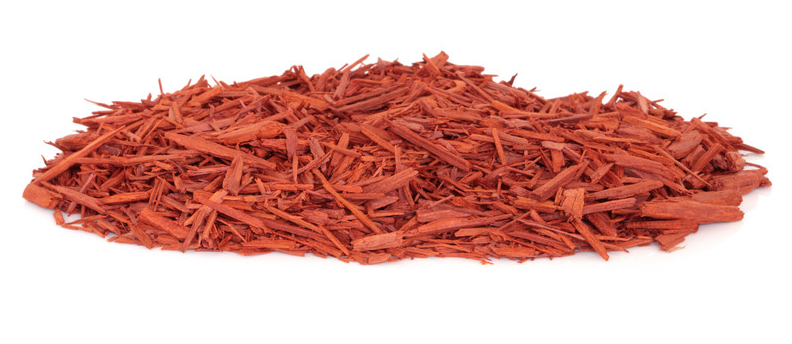
SandalwoodDid you know sandalwood is the  oil of sacred devotion? It helps with all kinds of spiritual worship including prayer, and meditation. It teaches reverence and respect for God. Sandalwood has been used since ancient times. More than 4,000 years ago, it was used to calm the mind, still the heart, and prepare the spirit to commune with Deity. In India, it’s been valued for at least 2,000 years as one of the most sacred trees, and an important part of devotional rituals.

Sandalwood is a tree with a extremely aromatic wood. It is economically and culturally important to many countries around the Pacific and Eastern Indian Ocean regions where it grows or is traded. The wood is used for making furniture, ornaments, sacred objects, carvings, and joss sticks (incense). The essential oil is used in medicine, perfume, and aromatherapy.

The tree is medium sized 12-15 meters tall. The tree reaches its full maturity in 60 to 80 years, which is when the center of the slender trunk (the heart wood) has achieved its greatest oil content. Both the heartwood and roots are fragrant and contain the oil; the bark and sapwood, however, are odorless. The Sandalwood tree is never cut down, but uprooted during the rainy season, when it is richer in precious essential oils.

Essential oils may have also been used in Indian medicine, but were popularized in the west by the perfume industry, and so became applied medicinally in the western world after the 1920’s by French aromatherapists. Sandalwood is very beneficial to the skin; it can help reduce the appearance of scars and blemishes and it promotes a healthy, smooth complexion.