Tag Archives: Insect Repellent

How To Use Essential Oils: Davana

Davana essential oil, distilled from the leaves and flowers of the Artemisia pallens plant, is treasured for its rich, fruity, and slightly woody aroma. Native to southern India, it has been used for centuries in traditional practices, especially in Ayurveda and spiritual ceremonies. Its exotic fragrance makes it a rare and prized addition to perfumery, where it is valued for its ability to bring warmth, depth, and a unique sweetness to blends. Diffused, it creates a calming, uplifting environment that feels both luxurious and comforting.

Beyond its aromatic appeal, davana essential oil is often turned to for supporting emotional balance and easing daily tension. It blends well with bright citrus oils such as orange or bergamot for cheerful diffuser recipes and pairs beautifully with grounding oils like sandalwood or patchouli for meditation or relaxation. Its sweet, almost apricot-like scent makes it a favorite in natural perfumes, lotions, and personal care blends where a touch of richness is desired.

Did You Know? In India, davana flowers are traditionally offered to Lord Shiva as a sign of devotion and purity. One of its most fascinating qualities is that the oil’s aroma changes slightly depending on each person’s chemistry, making it smell different on different individuals. This rare trait has made davana one of the most sought-after oils in luxury perfumery, prized for its ability to create a scent that feels uniquely personal.

How to Use Essential Oils: Citronella

Citronella essential oil, distilled from a tall grass native to Asia, is widely recognized for its crisp, lemony-fresh aroma and natural insect-repelling qualities. For generations, it has been used to ward off mosquitoes, spiders, and other pests by masking human scents that attract them. Beyond its well-known bug-repellent benefits, citronella oil also helps freshen the air, making it a popular choice for diffusing during outdoor gatherings or in stuffy indoor spaces. Its clean and uplifting scent not only protects but also creates a refreshing, energizing environment.

In addition to keeping pests away, citronella essential oil offers cleansing and purifying properties that make it useful around the home and in personal care. When added to water, it can be used to clean surfaces and eliminate odors naturally. In hair care, a few drops blended into shampoo or conditioner can help reduce buildup and leave the scalp feeling refreshed. Whether used to brighten a room, cleanse the home, or keep insects at bay, citronella oil is a versatile essential oil with benefits that extend well beyond outdoor use.

Did You Know? Citronella is often confused with lemongrass, but they are actually two different plants. While both belong to the same family and share a fresh, citrus-like aroma, citronella is especially rich in compounds that make it more effective as a natural insect repellent. Because of this, it has long been used not only in essential oils but also in candles, sprays, and outdoor products to help keep pests away.

How to Use Essential Oils: Cedarwood

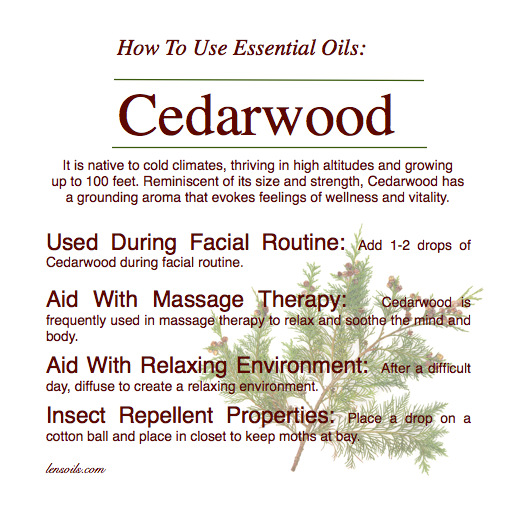
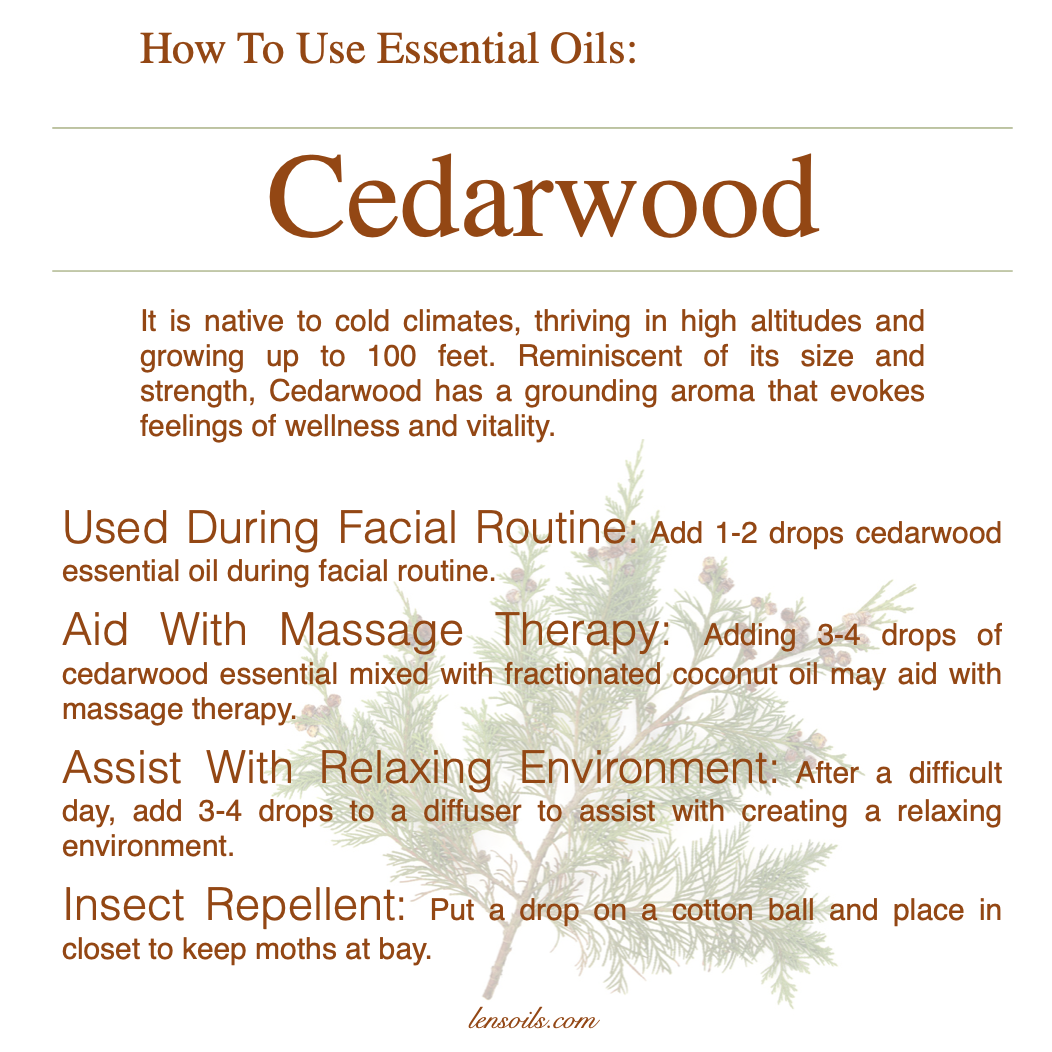
Cedarwood (Cedrus spp.) is a towering evergreen tree native to cold climates, thriving in high altitudes and reaching heights of up to 100 feet. Known for its durability and resilience, cedarwood has been used throughout history in construction, medicine, and spiritual practices. The essential oil, derived from the wood of the tree, carries a rich, grounding aroma that promotes a sense of wellness and vitality. In skincare, adding 1-2 drops of cedarwood essential oil to a facial routine may help promote clear and balanced skin due to its purifying and astringent properties. Additionally, cedarwood is widely used in massage therapy, where 3-4 drops blended with fractionated coconut oilcan provide a calming and muscle-relaxing effect. While historical and anecdotal evidence support these uses, more scientific research is needed to confirm its full range of skin-enhancing and muscle-soothing benefits.

Beyond personal care, cedarwood essential oil is commonly used in aromatherapy to promote relaxation and emotional balance. Adding 3-4 drops to a diffuser can help create a calming environment, particularly after a stressful day. Cedarwood is also known for its insect-repellent properties—placing a drop on a cotton ball and leaving it in a closet may help keep moths at bay. This traditional use is supported by the presence of sesquiterpenes and cedrol, compounds that may have natural insect-deterring effects. However, while cedarwood has been traditionally used as a natural moth repellent, scientific studies on its effectiveness compared to chemical alternatives are still ongoing.

In addition to its well-known uses, cedarwood essential oil has been explored for its potential role in improving sleep quality. Some research suggests that cedrol, a primary component in cedarwood, may have mild sedative effects, which could help support relaxation and restful sleep. Many individuals use cedarwood oil in nighttime diffuser blends or apply a diluted amount to pulse points before bed to encourage a sense of calm. While early findings are promising, more clinical research is needed to confirm its direct impact on sleep disorders or long-term sleep improvement. Regardless, cedarwood essential oil remains a versatile and widely used natural remedy, valued for its aromatic, therapeutic, and protective benefits.

How to Use Essential Oils:

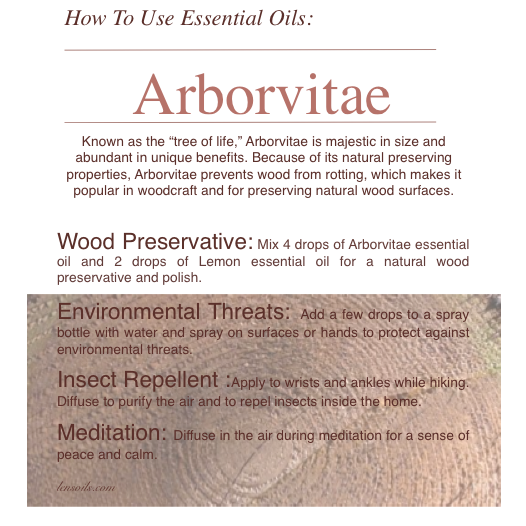
Arborvitae essential oil, derived from the “tree of life,” is known for its natural preserving properties and unique benefits. Traditionally used to prevent wood from rotting, this oil has been a popular choice for woodcraft and preserving natural surfaces. By mixing four drops of Arborvitae essential oil with two drops of lemon essential oil, you can create a natural wood preservative and polish, helping to protect and enhance the longevity of wooden furniture, countertops, and décor. Its ability to repel moisture and resist decay makes it a valuable tool for natural home maintenance.

Beyond wood preservation, Arborvitae essential oil can be used to protect against environmental threats. Adding 5-6 drops of Arborvitae oil to a spray bottle filled with water creates a natural surface and hand spray, offering protection without the use of harsh chemicals. Additionally, its strong, earthy aroma makes it a powerful insect repellent. When mixed with fractionated coconut oil and applied to the wrists and ankles, Arborvitae oil can help ward off insects while hiking or spending time outdoors. These protective properties make it a great addition to natural wellness and household care routines.

In addition to its physical benefits, Arborvitae essential oil is valued for its grounding and calming effects in meditation and mindfulness practices. Diffusing 3-4 drops of Arborvitae oil during meditation can help create a peaceful and centered atmosphere, allowing for deeper relaxation and focus. It is also sometimes used in emotional balancing blends to encourage feelings of stability and connection. Whether used for preserving wood, repelling insects, or fostering a sense of inner peace, Arborvitae essential oil is a versatile and beneficial addition to any essential oil collection.

Lemon Myrtle – Did You Know?

Did you know that Lemon Myrtle is a type of plant that grows in the subtropical rainforests of Queensland and New South Wales, Australia? For thousands of years, indigenous Australians have been using Lemon Myrtle tea in their traditional foods and for medicinal purposes. It has a nice, sweet lemony smell, and it can make you feel happy and energized, so it’s great for lots of different uses that involve its smell. People make useful oil from Lemon Myrtle leaves and branches by using steam.

The number one reason to like Lemon Myrtle is because it’s packed with helpful stuff that can be used in many ways to make you feel better. Most of it is made up of two things called geranial and neral, which are good for aromatherapy. These things in Lemon Myrtle can help clean the air, keep your breathing healthy, and even keep away things like allergies during certain times of the year.

If you’re someone who loves essential oils just for their nice smell, you should definitely try Australian Lemon Myrtle. It has a fresh and uplifting scent, and you can use it in things like cleaning products and natural air fresheners to make your home smell nice without using harsh chemicals. Plus, bugs don’t really like the smell of it, so it’s also good to bring with you when you’re spending time outdoors.