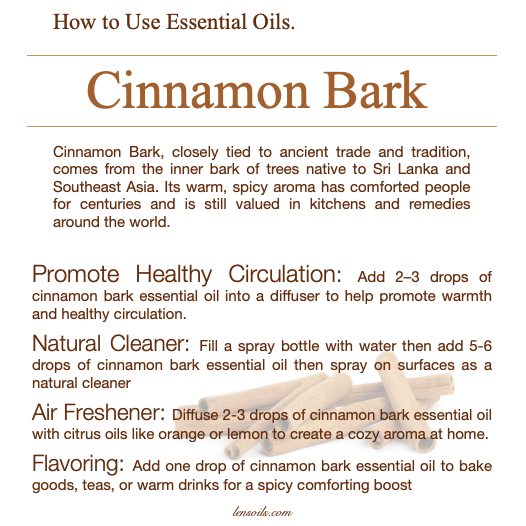
Cinnamon Bark essential oil, distilled from the inner bark of the cinnamon tree, is treasured for its rich, spicy aroma that evokes warmth and comfort. Native to Sri Lanka and parts of Southeast Asia, cinnamon has been valued for thousands of years in trade, medicine, and ritual. Its essential oil carries strong cleansing properties, making it popular in natural home sprays and cleaners. Diffused, its bold scent creates a cozy, welcoming atmosphere that can support a sense of energy and alertness.
Beyond its household uses, cinnamon bark oil has been studied for its powerful antimicrobial qualities, which are linked to its high cinnamaldehyde content. This makes it a favorite in DIY blends for supporting a healthy environment, especially during seasonal changes. A drop is sometimes used in recipes like spiced teas or baked goods for an extra kick of flavor, though it must be used sparingly because of its strength. In aromatherapy, its stimulating aroma can help awaken the senses and lift feelings of fatigue.
Did You Know? Cinnamon was once so prized that it was considered more valuable than gold in ancient trade. Arab traders kept its true source a secret for centuries, weaving myths that it was gathered from nests of giant birds to protect its rarity. Today, the “true” cinnamon most associated with high quality comes from Cinnamomum verum of Sri Lanka, while other species like Cinnamomum cassia are more widely available but have slightly different chemical compositions.
 Did you know Birch is the oil of support? Birch offers support to the unsupported. When a person is feeling unsupported or attacked by friends or family, Birch offers courage to help you move in a positive direction alone. It helps assist people overcome negative generation patterns especially when you are being rejected for choosing another path.
 Len's Oils