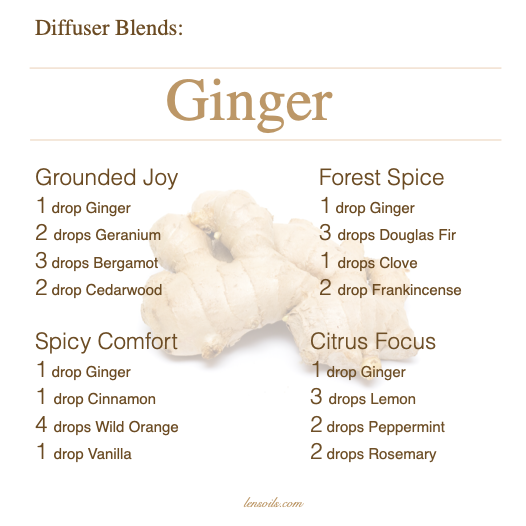
Ginger adds a warm, steady pulse to these blends, bringing both comfort and quiet motivation without stealing the spotlight. Grounded Joy feels balanced and emotionally lifting, where ginger gently anchors the florals and citrus, while Spicy Comfort is cozy and reassuring, like warmth spreading from the inside out. Forest Spice is especially grounding, blending ginger’s gentle heat with deep woods and resin to create a calm, reflective atmosphere. And Citrus Focus shows ginger’s energizing side, smoothing the sharper edges of lemon, peppermint, and rosemary so the blend feels clear, focused, and sustained rather than rushed.
The passage from Song of Solomon 4:13-14 is part of a poetic love song that symbolizes deep affection and devotion. The Song of Solomon, also known as the Song of Songs, is traditionally interpreted as a dialogue between King Solomon and his beloved, often seen as an allegory of God’s love for His people. In these verses, the beloved’s presence is compared to a flourishing garden filled with rich, fragrant plants and valuable spices, highlighting both beauty and abundance. The imagery of pomegranates, spikenard, saffron, cinnamon, frankincense, myrrh, and aloes suggests a place of great delight, luxury, and spiritual significance. These plants were not only treasured for their aromatic qualities but were also used for anointing, purification, and healing in biblical times.
Essential oils and aromatic resins played a profound role in the daily lives and religious practices of ancient Israel. Spikenard, for instance, was a costly and precious oil often associated with worship and anointing, as seen when Mary anointed Jesus’ feet with it (John 12:3). Frankincense and myrrh, famously given to Christ at His birth, were used in sacred rituals, symbolizing prayer, purification, and divine presence. Cinnamon and calamus were key ingredients in the holy anointing oil described in Exodus 30:23-25, used to consecrate priests and sacred objects. These oils were not merely for fragrance—they carried spiritual and medicinal properties, valued for their ability to heal, preserve, and set apart.
The inclusion of these plants and oils in Song of Solomon suggests more than just physical attraction; it speaks to the richness of love and devotion that mirrors divine intimacy. The garden imagery reflects Edenic perfection, symbolizing the restoration of harmony between humanity and God. Just as essential oils were used for anointing and healing, the love described in this passage is one that refreshes, restores, and sustains. This passage, steeped in sensory richness, not only illustrates the deep bond between the lovers but also points to the sacred role of aromatic plants in biblical culture—used for healing, worship, and as an expression of divine blessing.
It was a cold winter evening in the late 18th century when a young French chemist named Antoine Baumé began experimenting with the oils of an exotic spice. His research, focused on its strong, spicy aroma, revealed that just a small amount of this oil could transform ordinary remedies into something extraordinary. What made this discovery remarkable was how it seemed to heighten the senses, soothe discomfort, and even energize the weary. But Baumé, a man of few words, left his notes mysteriously vague, leaving the spice’s legacy to drift into obscurity—for a while.
Centuries earlier, in ancient Egypt, Pharaohs demanded that this spice be included in their burial rites. Its aroma, earthy yet sweet, filled the air during rituals, symbolizing both purification and preservation. Priests burned it in temple offerings, believing its scent could carry prayers to the heavens. While frankincense and myrrh often stole the spotlight, this spice stood silently in the background, a humble hero in the halls of Egyptian mysticism.
In the Bible, this spice was mentioned multiple times as a symbol of wealth, sacredness, and divine favor. Moses used it in the anointing oil for the Tabernacle, mixing it with other spices to create a fragrance both holy and unforgettable. The book of Proverbs spoke of its value, and it became synonymous with wisdom and health. Over time, merchants from the East carried it to Europe, where kings and queens clamored for its warmth and richness.
Fast forward to the 15th century, and Christopher Columbus encountered a mystery spice in the New World. Though it was not the spice he sought—cinnamon—it bore a striking resemblance in both flavor and aroma. He brought it back to Spain, where it quickly became a favorite in kitchens, adding depth to savory and sweet dishes alike. Explorers and traders were enchanted by its versatility, yet its true origin remained a closely guarded secret.
In 1819, English herbalist Nicholas Culpeper wrote of the spice’s remarkable medicinal properties. According to Culpeper, its oil could soothe indigestion, relieve chills, and fortify the immune system against seasonal threats. He recommended mixing it with water or wine for digestive relief or combining it with honey to calm a sore throat. While cinnamon was the darling of herbal medicine, this spice became its quieter but equally powerful cousin.
In kitchens across Europe and Asia, bakers discovered that just a drop or two of this spice could elevate pies, breads, and desserts to new heights. It offered a richer, deeper flavor than cinnamon, with a hint of fiery sweetness that lingered long after the last bite. It wasn’t just for food, though. Blended with clove and ginger, its oil became a staple in wintertime rituals, warming homes and hearts alike.
By the 20th century, essential oil practitioners rediscovered this ancient treasure. Aromatherapists praised its ability to boost the immune system and calm the mind. Fitness enthusiasts began using it in water to ward off hunger cravings, while others added it to their wellness routines for digestive support. Its strong, spicy scent became a favorite in fall and winter diffuser blends, evoking feelings of warmth, comfort, and nostalgia.
But what made this spice truly unique was its resilience. Growing wild in the forests of Southeast Asia, the plant thrived in conditions where few others could survive. Its hardy bark and leaves were as unyielding as its aroma was inviting. For centuries, its strength and vitality inspired those who used it, whether for cooking, healing, or spiritual practices.
And now, with all the clues before you—the sacred oils of ancient Egypt, the fiery warmth of fall recipes, the misunderstood spice sought by explorers—you might think we’re talking about cinnamon. But we’re not.
The unsung hero of this tale is Cassia. A close relative to cinnamon, Cassia’s bold, spicy oil has traveled through history, quietly transforming lives with its warmth and strength. And now, as Paul Harvey would say, you know the rest of the story.
Essential oils are absorbed transdermally through the skin’s pores, allowing their beneficial properties to take effect. Some essential oils are gentle and soothing, while others are considered “hot” and can cause irritation. To ensure safe application, it is essential to have fractionated coconut oil available to dilute stronger oils. When applying multiple oils, allow a few minutes between each layer to let the skin absorb the properties of each oil properly.
When using essential oils on the skin, it’s important to consider factors such as skin sensitivity and the purpose of the oil. Always perform a patch test before using a new oil to check for any reactions. Dilution is key for safe application, especially with potent oils like oregano or cinnamon. Additionally, essential oils should be applied to pulse points or problem areas for targeted benefits. For enhanced absorption, gently massaging the oil into the skin can improve circulation and effectiveness.
One particularly beneficial oil for skincare is Roman Chamomile (Anthemis nobilis). This essential oil is known for its calming and soothing properties, making it an excellent choice for irritated or sensitive skin. It can help reduce redness, inflammation, and minor skin discomfort. Roman Chamomile is also popular for promoting relaxation, making it a great addition to nighttime skincare routines.
Revelation 18:13 describes the fall of a wealthy and corrupt society by listing the luxurious goods it once thrived on. Among these goods are spices like cinnamon and frankincense, which were highly valued in the ancient world for their fragrance, religious rituals, and medicinal properties. Along with these spices, the verse mentions other luxury items such as ointments, wine, oil, flour, wheat, livestock, and even human lives, showing how this society was built on trade, wealth, and exploitation. The inclusion of cinnamon and frankincense highlights how people sought after extravagance and comfort while ignoring the moral consequences of their greed.
This verse serves as a warning that material wealth and lavish lifestyles do not last forever. History has shown that empires that prioritize luxury and power over justice and righteousness eventually collapse. The mention of spices, along with other goods, reflects how people often chase after temporary pleasures but fail to see the deeper importance of kindness, integrity, and human dignity. The phrase “souls of men” in the verse is particularly striking, emphasizing that human lives were treated as commodities, further revealing the deep corruption of this society.
For today’s world, this verse is a reminder to reflect on what we value most. Do we focus on material wealth, status, and luxury like cinnamon, frankincense, and fine oils, or do we prioritize compassion, justice, and ethical living? Revelation 18:13 warns that societies built on greed and exploitation will not last, but those who live with fairness and kindness will create something truly meaningful and enduring.
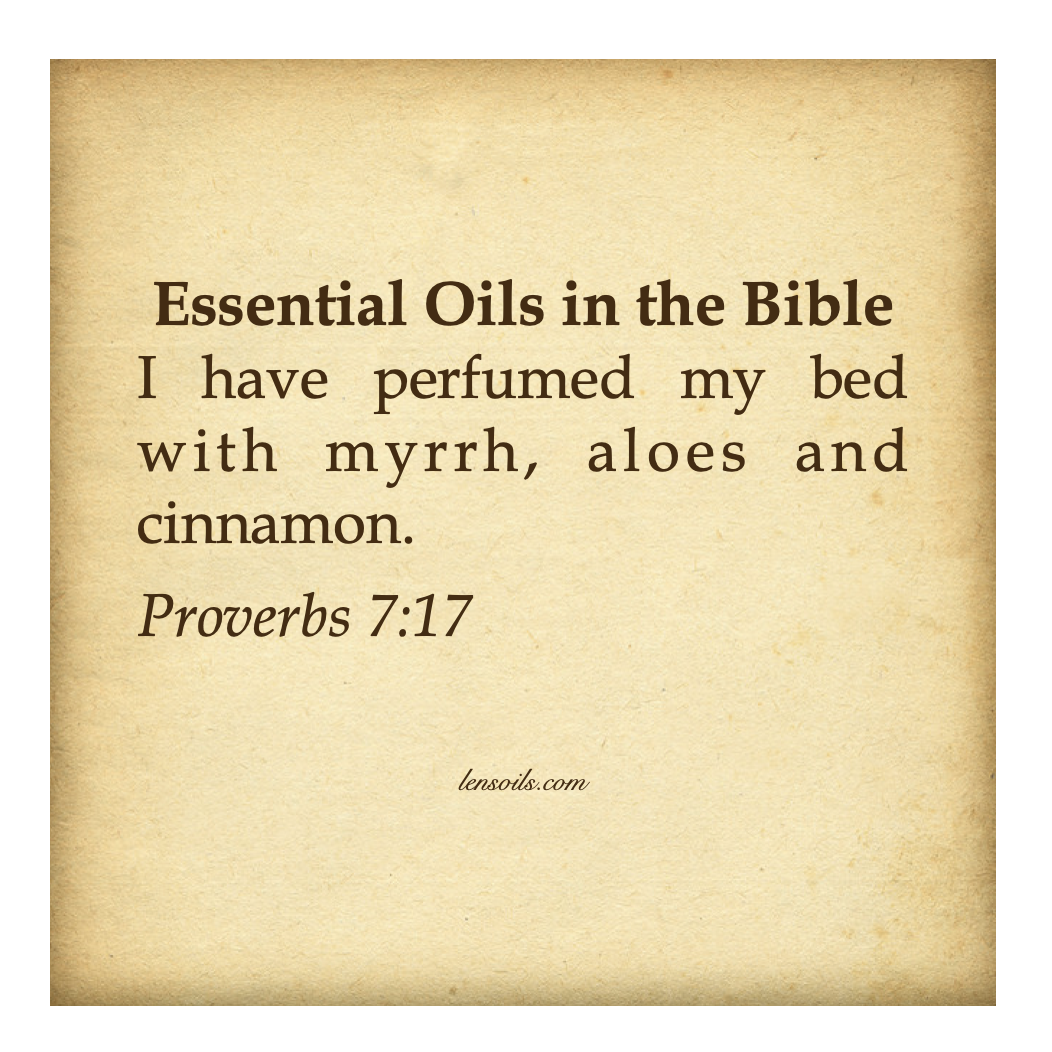
The verse Proverbs 7:17, which states, “I have perfumed my bed with myrrh, aloes, and cinnamon,” is part of a larger passage in Proverbs 7, where King Solomon warns young men about the dangers of falling into temptation, particularly seduction by an immoral woman.
Backstory and Meaning
In Proverbs 7, Solomon describes a scene where a woman, who is unfaithful to her husband, lures a young man into her home with enticing words and luxurious preparations. She says she has adorned her bed with fine linens and scented it with myrrh, aloes, and cinnamon—all valuable and aromatic spices and oils in the ancient world. These fragrances were not only used for pleasure but also for religious rituals, anointing, and burial practices.
By using these expensive and exotic scents, the woman is making her invitation more appealing, creating an atmosphere of comfort and indulgence. The passage is meant to serve as a cautionary tale, warning against being seduced by fleeting pleasures that lead to regret.
Essential Oils in the Bible
This verse also highlights the historical significance of essential oils and aromatic spices in biblical times. Myrrh was used for anointing and embalming, aloes (possibly referring to sandalwood or another fragrant wood) had medicinal and perfuming purposes, and cinnamon was a prized spice used in sacred anointing oil (Exodus 30:23). These natural substances were valuable, used for both practical and spiritual reasons.
In summary, Proverbs 7:17 is part of a warning about temptation, but it also reflects how essential oils and fragrances played a meaningful role in ancient life, from personal use to religious and medicinal applications.
‘Twas the Night Before Christmas (Essential Oils Edition)
‘Twas the night before Christmas, when all through the house, Not a creature was stirring, not even a mouse. The stockings were hung by the chimney with care, With scents of sweet cinnamon filling the air.
The children were nestled all snug in their beds, While whispers of peppermint danced in their heads. And Mama in her scarf, with her lavender spray, Had just settled down at the end of the day.
When out on the lawn there arose such a clatter, I sprang from my bed to see what was the matter. Away to the window I flew like a flash, The aroma of fir trees as fresh as a splash.
The moon on the snow gave a magical glow, And hints of pine essence made spirits bestow. When, what to my wondering nose should appear, But a sleigh full of oils and eight festive reindeer!
With a little old driver, so lively and quick, I knew in a moment it must be St. Nick. More fragrant than ever, his oils they came, And he whistled and shouted and called them by name:
“Now Frankincense! Now Myrrh! Now Citrus and Spruce! On Clove Bud! On Ginger! Let the aromas cut loose! To the top of the porch! To the top of the wall! Let the scents of the season bring joy to you all!”
As dry leaves that before the wild hurricane fly, The warm scent of clove and orange filled the sky. So up to the rooftop the reindeer they flew, With a sleigh full of treasures, and St. Nicholas too.
And then, in a twinkling, I heard on the roof, The prancing and pawing of each little hoof. As I drew in my head and was turning around, Through the chimney St. Nicholas came with a bound.
He was dressed all in fur, from his head to his toes, And carried a diffuser to spread Christmas glows. A bundle of bottles he had flung on his back, Filled with aromas to keep the season on track.
His eyes, how they twinkled! His dimples, how merry! His cheeks smelled of nutmeg, his nose like a cherry! With a drop of vanilla, his smile did gleam, Bringing joy to the night with his yuletide dream.
He spoke not a word, but went straight to his work, Adding oils to stockings with a satisfied smirk. A touch of eucalyptus, a hint of sweet bay, And a drop of warm cedar to brighten the day.
Then laying his finger aside of his nose, A burst of fresh pine through the chimney arose. He sprang to his sleigh, to his team gave a whistle, And away they all flew like the scent of a thistle.
But I heard him exclaim, ere he drove out of sight, May your oils bring peace, may your spirits stay bright, For aromas of Christmas make everything right.”
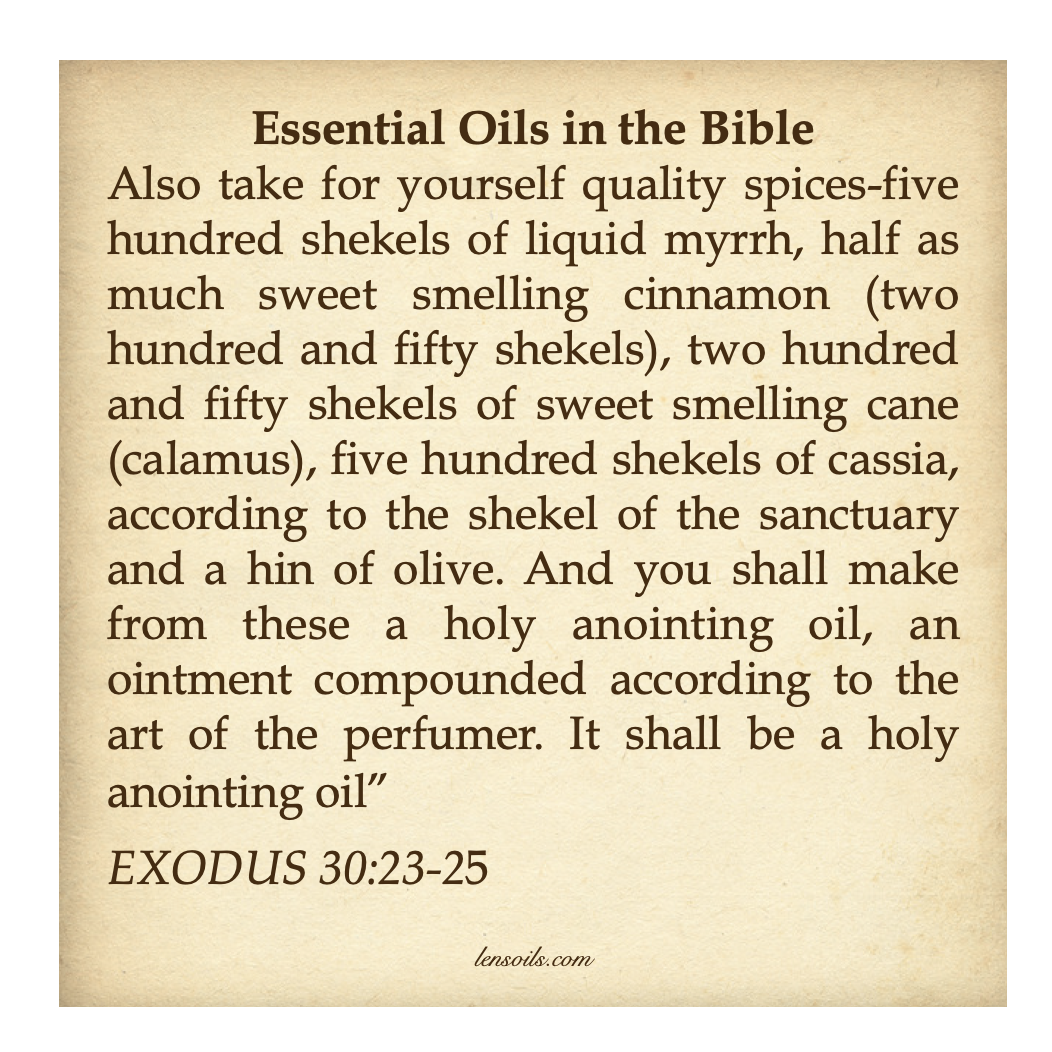
In the Bible, God instructs Moses to create a special holy anointing oil using specific ingredients. This recipe is found in Exodus 30:23-25. Here’s a simplified explanation:
Take the following high-quality spices:
500 shekels of liquid myrrh
250 shekels of sweet-smelling cinnamon
250 shekels of calamus (a fragrant cane)
500 shekels of cassia (a spice similar to cinnamon)
A hin (about a gallon) of olive oil
These ingredients are combined by a skilled perfumer to create a sacred anointing oil. This oil was set apart as holy and used for special purposes in worship and dedication.





 Len's Oils