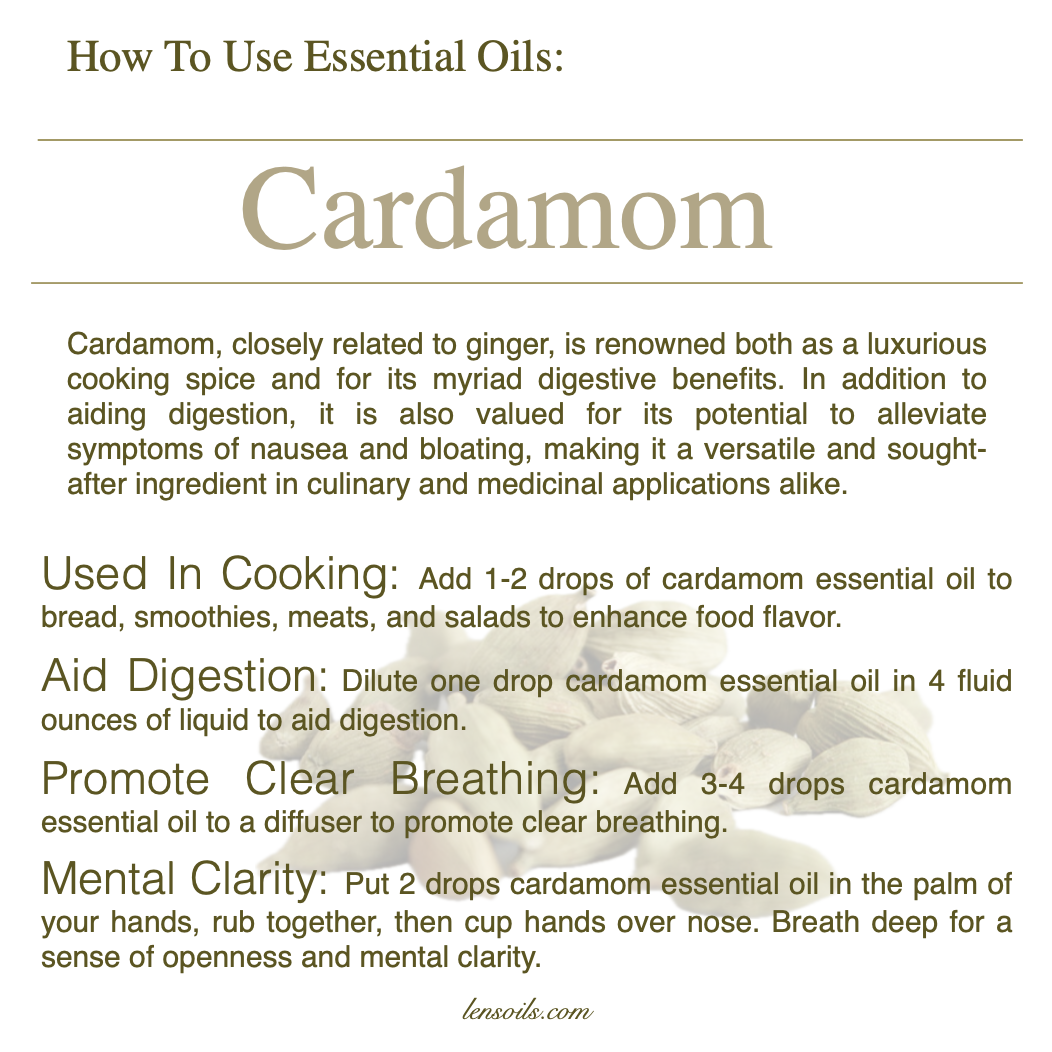
Cardamom (Elettaria cardamomum), a close relative of ginger, has been prized for centuries as both a luxurious culinary spice and a natural digestive aid. Historically, it has been used in Middle Eastern, Indian, and Scandinavian cuisine, where its warm, slightly sweet flavor enhances a variety of dishes. Beyond its culinary appeal, cardamom is known for its digestive benefits, traditionally used to ease bloating, indigestion, and occasional nausea. Adding 1-2 drops of cardamom essential oil to foods such as breads, smoothies, meats, and salads enhances their flavor while also supporting digestion. Additionally, cardamom essential oil can be diluted in 4 fluid ounces of liquid to help aid digestion naturally. While these traditional uses are well-documented, further scientific research is needed to confirm the full extent of cardamom essential oil’s role in gut health and digestive enzyme activation.
Beyond digestion, cardamom essential oil is often used in aromatherapy to promote respiratory health. Adding 3-4 drops to a diffuser can help create an atmosphere that supports clear breathing and soothes airways, making it useful during seasonal changes. Additionally, cardamom oil is said to promote mental clarity—placing 2 drops in the palms, rubbing hands together, and inhaling deeply is believed to provide a sense of openness and focus. Some studies suggest that certain compounds in cardamom may have calming effects, which could support mental well-being, though more clinical research is needed to determine its direct impact on stress reduction and cognitive function.
Among its various applications, cardamom essential oil is sometimes considered beneficial for oral health and detoxification, though these claims require more scientific validation. While cardamom has been used in traditional medicine for freshening breath and cleansing the mouth, research on its effectiveness in preventing bacteria-related oral issues remains limited. Additionally, some practitioners believe that cardamom essential oil may support natural detoxification, but further studies are needed to substantiate these claims. Regardless, cardamom remains a versatile and highly valued essential oil, offering culinary, digestive, and aromatic benefits, making it a staple in both traditional and modern wellness practices.

 Len's Oils