 This is a favorite oil of mine. It has a very smoky musky aroma. Vetiver goes a long way, just a hint of the oil on my finger lingers for quite a while. I will also rub it in my hair and it smells like a guys cologne.
Category Archives: Essential Oil Information
Essential Oils Studied For Anti-Inflammatory Properties

Anti-Inflammatory means an agent that alleviates inflammation.
Basil Essential Oil
Basil is cooling to the skin, and can be used to soothe minor irritations. When diffused, Basil helps promote clear breathing, and healthy respiratory function while sharpening focus, and lessening stress.
Learn More
Bergamot Essential Oil
Italians have used Bergamot for years to reduce tension and stress and to soothe and rejuvenate skin. Bergamot is unique among citrus oils due to its ability to be both uplifting and calming, making it ideal to help with anxious and sad feelings.
Learn More
Cassia Essential Oil
When diluted, Cassia can help soothe sore, achy joints. Cassia can be used in cooking either as a replacement for Cinnamon in pies and breads, or by itself in many different entrees and desserts.
Learn More
Eucalyptus Essential Oil
Eucalyptus oil is best known for respiratory health and works great when massaged over the chest and throat. Can be applied without diluting.
Learn More
Frankincense Essential Oil
Frankincense promotes a healthy inflammatory response and acts as an overall tonic to the body’s systems, helping them function optimally. When inhaled or diffused, Frankincense induces feelings of peace, relaxation, satisfaction, and overall wellness.
Learn More
Geranium Essential Oil
This oil has been used to promote clear skin and healthy hair, making it ideal for skin and hair care products. It also helps calm nerves and lessen stress.
Learn More
Helichrysum Essential Oil
Helichrysum is great for regenerative effects, can be used without dilution for most people. No first aide kit should be without this oil.
Learn More
Lavender Essential Oil
Inhaling Lavender promotes relaxation and a restful night’s sleep, making it an ideal oil to diffuse at bedtime and when stress levels are high.
Learn More
Lemongrass Essential Oil
This oil supports healthy digestion, and soothes aching muscles. Lemongrass purifies and tones skin, and acts as an overall tonic to the body’s systems.
Learn More
Myrrh Essential Oil
Myrrh is valued as an expectorant, which means it promotes the expulsion of mucus in cases of bronchitis and lung congestion. Myrrh is best for chronic conditions, because it contains tannins and resins, it has an astringent effect on tissues.
Learn More
Orange Essential Oil
Orange can be taken daily to cleanse the body or used on surfaces as a natural cleaner. Diffusing Wild Orange will energize and uplift the mind and body while purifying the air.
Learn More
Peppermint Essential Oil
Peppermint is very pleasing to the taste buds (you can add the oil to tea or water), but is powerfully soothing to the digestive system. You can usually apply it without diluting, inhale for nausea, or take internally as suggested.
Learn More
Roman Chamomile Essential Oil
Ancient Romans used the oil for mental clarity and courage during war. While the most common use of chamomile is in teas, Roman Chamomile can also be found in face creams, drinks, hair dyes, shampoos, and perfumes.
Learn More
Rosemary Essential Oil
Rosemary supports healthy digestion and helps soothe sore muscles and joints. This oil also helps reduce nervous tension and fatigue.
Learn More
Wintergreen Essential Oil
The main chemical component in Wintergreen, methyl salicylate, is used in topical joint creams to soothe sore muscles and joints; in fact, Wintergreen and Birch are the only plants in the world that contain methyl salicylate naturally.
Learn More
Essential Oils Studied For Anti-Infectious Properties
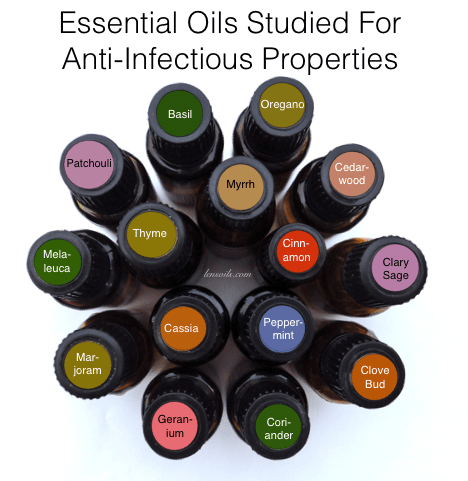
Anti-Infectious means an agent that prevents and combats the spread of germs.
Basil Essential Oil
Basil is cooling to the skin, and can be used to soothe minor irritations. When diffused, Basil helps promote clear breathing, and healthy respiratory function while sharpening focus, and lessening stress.
Learn More
Cassia Essential Oil
When diluted, Cassia can help soothe sore, achy joints. Cassia can be used in cooking either as a replacement for Cinnamon in pies and breads, or by itself in many different entrees and desserts.
Learn More
Cedarwood Essential Oil
Diffusing or inhaling Cedarwood will help maintain healthy breathing and respiratory function and, when applied topically, Cedarwood promotes clear, healthy skin.
Learn More
Cinnamon Essential Oil
Cinnamon is strong, so be sure to dilute it (3 drops of carrier oil to 1 drop of cinnamon), but you can cook, bake, or even make candy with it too.
Learn More
Clary Sage Essential Oil
The main chemical component of Clary Sage is linalyl acetate, part of the esters group, making it one of the most relaxing, soothing, and balancing essential oils.
Learn More
Clove Essential Oil
Clove has been used for years in dental preparations,candy, and gum for its flavor and ability to promote oral health, yet it provides a myriad of health benefits.
Learn More
Coriander Essential Oil
Coriander has a high linalool content, giving it strengthening and toning properties that benefit the skin, emotions, and body.
Learn More
Geranium Essential Oil
This oil has been used to promote clear skin and healthy hair, making it ideal for skin and hair care products. It also helps calm nerves and lessen stress.
Learn More
Marjoram Essential Oil
Marjoram oil is noted for it’s calming properties, can be taken internally, or used topically, although sensitive skin may want to dilute and it. One drop of essential oil is equivalent to 2 tsp. of dried herbs.
Learn More
Melaleuca Essential Oil
Melaleuca is best known for its purifying properties. It can be used to cleanse and purify. Taken internally, Melaleuca enhances immunity when seasonal threats are high.
Learn More
Myrrh Essential Oil
Myrrh is valued as an expectorant, which means it promotes the expulsion of mucus in cases of bronchitis and lung congestion. Myrrh is best for chronic conditions, because it contains tannins and resins, it has an astringent effect on tissues.
Learn More
Oregano Essential Oil
Oregano is one of the most potent essential oils. It must be diluted (3 drops of carrier oil to 1 drop of Oregano essential oil when used topically). Apply to reflex points. It can be used as a flavoring in cooking.
Learn More
Patchouli Essential Oil
Patchouli is regularly used in the perfume industry as well as in scented products. The fragrance of Patchouli provides a grounding, balancing effect on emotions.
Learn More
Peppermint Essential Oil
Peppermint is very pleasing to the taste buds (you can add the oil to tea or water), but is powerfully soothing to the digestive system. You can usually apply it without diluting, inhale for nausea, or take internally as suggested.
Learn More
Thyme Essential Oil
Thyme makes a great defense against many concerns, although it should always be diluted (4 drops carrier oil to 1 drop thyme). You can also cook with it.
Learn More
Essential Oils Studied For Anticatarrhal Properties

The term anticatarrhal refers to an agent that helps remove excess mucus from the respiratory system. The oils listed have been studied for properties that help dissolve and eliminate, as well as prevent the formation of mucus and inflammation of the mucus membrane.
Basil Essential Oil
Basil is cooling to the skin, and can be used to soothe minor irritations. When diffused, Basil helps promote clear breathing, and healthy respiratory function while sharpening focus, and lessening stress.
Learn More
Clove Essential Oil
Clove has been used for years in dental preparations,candy, and gum for its flavor and ability to promote oral health, yet it provides a myriad of health benefits.
Learn More
Eucalyptus Essential Oil
Eucalyptus oil is best known for respiratory health and works great when massaged over the chest and throat. Can be applied without diluting.
Learn More
Fennel Essential Oil
Fennel is best known for its distinct licorice aroma and taste, yet its ability to ease digestive troubles and monthly menstrual cycles are equally noteworthy.
Learn More
Frankincense Essential Oil
Frankincense is known to promote cellular health and immunity. It’s soothing and beautifying properties are used to rejuvenate skin and reduce the appearance of scars and stretch marks.
Learn More
Ginger Essential Oil
Ginger can lessen motion sickness, soothe an upset stomach, and help digest food after a large meal. Ginger essential oil can also be applied topically or inhaled to help with digestion issues.
Learn More
Helichrysum Essential Oil
Helichrysum is highly valued and sought after for its many health benefits. It’s frequently consumed to help detoxify the body.
Learn More
Marjoram Essential Oil
Marjoram oil is noted for it’s calming properties, can be taken internally, or used topically, although sensitive skin may want to dilute and it. One drop of essential oil is equivalent to 2 tsp. of dried herbs.
Learn More
Myrrh Essential Oil
Myrrh is valued as an expectorant, which means it promotes the expulsion of mucus in cases of bronchitis and lung congestion. Myrrh is best for chronic conditions, because it contains tannins and resins, it has an astringent effect on tissues.
Learn More
Oregano Essential Oil
Oregano is one of the most potent essential oils. It must be diluted (3 drops of carrier oil to 1 drop of Oregano essential oil when used topically). Apply to reflex points. It can be used as a flavoring in cooking.
Learn More
Peppermint Essential Oil
Peppermint is very pleasing to the taste buds (you can add the oil to tea or water), but is powerfully soothing to the digestive system. You can usually apply it without diluting, inhale for nausea, or take internally as suggested.
Learn More
Rosemary Essential Oil
Rosemary supports healthy digestion and helps soothe sore muscles and joints. This oil also helps reduce nervous tension and fatigue.
Learn More
Sandalwood Essential Oil
Sandalwood has a sweet, woody aroma that can enhance mood and is frequently used in meditation for its grounding effects.
Learn More
Thyme Essential Oil
Thyme makes a great defense against many concerns, although it should always be diluted (4 drops carrier oil to 1 drop thyme). You can also cook with it.
Learn More
White Fir Essential Oil
White Fir essential oil is most noted for soothing sore muscles and joints and supporting It can be stimulating to the mind while helping the body to relax. clear breathing.
Learn More
Top 15 Essential Oils Studied For Anti-Depressant Properties
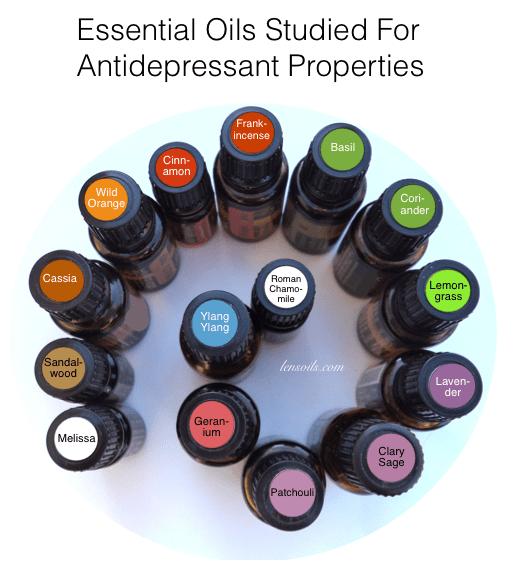
The term antidepressant refers to an agent that helps alleviate depression, bringing a person back to a more positive place in their life with increased happiness.
Basil Essential Oil
Basil is cooling to the skin, and can be used to soothe minor irritations. When diffused, Basil helps promote clear breathing, and healthy respiratory function while sharpening focus, and lessening stress.
Learn More
Cassia Essential Oil
When diluted, Cassia can help soothe sore, achy joints. Cassia can be used in cooking either as a replacement for Cinnamon in pies and breads, or by itself in many different entrees and desserts.
Learn More
Cinnamon Essential Oil
Cinnamon is strong, so be sure to dilute it (3 drops of carrier oil to 1 drop of cinnamon), but you can cook, bake, or even make candy with it too.
Learn More
Clary Sage Essential Oil
The main chemical component of Clary Sage is linalyl acetate, part of the esters group, making it one of the most relaxing, soothing, and balancing essential oils.
Learn More
Coriander Essential Oil
Coriander has a high linalool content, giving it strengthening and toning properties that benefit the skin, emotions, and body.
Learn More
Frankincense Essential Oil
Frankincense promotes a healthy inflammatory response and acts as an overall tonic to the body’s systems, helping them function optimally. When inhaled or diffused, Frankincense induces feelings of peace, relaxation, satisfaction, and overall wellness.
Learn More
Geranium Essential Oil
This oil has been used to promote clear skin and healthy hair, making it ideal for skin and hair care products. It also helps calm nerves and lessen stress.
Learn More
Lavender Essential Oil
Inhaling Lavender promotes relaxation and a restful night’s sleep, making it an ideal oil to diffuse at bedtime and when stress levels are high.
Learn More
Lemongrass Essential Oil
This oil supports healthy digestion, and soothes aching muscles. Lemongrass purifies and tones skin, and acts as an overall tonic to the body’s systems.
Learn More
Melissa (Lemon Balm) Essential Oil
Melissa is also great for your skin or over the reflex areas for the area of concern. You can also add a drop to your tea.
Learn More
Orange Essential Oil
Orange can be taken daily to cleanse the body or used on surfaces as a natural cleaner. Diffusing Wild Orange will energize and uplift the mind and body while purifying the air.
Learn More
Patchouli Essential Oil
Patchouli is regularly used in the perfume industry as well as in scented products. The fragrance of Patchouli provides a grounding, balancing effect on emotions.
Learn More
Roman Chamomile Essential Oil
Ancient Romans used the oil for mental clarity and courage during war. While the most common use of chamomile is in teas, Roman Chamomile can also be found in face creams, drinks, hair dyes, shampoos, and perfumes.
Learn More
Sandalwood Essential Oil
Sandalwood has a sweet, woody aroma that can enhance mood and is frequently used in meditation for its grounding effects.
Learn More
Ylang Ylang Essential Oil
Ylang Ylang is used to lessen tension and stress and to promote a positive outlook. Ylang Ylang is frequently used in luxurious hair and skin products for its scent and nourishing and protective properties.
Learn More
Top 15 Essential Oils Studied For Anti-Bacterial Properties

The term antibacterial refers to anything that kills bacteria or limits its ability to grow or reproduce.
Basil Essential Oil
Basil is cooling to the skin, and can be used to soothe minor irritations. When diffused, Basil helps promote clear breathing, and healthy respiratory function while sharpening focus, and lessening stress.
Learn More
Cassia Essential Oil
When diluted, Cassia can help soothe sore, achy joints. Cassia can be used in cooking either as a replacement for Cinnamon in pies and breads, or by itself in many different entrees and desserts.
Learn More
Cedarwood Essential Oils
Cedarwood will help maintain healthy breathing and respiratory function and, when applied topically, Cedarwood promotes clear, healthy skin. This oil is also used in massage therapy to relax the mind and body.
Learn More
Cinnamon Essential Oil
Cinnamon is strong, so be sure to dilute it (3 drops of carrier oil to 1 drop of cinnamon), but you can cook, bake, or even make candy with it too.
Learn More
Clove Essential Oil
Clove has been used for years in dental preparations,candy, and gum for its flavor and ability to promote oral health, yet it provides a myriad of health benefits.
Learn More
Cypress Essential Oil
Cypress assists with clear breathing, and promotes healthy respiratory function. It also soothes tight muscles and supports localized blood flow. This oil is helpful for oily skin conditions.
Learn More
Geranium Essential Oil
This oil has been used to promote clear skin and healthy hair, making it ideal for skin and hair care products. It also helps calm nerves and lessen stress.
Learn More
Helichrysum Essential Oil
Helichrysum is great for regenerative effects, can be used without dilution for most people. No first aide kit should be without this oil.
Learn More
Lemongrass Essential Oil
This oil supports healthy digestion, and soothes aching muscles. Lemongrass purifies and tones skin, and acts as an overall tonic to the body’s systems.
Learn More
Lime Essential Oil
Lime oil can usually be used without diluting, depending on skin sensitivity, and can be taken internally, but like all citrus oils, it can cause sensitivity to the sun with topical use up to 12 hours prior, so using it before bed is a great option.
Learn More
Melaleuca Essential Oil
Melaleuca is best known for its purifying properties. It can be used to cleanse and purify. Taken internally, Melaleuca enhances immunity when seasonal threats are high.
Learn More
Oregano Essential Oil
Oregano is one of the most potent essential oils. It must be diluted (3 drops of carrier oil to 1 drop of Oregano essential oil when used topically). Apply to reflex points. It can be used as a flavoring in cooking.
Learn More
Peppermint Essential Oil
Peppermint is very pleasing to the taste buds (you can add the oil to tea or water), but is powerfully soothing to the digestive system. You can usually apply it without diluting, inhale for nausea, or take internally as suggested.
Learn More
Rosemary Essential Oil
Rosemary supports healthy digestion and helps soothe sore muscles and joints. This oil also helps reduce nervous tension and fatigue.
Learn More
Thyme Essential Oil
Thyme makes a great defense against many concerns, although it should always be diluted (4 drops carrier oil to 1 drop thyme). You can also cook with it. This oil has cleansing and purifying effects for the skin.
Learn More
Top 15 Essential Oils Studied For Antiviral Properties
 The term antiviral refers to something that is able to inhibit or stop the development or duplication of an infection causing virus.
Arborvitae Essential Oil
Is unique because it has a high ester content, and 0% thuja content (a toxic constituent found in other varieties of arborvitae). It also has insect repelling properties even decomposition of the fallen trees for centuries.
Learn More
Basil Essential Oil
Basil is cooling to the skin, and can be used to soothe minor irritations. When diffused, Basil helps promote clear breathing, and healthy respiratory function while sharpening focus, and lessening stress.
Learn More
Cassia Essential Oil
When diluted, Cassia can help soothe sore, achy joints. Cassia can be used in cooking either as a replacement for Cinnamon in pies and breads, or by itself in many different entrees and desserts.
Learn More
Cinnamon Essential Oil
Cinnamon is strong, so be sure to dilute it (3 drops of carrier oil to 1 drop of cinnamon), but you can cook, bake, or even make candy with it too.
Learn More
Clove Essential Oil
Clove has been used for years in dental preparations,candy, and gum for its flavor and ability to promote oral health, yet it provides a myriad of health benefits.
Learn More
Eucalyptus Essential Oil
Eucalyptus oil is best known for respiratory health and works great when massaged over the chest and throat. Can be applied without diluting.
Learn More
Helichrysum Essential Oil
Helichrysum is highly valued and sought after for its many health benefits. It’s frequently consumed to help detoxify the body.
Learn More
Lemon Essential Oil
Lemon oil is great for cleaning, can be taken internally, or used topically. Those with sensitive skin may want to dilute it, because it can cause photosensitivity.
Learn More
Lime Essential Oil
Lime oil can usually be used without diluting, depending on skin sensitivity. It can be taken internally, but like all citrus oils, it can cause sensitivity to the sun with topical use up to 12 hours prior. Using it before bed is a great option.
Learn More
Melaleuca Essential Oil
Melaleuca is best known for its purifying properties. It can be used to cleanse and purify. Taken internally, Melaleuca enhances immunity when seasonal threats are high.
Learn More
Melissa (Lemon Balm) Essential Oil
Melissa is also great for your skin or over the reflex areas of concern. You can also add a drop to your tea.
Learn More
Myrrh Essential Oil
Myrrh is valued as an expectorant, which means it promotes the expulsion of mucus in cases of bronchitis and lung congestion. Myrrh is best for chronic conditions, because it contains tannins and resins. It has an astringent effect on tissues.
Learn More
Peppermint Essential Oil
Peppermint is very pleasing to the taste buds (you can add the oil to tea or water), but is powerfully soothing to the digestive system. You can usually apply it without diluting. inhale for nausea, or take internally as suggested.
Learn More
Thyme Essential Oil
Thyme is a great defense against many concerns. It should always be diluted (4 drops carrier oil to 1 drop thyme). You can also cook with it.
Learn More
I Want You To Receive Essential Oils

Four years ago, I was introduced to something that has transformed my life: essential oils.
Yes I was a big skeptic about them at first, but I now use essential oils on a daily basis in every area of my home, and they have completely changed my life! My medicine cabinet has been completely transformed, and I am now empowered with the tools and knowledge to care for my family.
When I realized I could get free products AND create residual income? I got really excited!
As a result, of my essential oil journey, and passion helping others, I’m ready to help you get started with your essential oil journey as well.
The best part about essential oils is that there is an option for everyone, whether you want to simply enjoy the products for yourself and transform your family’s health (and get free stuff in the process) OR you’re ready to build a team, create residual income, and get out of debt.
If any of these options sound appealing to you, let’s chat!
I’ll help you figure out which option will be the best fit for you, plus you can qualify for some awesome incentives in the process.
I can’t wait to talk to you!
Please text free sample or call me at 801-661-4786
I will be sure to get back to you as soon as possible.
Or
Send me an email at lfish64@yahoo.com
It will be an honor to help you in any way that I can.
Sincerely,

Cinnamon-Did You Know?
 Did you know cinnamon is the oil of sexual harmony and greatly supports the reproductive system and aids with sexual issues. It helps people to embrace their body, and accepting their physical attractiveness. Cinnamon encourages the growth of strong relationships based on mutual love, and respect.
Cinnamon, which is actually the dried bark of the laurel tree a large tropical evergreen tree can grow up to 45 feet tall. Cinnamon has been used for thousands of years. This powerful spice was used in Egypt, Rome, and China. Cinnamon is native to Sri Lanka. The “real” cinnamon of old comes from the Cinnamomum zeylanicum tree.
Historically, cinnamon is even mentioned in the Bible. Moses used it as an ingredient for his anointing oils. In ancient Rome, it was burned during funerals, as a way to remove some of the odor of dead bodies. The ancient Egyptians used it in embalming mummies because of its pleasant odors and its preservative qualities.
Extracted from bark, cinnamon oil contains strong cleansing and immune enhancing properties. Due to its high content of cinnamaldehyde, Cinnamon should be diluted with Fractionated Coconut Oil when applied to the skin and only one to two drops are needed for internal benefits.
Cinnamon is very purifying to the circulatory system and it helps promote circulation, both internally and when applied to the skin, helping to ease sore muscles and joints. Cinnamon helps maintain a healthy immune system, especially when seasonal threats are high. When diffused, Cinnamon promotes clear breathing while purifying the air. Cinnamon is frequently used in mouth rinses and gums for its oral health benefits. Cinnamon has a long history of culinary uses, adding spice to desserts, entrees, and hot drinks.
How to Use Essential Oils
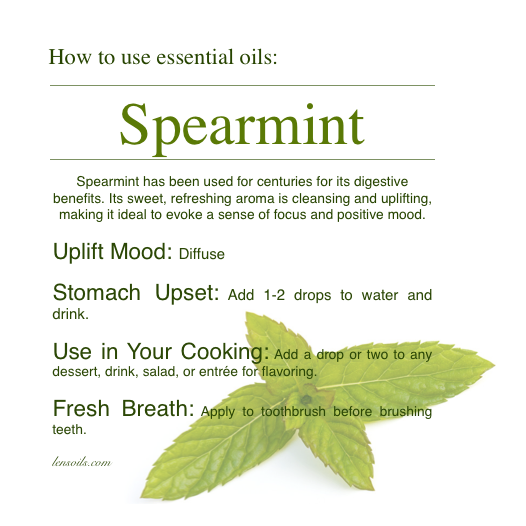
Spearmint is very different from Peppermint, making it a milder option to use on children and those with sensitive skin.
 Len's Oils