Tag Archives: licorice taste

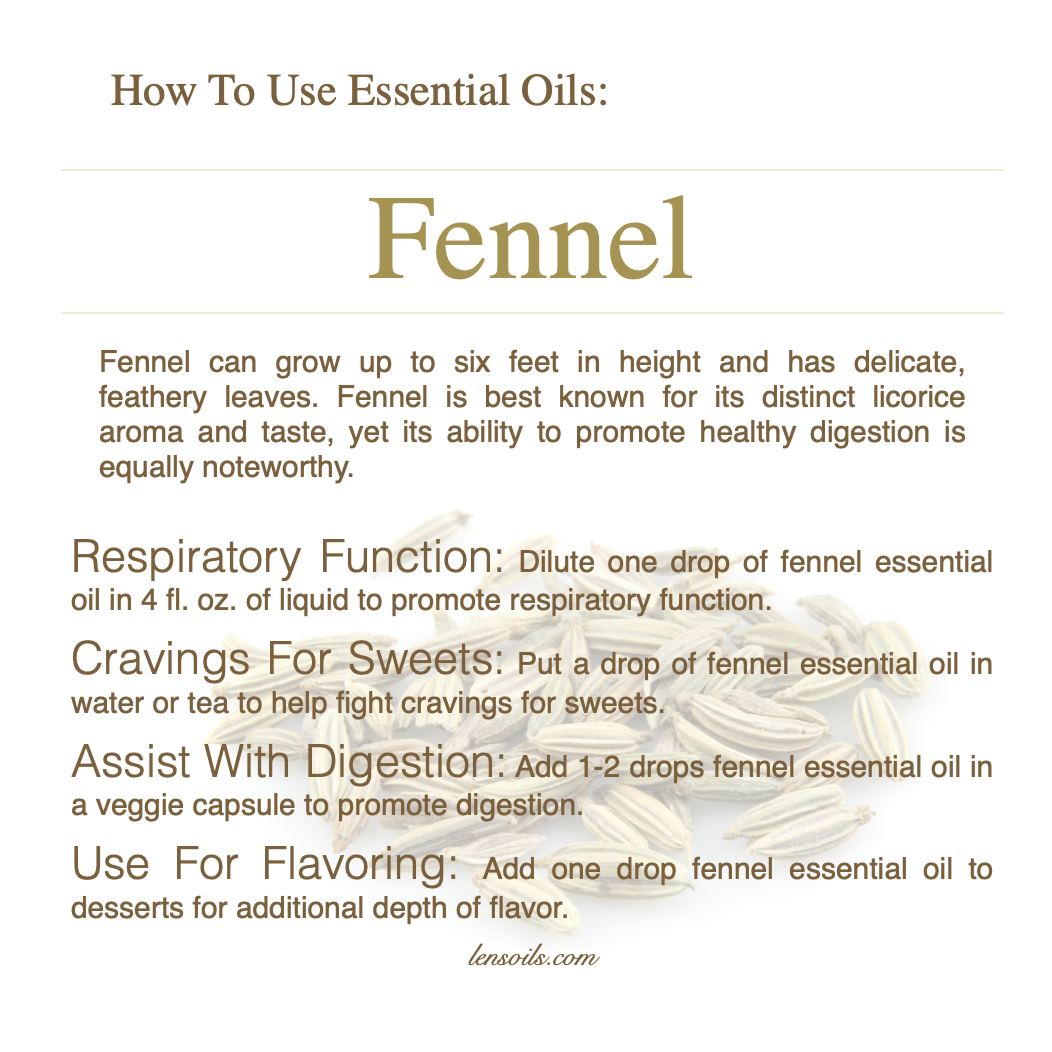
How to Use Essential Oils: Fennel

Fennel essential oil, distilled from the seeds of the Foeniculum  Foeniculum vulgare plant, has a sweet, licorice-like aroma that is both distinctive and soothing. Native to the Mediterranean, fennel has been cherished since ancient times for its culinary and medicinal uses. In essential oil form, its comforting fragrance is often used to promote a sense of calm and balance. Diffused, fennel oil can create a warm, inviting atmosphere that supports relaxation and mental clarity.

Beyond its aromatic qualities, fennel essential oil is often turned to for its digestive-supporting properties. A drop may be added to water (if using food-grade oil) to ease occasional stomach discomfort, or it can be diluted and massaged onto the abdomen as part of a soothing wellness routine. In blends, fennel pairs well with spicy oils like ginger or cardamom to create warming aromas, and with citrus oils such as lemon to add brightness and freshness. Its sweet, herbal profile makes it versatile for both personal care and home use.

Did You Know? In ancient Greece, fennel was associated with courage and strength—its name comes from the Greek word marathon, after a field of fennel where the famous Battle of Marathon took place. The hollow fennel stalk was also said to have been used to carry fire, symbolizing the spread of knowledge and life. Today, fennel continues to be prized not only in Mediterranean cuisine but also in natural wellness practices for its soothing and revitalizing qualities.

Fennel-Did You Know?

Fennel
Did you know fennel essential oil is the oil of responsibility? Fennel supports the person who has a lack of self esteem. This person may feel overwhelmed with life and all the things they are accountable for, having little to zero desire to improve their situation. Fennel is especially important by supporting people to listen and reconnect to the natural messages of the body, where there has been a loss of connection due to emotional eating, severe dieting and even drug abuse.

Fennel can grow up to six feet in height and has delicate, feathery leaves. Most fennel originated in India, Egypt and China. It also dates back to Pliny the Roman author of Naturalis Historie written between 23-79 AD. He used fennel for 22 different ailments. Roman warriors were said to have consumed Fennel to make them strong and ready for battle.

We know King Edward I of England consumed large amounts of fennel because his account book listed a purchase of 8½ pounds. This seed was a one month supply. In the 1300s fennel was used as a condiment and an appetite suppressant. During medieval times, people thought evil spirits could freely move around as the sun moved south. It was thought when fennel was hung over doorways you were protected from the spirits. Fennel seeds inserted into keyholes were thought to protect homes from ghosts especially in the summer.

Fennel is best known for its distinct licorice aroma and taste, yet its ability to ease digestive troubles, and monthly menstrual cycles are equally noteworthy. Fennel can be added to tea to calm the digestive system, as well as the mind and emotions. Fennel can be very soothing when applied to the abdomen during monthly menstrual cycles, and those same properties can lessen the discomfort associated with minor skin irritations. Fennel is also known to support a healthy lymphatic system.