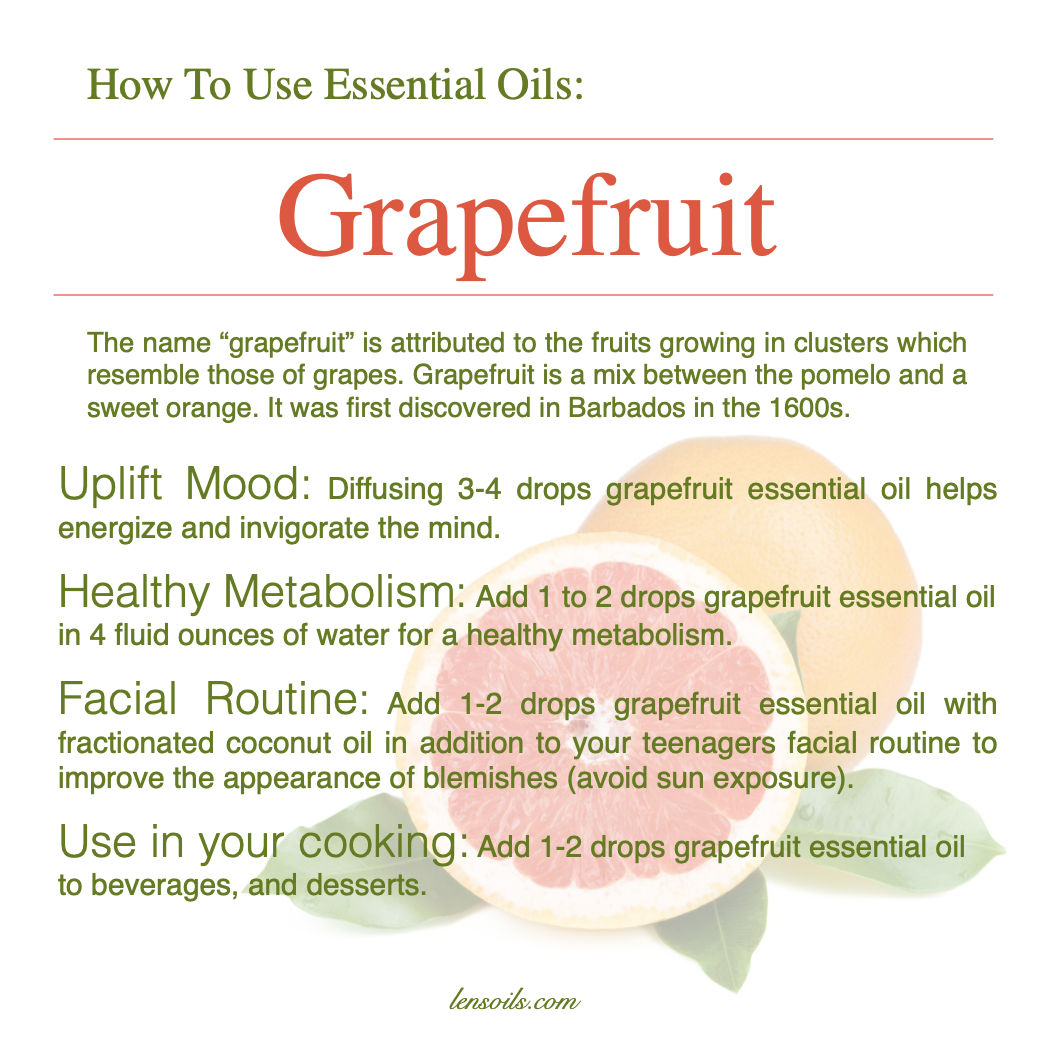
Grapefruit essential oil comes from a bright, citrus fruit that earned its name because it grows in clusters similar to grapes. A natural hybrid of pomelo and sweet orange, grapefruit was first discovered in Barbados in the 1600s and has been appreciated ever since for its fresh, energizing aroma. Diffusing three to four drops can help uplift mood, clear mental fog, and create an invigorating atmosphere that feels light and motivating.
In daily routines, grapefruit essential oil is often used to support a healthy metabolism when a drop or two is added to water. When properly diluted with fractionated coconut oil, it can also be a gentle addition to a facial routine, especially for teenagers looking to improve the appearance of blemishes. Its crisp, tangy flavor makes it a favorite in the kitchen as well, where one or two drops can brighten beverages and desserts. Because grapefruit is photosensitive, topical use should always be followed by avoiding direct sun exposure.
Cedarwood (Cedrus spp.) is a towering evergreen tree native to cold climates, thriving in high altitudes and reaching heights of up to 100 feet. Known for its durability and resilience, cedarwood has been used throughout history in construction, medicine, and spiritual practices. The essential oil, derived from the wood of the tree, carries a rich, grounding aroma that promotes a sense of wellness and vitality. In skincare, adding 1-2 drops of cedarwood essential oil to a facial routine may help promote clear and balanced skin due to its purifying and astringent properties. Additionally, cedarwood is widely used in massage therapy, where 3-4 drops blended with fractionated coconut oilcan provide a calming and muscle-relaxing effect. While historical and anecdotal evidence support these uses, more scientific research is needed to confirm its full range of skin-enhancing and muscle-soothing benefits.
Beyond personal care, cedarwood essential oil is commonly used in aromatherapy to promote relaxation and emotional balance. Adding 3-4 drops to a diffuser can help create a calming environment, particularly after a stressful day. Cedarwood is also known for its insect-repellent properties—placing a drop on a cotton ball and leaving it in a closet may help keep moths at bay. This traditional use is supported by the presence of sesquiterpenes and cedrol, compounds that may have natural insect-deterring effects. However, while cedarwood has been traditionally used as a natural moth repellent, scientific studies on its effectiveness compared to chemical alternatives are still ongoing.
In addition to its well-known uses, cedarwood essential oil has been explored for its potential role in improving sleep quality. Some research suggests that cedrol, a primary component in cedarwood, may have mild sedative effects, which could help support relaxation and restful sleep. Many individuals use cedarwood oil in nighttime diffuser blends or apply a diluted amount to pulse points before bed to encourage a sense of calm. While early findings are promising, more clinical research is needed to confirm its direct impact on sleep disorders or long-term sleep improvement. Regardless, cedarwood essential oil remains a versatile and widely used natural remedy, valued for its aromatic, therapeutic, and protective benefits.
Cedarwood reminds me of being a child and wandering through the Utah, desert as a Boy Scout, many found memories. The smell of burning cedarwood on a camp fire is wonderful.


 Len's Oils