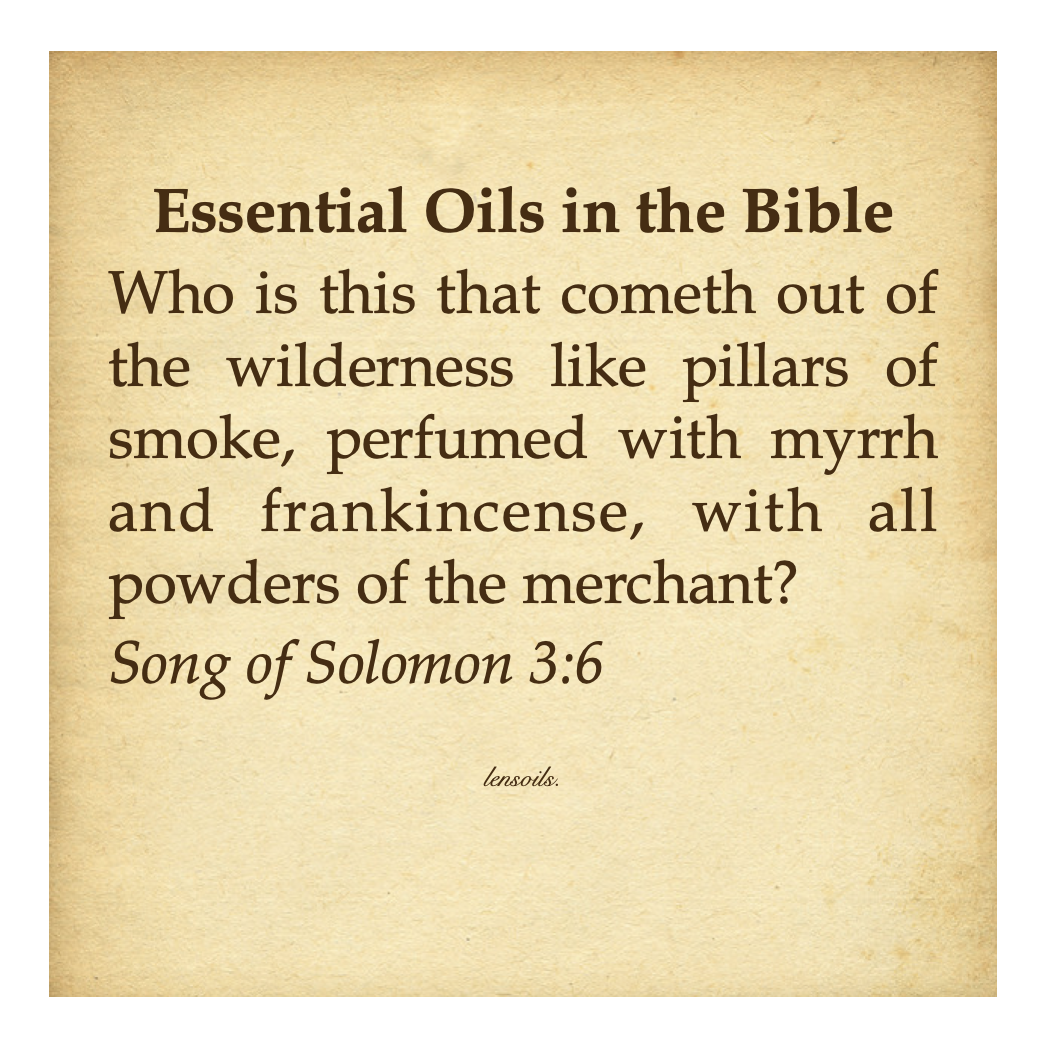
Song of Solomon 3:6 is a vivid and poetic verse describing a grand and majestic arrival, likely referring to King Solomon or a royal bride coming in a splendid procession. The imagery of pillars of smoke and the rich perfume of myrrh and frankincense creates a scene of beauty, luxury, and importance. In biblical times, smoke rising from burning incensewas associated with worship, purification, and divine presence, while perfumes and spices were symbols of wealth, honor, and preparation for sacred moments. This verse paints a picture of someone emerging from the wilderness in glory, transformed and ready for a royal or spiritual union.
The mention of myrrh and frankincense connects deeply to essential oils and natural resins that were highly prized in ancient Israel. Myrrh, a resin with a deep, rich scent, was used for anointing, healing, and embalming, often symbolizing sacrifice and devotion. Frankincense, known for its uplifting aroma, was used in temple worship and prayers, representing purification and connection with God. These oils were some of the most valuable traded commodities, associated with kingship, holiness, and sacred moments. The phrase “all powders of the merchant”suggests an abundance of rare and exotic spices, reinforcing the image of splendor, preparation, and divine blessing.
For us today, Song of Solomon 3:6 reminds us of the beauty of spiritual preparation. Just as the procession was perfumed and adorned, we are called to prepare our hearts and lives for our relationship with God. The use of essential oils in this verse symbolizes purification, worship, and devotion, teaching us to bring our best—our love, faith, and obedience—before the Lord. This passage also reflects the idea of transformation, where one emerges from the wilderness refined, prepared, and ready for something greater. It is a powerful reminder that our spiritual journey is one of beauty, fragrance, and purpose in God’s presence.
 Len's Oils