Story 1 of 10 — Marking 250 Years of American Freedom
Printing Courage in a Season of Doubt
January 10, 1776 became clear when the pamphlet Common Sense was published in Philadelphia by Thomas Paine. Written in plain language, it argued that monarchy was unjust and that independence was not only possible, but necessary. The colonies were already at war, yet independence had not been declared, and many people still hoped for reconciliation with Britain. Fear and uncertainty shaped daily life, and unity remained fragile.
During these winter weeks, printed words became one of the most powerful tools available. Pamphlets, broadsides, and newspapers carried arguments, warnings, and appeals across colonial towns. Printing presses worked long hours despite shortages of paper, ink, and money. Printers understood that what they produced could influence public opinion, even as it placed them under scrutiny.
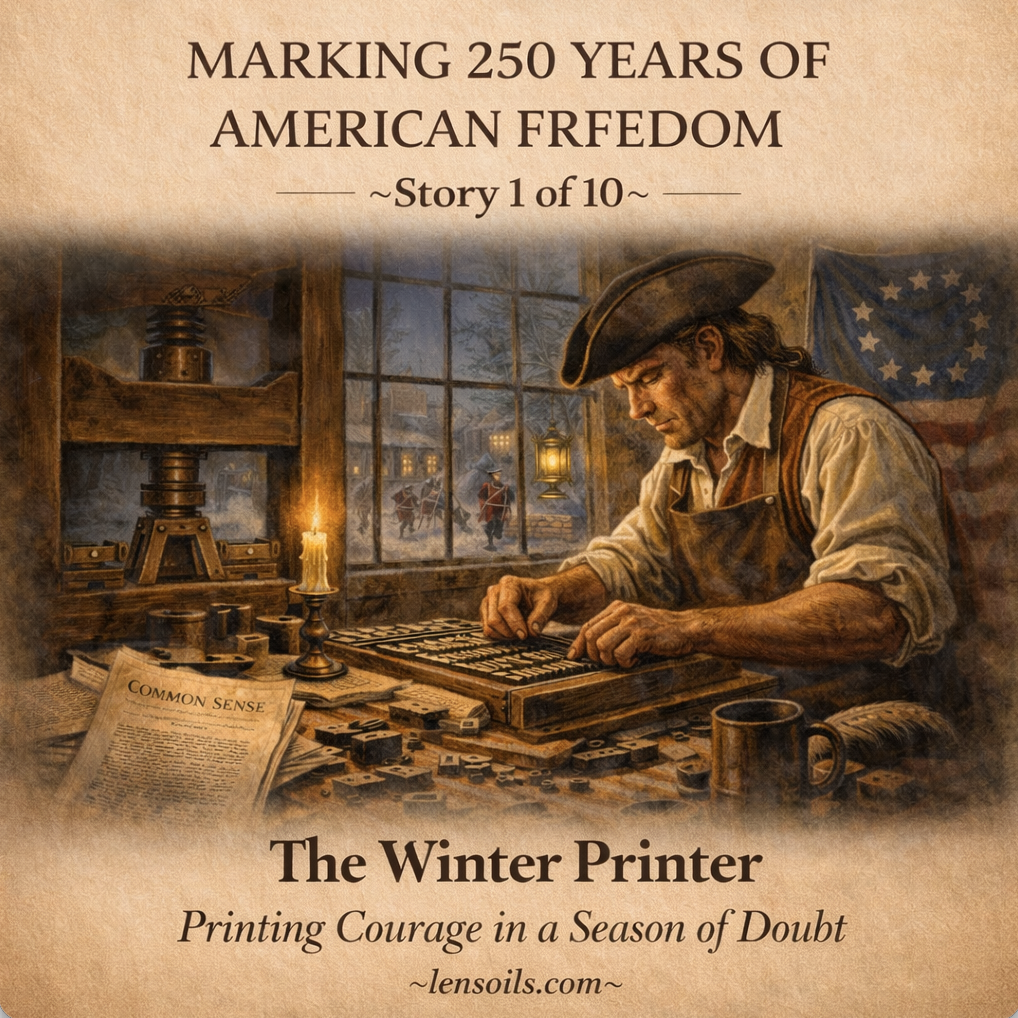
One such printer worked late into the night, setting type by hand in a cold shop lit by candles. British patrols still moved through nearby streets, and printing political material carried real risk. Yet presses continued to run, producing pamphlets that called for shared purpose rather than submission or fear. These pages did not promise victory. They asked readers to consider responsibility.
The words traveled far beyond the city. Farmers read them by firelight, shopkeepers shared them with customers, and soldiers passed them between camps. Many readers had never seen the members of Congress or spoken with colonial leaders. What reached them instead were ideas—arguments about liberty, self-rule, and the cost of hesitation.
At the time, these printed appeals did not create immediate agreement. Colonies remained divided, and opinions shifted slowly. But the steady circulation of ideas helped establish a common language. Even among disagreement, people began to recognize shared concerns and shared risks. Unity, when it appeared, did so gradually.
This period shows that independence did not advance only through declarations or battles. It also moved through quiet, persistent effort by ordinary people willing to act without certainty. Long before July 1776, freedom was carried forward by those who chose truth over comfort, even when the outcome was unknown.
What happened in those winter print shops did not resolve the colonies’ disagreements, but it made honest debate unavoidable. Words carried responsibility before freedom carried celebration. Long before independence was declared, people were already practicing it by choosing to think, question, and speak for themselves. That quiet discipline, repeated day after day, prepared a divided people to face the harder decisions still ahead.
References
David McCullough, 1776
Thomas Paine, Common Sense (1776), Library of Congress
Pauline Maier, American Scripture: Making the Declaration of Independence
These stories are grounded in documented historical events and primary sources, with limited interpretive synthesis used to connect facts and reflect lived experience where the historical record does not capture every detail.
 Len's Oils