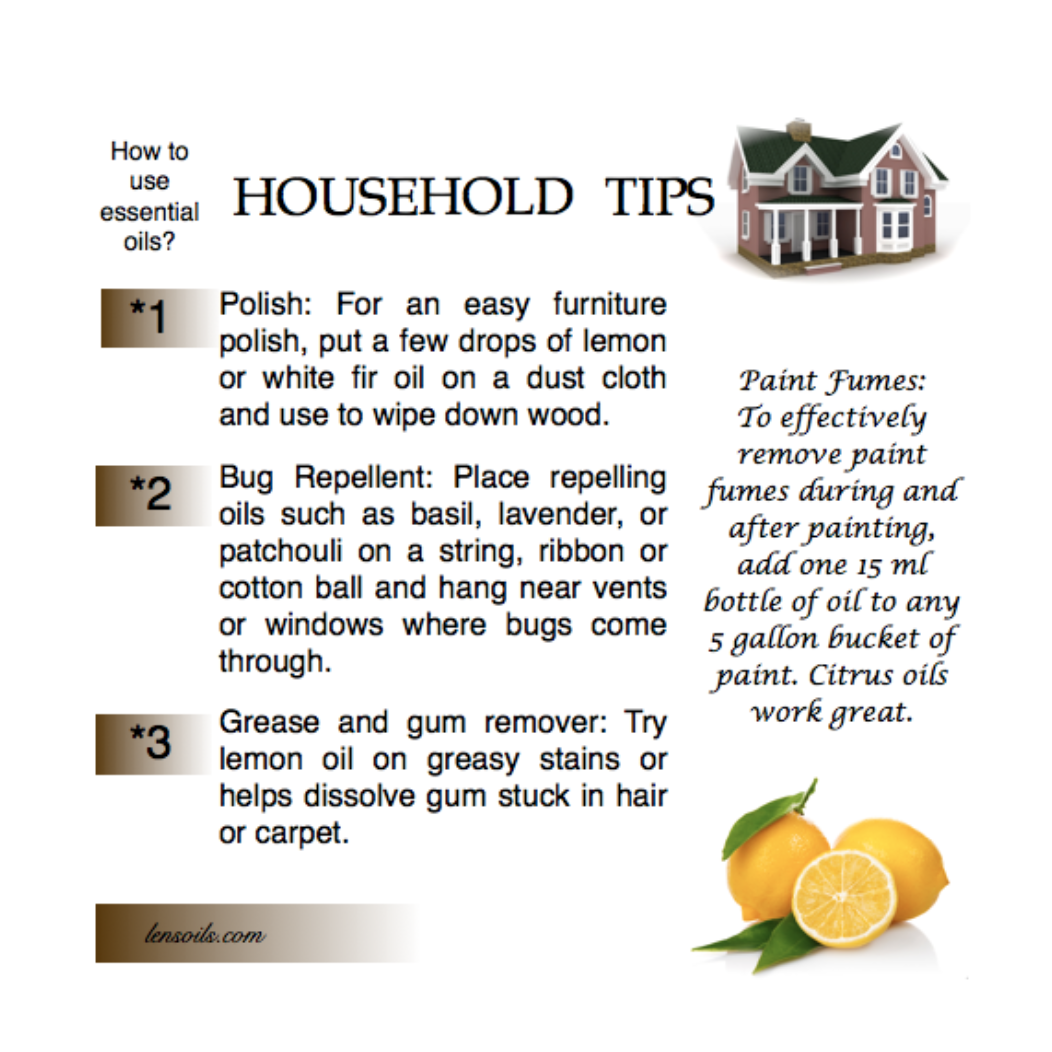
Essential oils can be a powerful addition to household cleaning and maintenance routines. One of the easiest ways to incorporate them is by using them as a natural furniture polish. Simply add a few drops of lemon or white fir oil to a dust cloth and wipe down wooden surfaces to bring out their shine and leave behind a fresh, clean scent. Essential oils also work well as grease and gum removers—applying a few drops of lemon oil to greasy stains on surfaces or fabric can break down stubborn residue. It can even help dissolve gum stuck in hair or carpet without the need for harsh chemicals.
Another practical household use for essential oils is to reduce paint fumes during and after painting. Adding one 15ml bottle of citrus essential oil—such as lemon or orange—to a five-gallon bucket of paint can help neutralize strong odors while also adding a subtle, refreshing scent to the space. Citrus oils work especially well in this application, as they have natural air-purifying properties. Additionally, essential oils can serve as a natural bug repellent. Placing a few drops of basil, lavender, or patchouli oil on a string, ribbon, or cotton ball and hanging it near vents, doors, or windows can help keep insects from entering the home.
An often-overlooked use of essential oils in the home is their ability to eliminate stubborn odors from kitchen surfaces. A few drops of eucalyptus or tea tree oil mixed with baking soda can be sprinkled onto cutting boards, garbage disposals, or even inside the trash can to neutralize lingering smells. Letting the mixture sit for a few minutes before wiping or rinsing it away ensures a fresh, clean scent throughout the kitchen. By incorporating essential oils into everyday household tasks, homeowners can enjoy a more natural, chemical-free approach to cleaning and maintenance.
 Len's Oils