Tag Archives: Congress

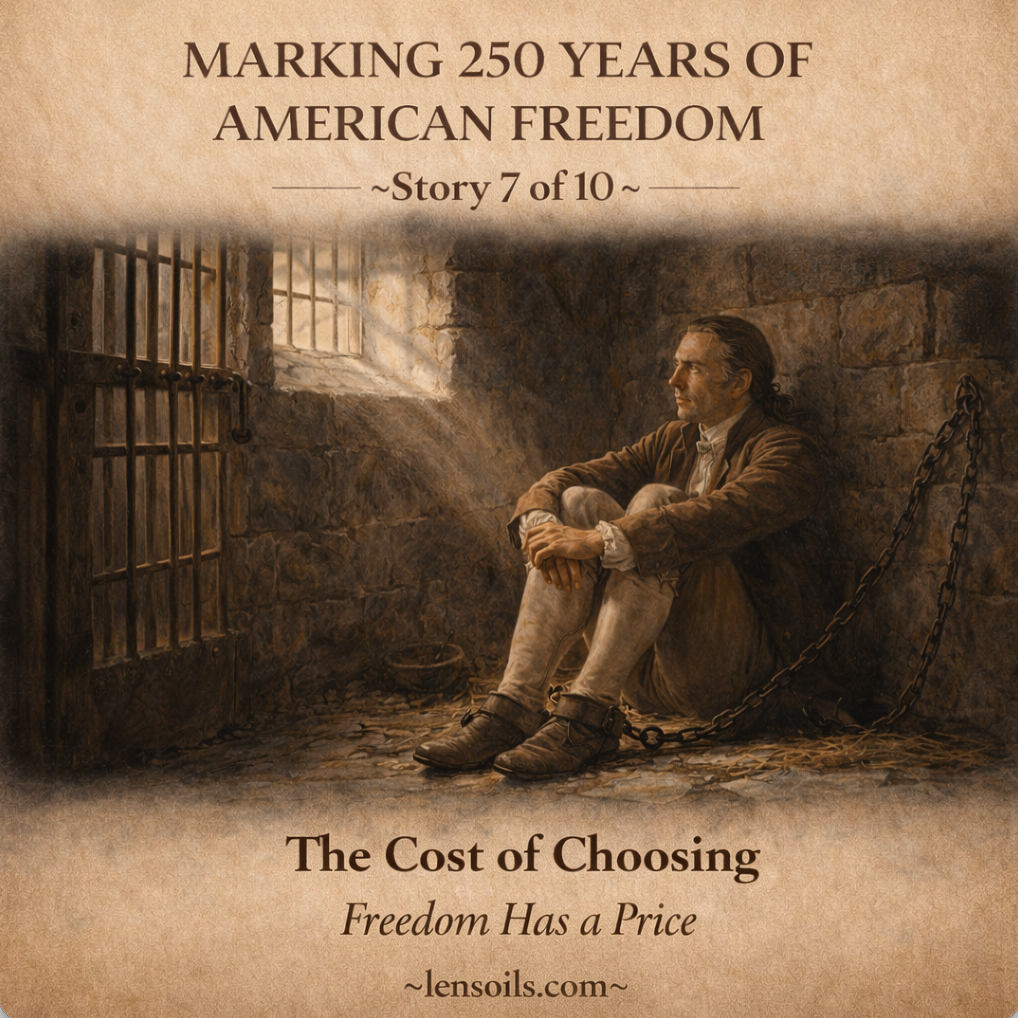
The Cost of Choosing

Story 7 of 10 — marking 250 years of American freedom
Freedom Has a Price

On June 18, 1776, the consequences of independence were no longer theoretical. Fighting with Britain had already begun, and news of the proposed break spread steadily through the colonies. For many Americans, the question was no longer whether independence sounded right, but whether they were prepared to live with what it would cost.

Choosing independence meant accepting loss. Trade networks tied to Britain faced collapse. Families risked property seizure, imprisonment, or exile for supporting the Revolutionary cause. Loyalists feared retaliation, while Patriots understood that failure would be punished as treason. Neutrality became increasingly difficult as pressure mounted from both sides.

Economic uncertainty weighed heavily on daily life. Ports slowed, currency fluctuated, and shortages became common. Farmers, merchants, and craftsmen were forced to plan for instability rather than growth. Independence promised freedom, but it also demanded endurance through hardship without guarantees of success.

Political choice also carried moral weight. Supporting independence required individuals to accept responsibility for collective outcomes, not just personal belief. Colonists understood that decisions made in assemblies and Congress would shape lives far beyond the moment. Freedom would not arrive without obligation, discipline, and sacrifice.

Leaders in Congress faced the same reality. Debate continued, not because delegates doubted the ideals of independence, but because they understood the stakes. Declaring independence meant committing future generations to defend and sustain it. The cost would not end with the declaration itself.

For many, the cost of independence was not abstract or distant. It appeared in difficult conversations, strained relationships, and decisions that could not be undone. Supporting independence meant choosing a side in a conflict that reached into homes and communities. Even those who believed the cause was just understood that unity would come at the price of personal security and long-held stability.

This moment reminds us that freedom is never free of consequence. Independence required Americans to choose responsibility over comfort and resolve over certainty. The nation moved forward not because the cost was low, but because the cost was understood and accepted.


References

  • Journals of the Continental Congress, June 1776
  • Pauline Maier, From Resistance to Revolution
  • Gordon S. Wood, The Radicalism of the American Revolution

These stories are grounded in documented historical events and primary sources, with limited interpretive synthesis used to connect facts and reflect lived experience where the historical record does not capture every detail.
Restraint Is Strength

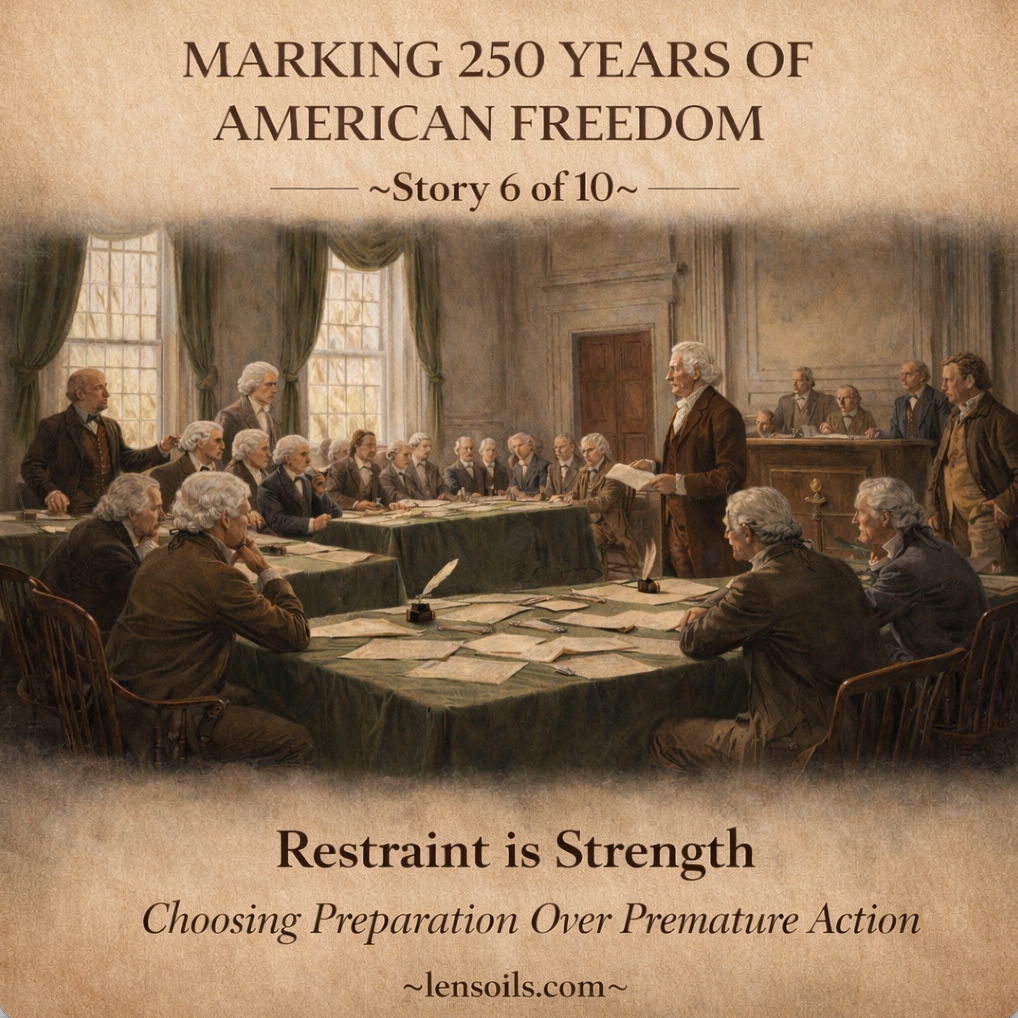
Story 6 of 10 — Marking 250 Years of American Freedom
Choosing Preparation Over Premature Action

On June 11, 1776, the Continental Congress reached a moment of careful restraint. Just days after independence had been openly proposed, delegates chose not to rush toward a final vote. The colonies remained divided, and unity was not yet secure. Instead of forcing a decision that might fracture the effort, Congress paused and redirected its energy toward preparation.

That day, Congress appointed a small drafting group later known as the Committee of Five. Thomas Jefferson, John Adams, Benjamin Franklin, Roger Sherman, and Robert Livingston were tasked with preparing a formal declaration explaining why independence might be necessary. The decision to begin drafting did not mean independence was guaranteed. It meant Congress was willing to prepare for an outcome it was not yet ready to declare.

This choice reflected discipline under pressure. Delegates understood that delay carried risks, but so did acting too quickly. Several colonies had not received final instructions from their assemblies. Others remained internally divided. A premature vote could weaken support and invite failure before the colonies were fully committed.

The act of drafting while debate continued allowed Congress to hold disagreement without collapse. It created space for persuasion, negotiation, and instruction to flow back and forth between Philadelphia and the colonies. Preparation became a stabilizing force, keeping the process moving forward without forcing unity that did not yet exist.

This period required restraint not only from leaders, but from the broader public. News of independence proposals stirred anxiety and expectation. Yet no declaration was announced. The absence of immediate action reflected an understanding that independence, if claimed, would need clarity, justification, and shared commitment to endure.

What happened on June 11 shows that restraint was not hesitation or fear. It was a form of strength. Congress chose responsibility over momentum, structure over impulse. By preparing the explanation before final agreement, leaders protected the legitimacy of the decision still to come.

This moment reminds us that enduring change often requires patience before proclamation. Independence was not secured by speed, but by discipline. The ability to hold tension, continue working, and prepare carefully allowed the colonies to move forward together when the time was right.


References

  • Journals of the Continental Congress, June 11, 1776
  • Pauline Maier, American Scripture: Making the Declaration of Independence
  • Gordon S. Wood, The Creation of the American Republic, 1776–1787

These stories are grounded in documented historical events and primary sources, with limited interpretive synthesis used to connect facts and reflect lived experience where the historical record does not capture every detail.

I Love America

American FlagAs long as I can remember I have loved the U.S.A. I am proud to be an American. I have grown up respecting the flag, especially when the flag is passing by in a parade, my hand goes over my heart with pride. I also honor and respect our elected and public officials even if I didn’t vote for them.

Recently I feel a shift in how people are respecting our country. I think the American people’s love and honor for this country is in direct proportion to the way the President and congress love and respect the American people.

You can’t blame any political party. I love Thomas Jefferson who said a government that governs least governs best. We need to remove entitlements. When a nation grows up with several generations of people that have grown up with entitlements, receiving something for nothing this is when you will see an America that is respected less by her own people and other countries around the world.

One of our greatest blessings living in America is our freedom. I am so grateful for everyone who has helped keep us free in this wonderful country. Lets keep America great.