
Tag Archives: John Adams

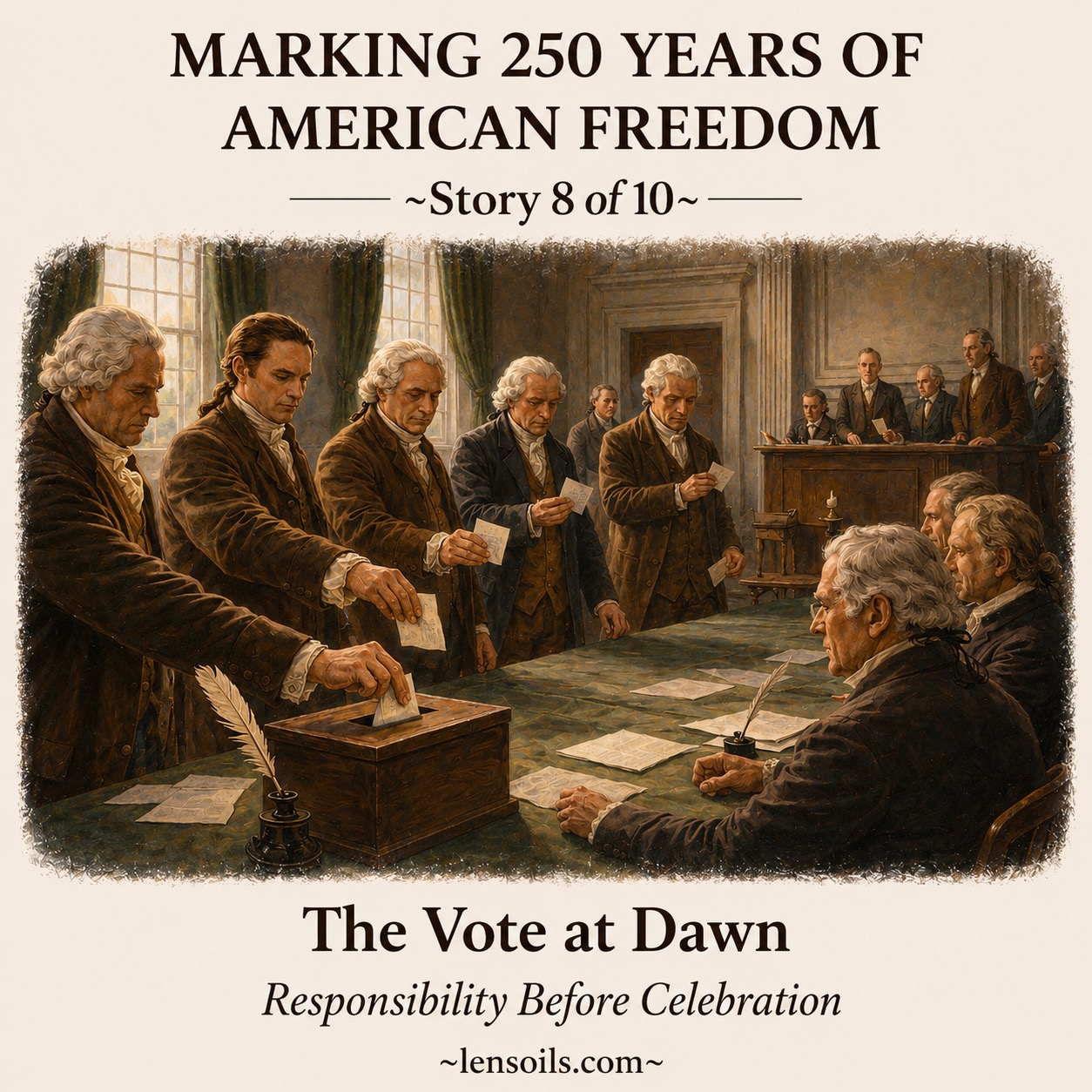
The Vote at Dawn

Story 8 of 10 — Marking 250 Years of American Freedom
Responsibility Before Celebration

July 2, 1776 began without ceremony. In Philadelphia, delegates to the Continental Congress gathered knowing the day would carry lasting consequences. After weeks of debate, postponement, and revision, the colonies were prepared to decide whether to formally break from Britain. The choice before them was not symbolic. It would commit every colony to a path that could not be reversed.

The vote was not unanimous. Several delegations remained divided, and some delegates were absent or undecided. New York, constrained by instructions from home, abstained. Others voted in favor while privately questioning whether their colonies were prepared for what independence would require. The motion passed not because all were confident, but because delay carried its own danger.

There was no public celebration that day. Congress understood that declaring independence meant accepting responsibility for war, diplomacy, debt, and governance. Victory was uncertain, and failure would bring severe consequences. The decision did not ease fear so much as it clarified obligation.

That same day, Congress continued its work. Committees met, correspondence was drafted, and preparations began to explain the decision to the colonies and to foreign powers. Attention shifted from whether independence should happen to how it would be justified, defended, and sustained. The burden of proof now rested with the new nation.

Outside Congress, most colonists were unaware that the vote had taken place. Soldiers remained in the field, families endured shortages, and daily life continued under strain. Independence did not immediately change circumstances. It changed direction, narrowing the range of possible outcomes.

This moment reveals the Revolution at its most serious. Independence was not claimed with excitement or certainty. It was accepted with restraint and discipline. Delegates understood that freedom demanded accountability before it offered hope.

July 2 reminds us that independence did not begin with celebration. It began with responsibility. Before declarations were read aloud or bells were rung, leaders chose obligation over comfort. The nation was shaped in a moment of resolve, when the weight of the future mattered more than the thrill of the moment.


References

  • Continental Congress , July 2, 1776
  • John Adams, Letters to Abigail Adams, July 1776
  • American Scripture: Making the Declaration of Independence

These stories are grounded in documented historical events and primary sources, with limited interpretive synthesis used to connect facts and reflect lived experience where the historical record does not capture every detail.

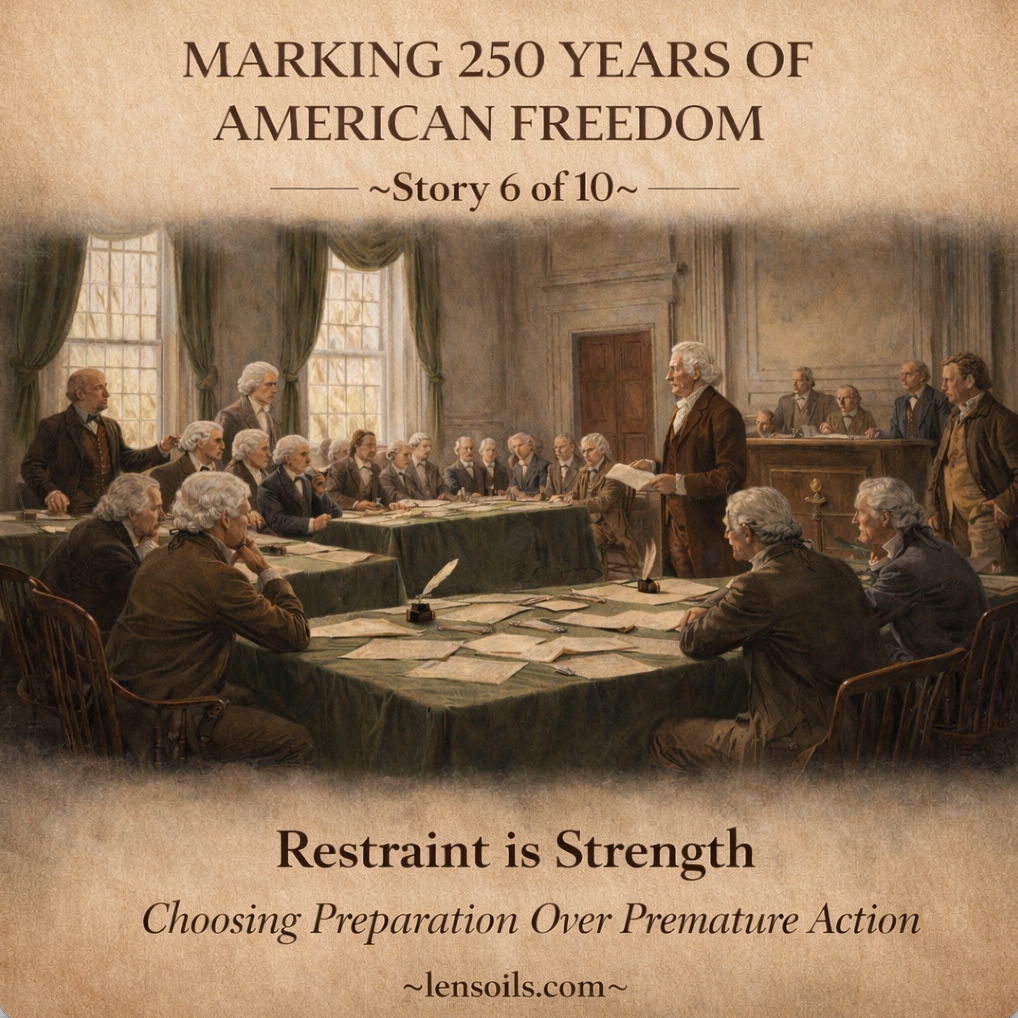
Restraint Is Strength

Story 6 of 10 — Marking 250 Years of American Freedom
Choosing Preparation Over Premature Action

On June 11, 1776, the Continental Congress reached a moment of careful restraint. Just days after independence had been openly proposed, delegates chose not to rush toward a final vote. The colonies remained divided, and unity was not yet secure. Instead of forcing a decision that might fracture the effort, Congress paused and redirected its energy toward preparation.

That day, Congress appointed a small drafting group later known as the Committee of Five. Thomas Jefferson, John Adams, Benjamin Franklin, Roger Sherman, and Robert Livingston were tasked with preparing a formal declaration explaining why independence might be necessary. The decision to begin drafting did not mean independence was guaranteed. It meant Congress was willing to prepare for an outcome it was not yet ready to declare.

This choice reflected discipline under pressure. Delegates understood that delay carried risks, but so did acting too quickly. Several colonies had not received final instructions from their assemblies. Others remained internally divided. A premature vote could weaken support and invite failure before the colonies were fully committed.

The act of drafting while debate continued allowed Congress to hold disagreement without collapse. It created space for persuasion, negotiation, and instruction to flow back and forth between Philadelphia and the colonies. Preparation became a stabilizing force, keeping the process moving forward without forcing unity that did not yet exist.

This period required restraint not only from leaders, but from the broader public. News of independence proposals stirred anxiety and expectation. Yet no declaration was announced. The absence of immediate action reflected an understanding that independence, if claimed, would need clarity, justification, and shared commitment to endure.

What happened on June 11 shows that restraint was not hesitation or fear. It was a form of strength. Congress chose responsibility over momentum, structure over impulse. By preparing the explanation before final agreement, leaders protected the legitimacy of the decision still to come.

This moment reminds us that enduring change often requires patience before proclamation. Independence was not secured by speed, but by discipline. The ability to hold tension, continue working, and prepare carefully allowed the colonies to move forward together when the time was right.


References

  • Journals of the Continental Congress, June 11, 1776
  • Pauline Maier, American Scripture: Making the Declaration of Independence
  • Gordon S. Wood, The Creation of the American Republic, 1776–1787

These stories are grounded in documented historical events and primary sources, with limited interpretive synthesis used to connect facts and reflect lived experience where the historical record does not capture every detail.