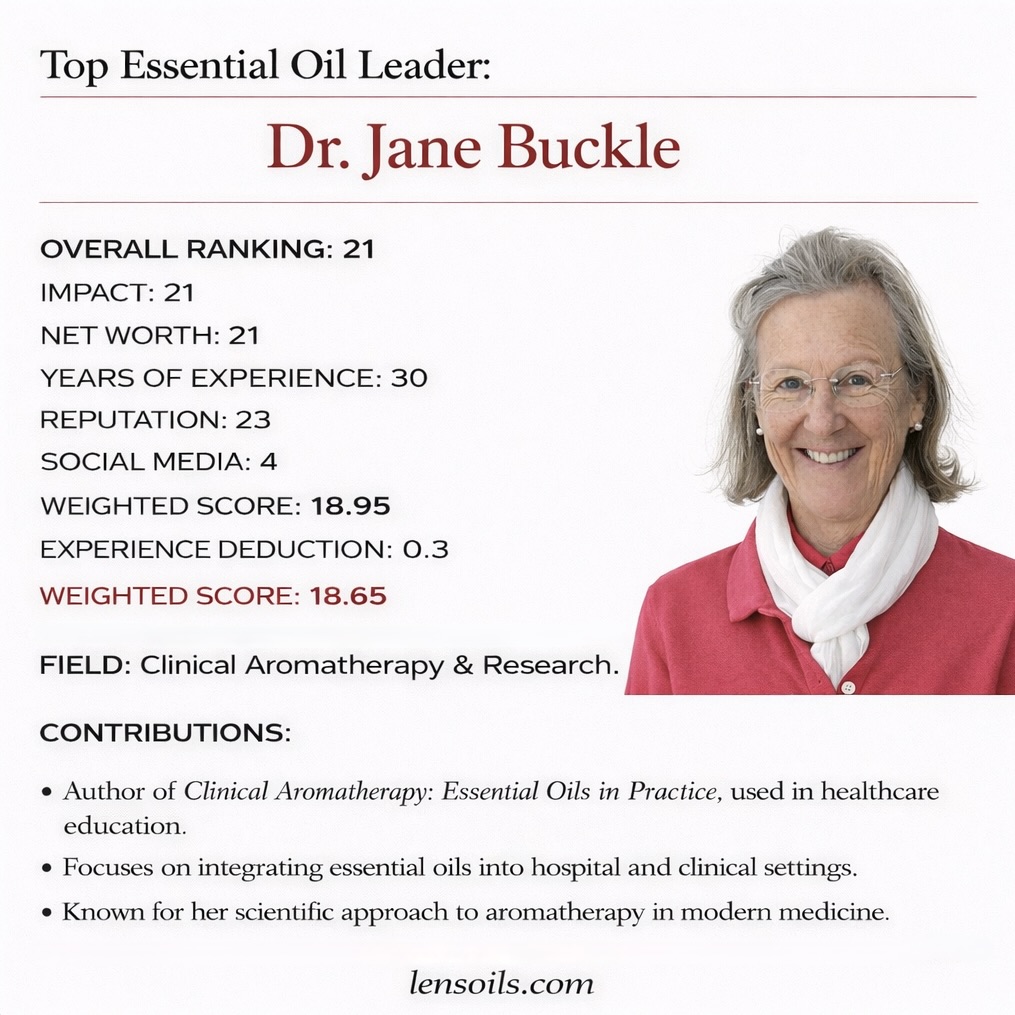
Jane Buckle is widely recognized as a pioneering figure in clinical aromatherapy, particularly for her work bridging essential oils with modern healthcare practice. With more than 30 years of experience, she has played a key role in establishing aromatherapy as a credible complementary approach within medical and clinical environments, emphasizing evidence, safety, and professional accountability.
Dr. Buckle is best known as the author of Clinical Aromatherapy: Essential Oils in Practice, a foundational text used in nursing, hospice, and integrative medicine education. The book is valued for its clear presentation of research, clinical case examples, and practical guidance on using essential oils in healthcare settings. It is frequently referenced by educators and practitioners seeking a science-informed framework rather than anecdotal or purely traditional use.
Her professional focus has centered on integrating essential oils into hospitals, palliative care, and symptom-management programs. Dr. Buckle has worked closely with healthcare professionals to demonstrate how aromatherapy may support patient comfort, stress reduction, and quality of life when used appropriately. This clinical emphasis helped shift aromatherapy discussions from wellness-only spaces into conversations that include nurses, physicians, and administrators.
Dr. Buckle is also known for her rigorous, research-oriented approach to aromatherapy. She has consistently advocated for peer-reviewed studies, standardized protocols, and ethical practice. By encouraging collaboration between researchers and clinicians, she helped lay groundwork for broader acceptance of aromatherapy within integrative medicine models, even in settings that traditionally viewed essential oils with skepticism.
Beyond her published research and clinical advocacy, it is reasonable to say that Dr. Buckle’s long-term influence lies in how she changed expectations within the field. Many practitioners credit her with demonstrating that aromatherapy can coexist with modern medicine without abandoning scientific standards. Her legacy likely rests not only in her writings, but in helping aromatherapy mature into a discipline capable of thoughtful dialogue with healthcare systems worldwide.
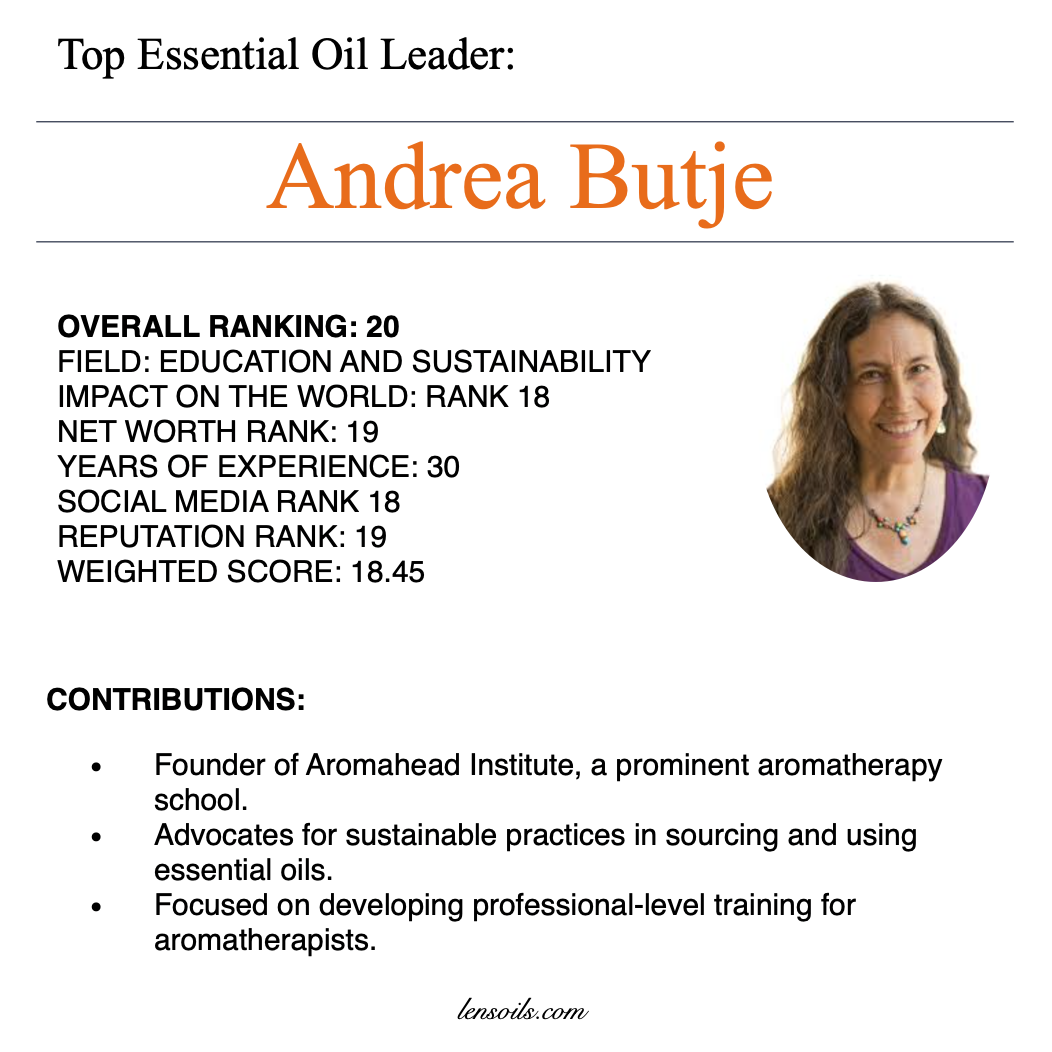
Andrea Butje is widely regarded as one of the most influential leaders in professional aromatherapy education, with more than 30 years of experience in the field. Her work has helped shape modern standards for how essential oils are taught, sourced, and responsibly used, particularly within structured educational and professional settings.
She is the founder of the Aromahead Institute, a prominent aromatherapy school known for its rigorous curriculum and strong emphasis on safety and evidence-based practice. Under her leadership, Aromahead has become a trusted educational resource for students around the world, offering programs that blend essential oil chemistry, anatomy and physiology, and practical application. The institute is especially respected for maintaining high professional standards within aromatherapy education.
Education is central to Andrea’s contributions, particularly her focus on developing professional-level training for aromatherapists. Her courses are designed to prepare students for real-world application rather than casual or recreational use. This approach has helped many practitioners gain confidence, credibility, and a deeper understanding of essential oils within wellness and healthcare-adjacent environments.
Andrea is also a strong advocate for sustainability in the essential oil industry. She has consistently emphasized ethical sourcing, environmental responsibility, and transparency in how oils are produced and distributed. By highlighting the connection between plant health, ecosystem balance, and human wellness, she has encouraged practitioners to think beyond individual use and consider the broader global impact of aromatherapy.
Beyond her formal programs and advocacy, Andrea’s influence is reflected in her long-standing reputation within the aromatherapy community. Many students and professionals credit her with shaping their commitment to integrity, responsibility, and lifelong learning. Her work suggests a lasting legacy built not only on education and sustainability, but on fostering a thoughtful and conscientious generation of aromatherapists worldwide.
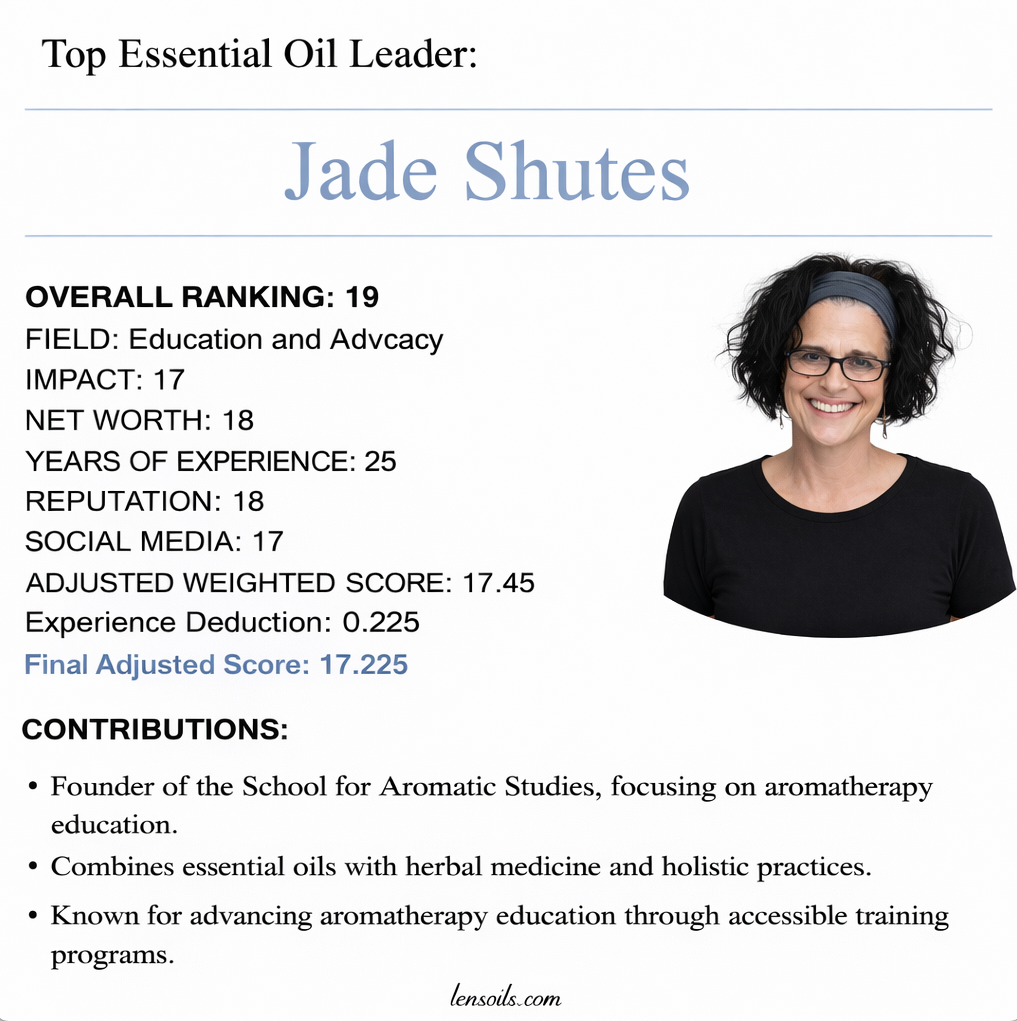
Jade Shutes is widely recognized as a leading authority in professional aromatherapy, with more than 25 years of experience shaping how essential oils are studied and responsibly applied. Her work has consistently emphasized safety, scientific understanding, and ethical practice, helping elevate aromatherapy from casual use into a disciplined and respected field.
She is the founder and director of the School for Aromatic Studies, an internationally respected institution dedicated to comprehensive aromatherapy education. Through this school, Jade has developed structured programs that address essential oil chemistry, anatomy and physiology, safety guidelines, and professional standards. These courses serve students worldwide, including practitioners seeking both foundational knowledge and advanced professional training.
Education also plays a central role in Jade’s published works, which are widely used as teaching resources. Her books include Aromatherapy for Bodyworkers, which focuses on practical and safe application for massage and manual therapies; The Carrier Oil Palette, an in-depth examination of carrier oils and their therapeutic roles; and The Ultimate Guide to Aromatherapy, which presents a structured, educational overview of essential oils for informed use. Together, these works support both classroom learning and independent study.
Across her teaching and writing, Jade consistently integrates aromatherapy with herbal medicine and holistic health traditions. She presents essential oils as supportive tools within a broader system of plant-based care rather than as isolated solutions. This balanced approach has helped aromatherapy gain credibility among educators, wellness professionals, and students seeking thoughtful, evidence-informed instruction.
Beyond her formal credentials and publications, Jade’s long-term influence is reflected in the practitioners she has trained and mentored. Many students credit her with shaping not only their technical skills but also their critical thinking and ethical approach. Her legacy is seen in a generation of aromatherapists who practice with discernment, responsibility, and deep respect for the plants they study and use.
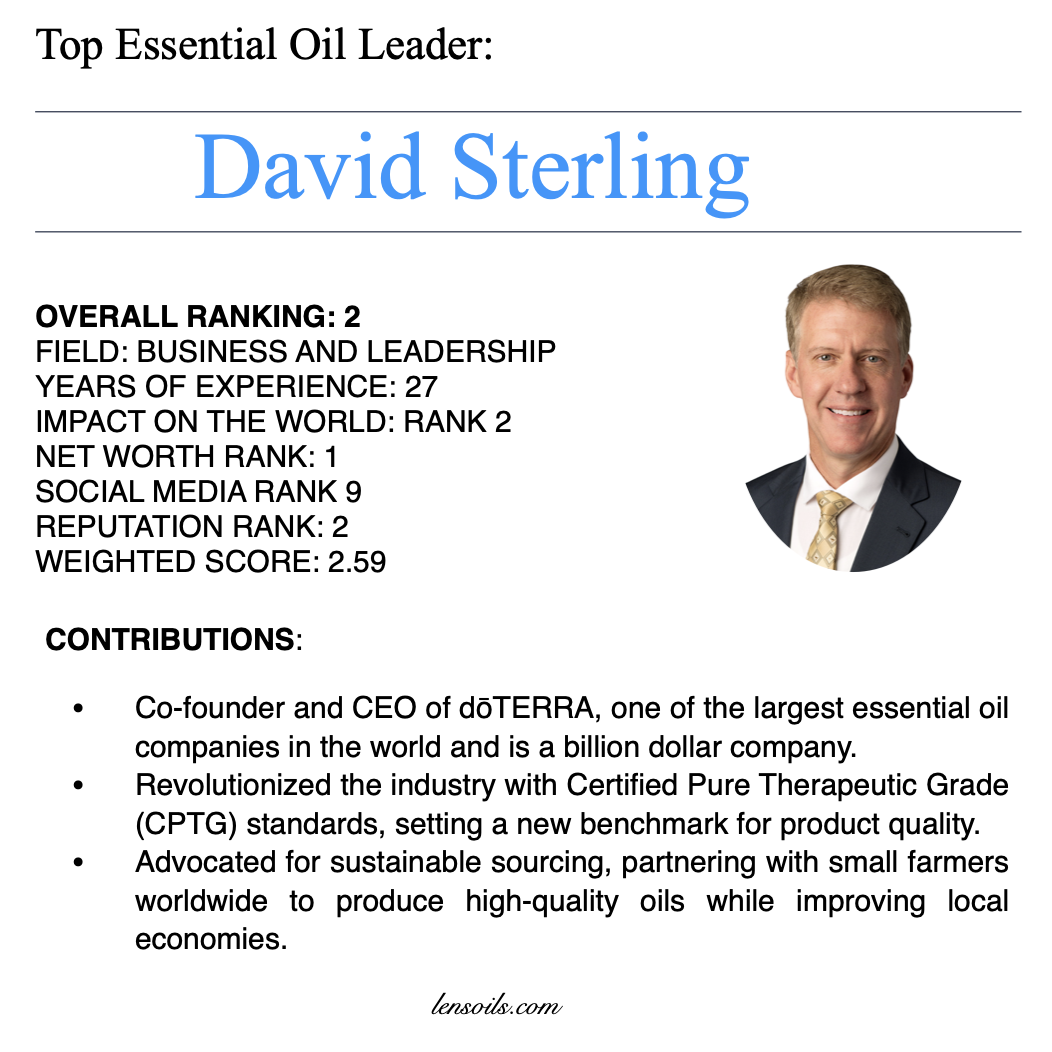
David Stirling, co-founder of dōTERRA is a visionary leader whose work has revolutionized the essential oils industry. Born in 1962, Stirling’s career began in business and product development, where he honed his skills in creating effective systems for quality assurance and sustainable growth. His background in health and wellness industries laid a strong foundation for his later contributions to the essential oils market.
In 2008, Stirling and a group of seven co-founders launched dōTERRA, aiming to create a company that redefined how essential oils were sourced, processed, and marketed. Dissatisfied with the inconsistencies in the industry, they focused on delivering high-quality, therapeutic-grade essential oils to consumers worldwide. The company’s name, derived from the Latin for “Gift of the Earth,” reflects Stirling’s belief in the natural healing power of plants.
Stirling’s key innovation was the introduction of Certified Pure Therapeutic Grade® (CPTG) standards, a rigorous quality assurance process that ensures each bottle of oil is free from contaminants and adulteration. This commitment to purity and potency has set a new benchmark in the essential oils industry, allowing dōTERRA to stand out as a trusted leader in a competitive market.
Under Stirling’s guidance, dōTERRA also pioneered Co-Impact Sourcing®, a program that emphasizes ethical and sustainable sourcing practices. By partnering directly with farmers and distillers in over 45 countries, dōTERRA ensures fair wages, improved working conditions, and long-term community support. This approach not only strengthens the company’s supply chain but also uplifts the lives of those involved, making Stirling a key advocate for corporate social responsibility.
Stirling’s leadership has taken essential oils from niche products to mainstream wellness tools. He has driven widespread consumer education about the benefits of essential oils, integrating them into homes, healthcare systems, and wellness practices worldwide. His focus on research has also contributed to the growing body of scientific evidence supporting the therapeutic uses of essential oils, bridging the gap between natural remedies and modern medicine.
In 2022, Stirling took a step back from his day-to-day responsibilities at dōTERRA to dedicate himself to a deeply personal mission. Together with his wife, Laura, he embarked on a three-year volunteer assignment as a mission president for The Church of Jesus Christ of Latter-day Saints. The Stirlings are serving in Fresno, California, where they oversee and mentor hundreds of young missionaries aged 18 to 25. Their role involves not only spiritual guidance but also providing practical life skills and emotional support to these missionaries as they serve communities and grow in their own journeys of faith.
This time of service reflects Stirling’s lifelong dedication to helping others thrive. The leadership, empathy, and vision he demonstrates in his mission work mirror the qualities that propelled dōTERRA to global success. His ability to inspire and empower the next generation—whether in business or in faith—has been a defining characteristic of his career. While he has stepped back from daily operations, Stirling’s influence is still felt at dōTERRA, as the culture of innovation and integrity he established continues to guide the company.
Even during his time away, Stirling’s legacy with dōTERRA remains vibrant. The company, now a global leader, boasts millions of wellness advocates and customers across the world. Under Stirling’s direction, DoTERRA expanded its offerings to include over 100 essential oils, along with supplements, skincare products, and home care solutions. Annual conventions attract tens of thousands of participants, a testament to the vibrant community he helped create.
David Stirling remains a driving force behind dōTERRA’s enduring mission and values. Though his focus is currently on his church mission, his influence within the essential oils industry remains undeniable. By fostering relationships between dōTERRA and global communities, he ensured the company’s growth was tied to making a positive impact worldwide.
David Stirling’s story is one of vision, faith, and unwavering dedication to service. From revolutionizing an industry to uplifting individuals in business and personal growth, he has left a mark that extends far beyond essential oils. Today, as he serves with his wife in Fresno, he continues to embody the principles of compassion, integrity, and purpose that have defined his life’s work. His ability to lead with vision and heart makes him not only a pioneer in his field but also a source of inspiration for all who seek to make a meaningful impact in the world
René-Maurice Gattefossé, born in 1881 in Montchat, Lyon, France, was a French chemist whose pioneering work laid the foundation for modern aromatherapy. Raised in a family of perfumers, Gattefossé grew up surrounded by the scents and intricacies of essential oils. This environment cultivated his early fascination with chemistry and the natural properties of plant extracts. After earning his degree in chemical engineering, he began working in his family’s perfumery business, where he honed his understanding of the aromatic compounds that would later define his career.
In the early 20th century, Gattefossé devoted himself to researching essential oils, initially focusing on their applications in perfumery. During this time, essential oils were primarily valued for their fragrances rather than their therapeutic properties. However, his scientific curiosity pushed him to investigate the chemical composition and potential medicinal uses of these oils. This transition from perfumery to therapeutics marked the beginning of a groundbreaking journey that would redefine the use of essential oils.
Gattefossé’s interest in the therapeutic potential of essential oils was significantly influenced by a life-altering incident in 1910. While working in his laboratory, he suffered a severe burn on his hand after an accidental explosion. In desperation, he plunged his hand into a nearby vat of lavender oil. To his surprise, the pain subsided almost immediately, and the wound healed rapidly without infection or scarring. This experience convinced him of the profound healing properties of essential oils and motivated him to study their medicinal benefits more deeply.
After the lavender oil incident, Gattefossé redirected his focus toward the therapeutic properties of essential oils. He began collaborating with physicians, chemists, and botanists to document the physiological and psychological effects of various oils. His research revealed that essential oils possessed antibacterial, antifungal, and anti-inflammatory properties, which could be used to treat a wide range of ailments. This work was revolutionary, as it marked one of the first systematic attempts to bridge traditional plant medicine with modern scientific methods.
Gattefossé coined the term “aromatherapy” in 1928, combining the words “aroma” and “therapy” to describe the use of essential oils for healing. His landmark book, Aromathérapie: Les Huiles Essentielles Hormones Végétales (1937), was the first to systematically document the medicinal uses of essential oils. In this work, he detailed the therapeutic effects of numerous oils, including lavender, rosemary, thyme, and eucalyptus. His findings laid the groundwork for modern aromatherapy, inspiring future generations of researchers and practitioners.
During World War I, Gattefossé worked closely with military physicians to treat wounded soldiers using essential oils. He provided oils like thyme and lavender for disinfecting wounds and preventing infections, demonstrating their efficacy in battlefield conditions. This period solidified his belief in the medicinal potential of essential oils and showcased their practical applications in medical care.
Beyond his scientific contributions, Gattefossé was a strong advocate for integrating aromatherapy into mainstream medicine. He believed that essential oils offered a natural and effective alternative to synthetic drugs, especially for treating infections and skin conditions. His vision was to create a holistic approach to medicine that combined traditional remedies with modern scientific understanding, emphasizing the importance of treating the whole person rather than just the symptoms.
Despite facing skepticism from the medical community, Gattefossé remained committed to his research and advocacy. He traveled extensively, sharing his findings at conferences and collaborating with international experts. His work gained recognition among a growing circle of health professionals, setting the stage for the eventual acceptance of aromatherapy as a legitimate field of study.
René-Maurice Gattefossé’s legacy as the father of aromatherapy continues to influence the field today. His pioneering research and dedication to understanding the healing power of essential oils transformed them from mere fragrances into powerful therapeutic tools. His contributions laid the scientific foundation for aromatherapy, inspiring countless researchers, practitioners, and enthusiasts to explore the natural healing potential of plants.
By the time of his death in 1950, Gattefossé had established a lasting legacy that would shape the future of natural medicine. His work bridged the gap between ancient traditions and modern science, ensuring that aromatherapy would endure as both an art and a science. Today, his name is synonymous with the field he helped create, reminding us of the profound impact that one person’s curiosity and dedication can have on the world.

 Len's Oils