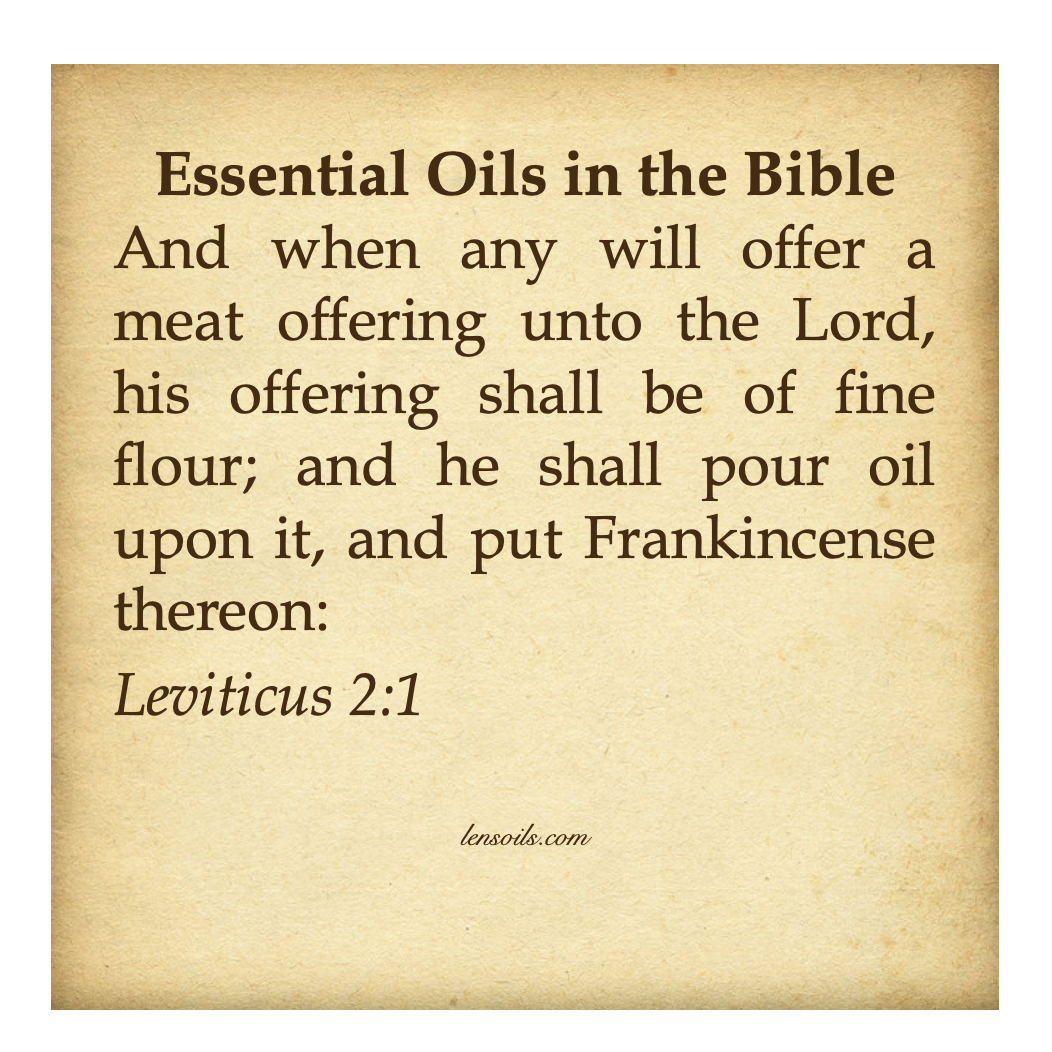
“And when any will offer a meat offering unto the Lord, his offering shall be of fine flour; and he shall pour oil upon it, and put frankincense thereon.”
— Leviticus 2:1
In this passage, frankincense was added to the grain offering, setting it apart as a memorial before God. Its fragrance, when burned, made the simple elements of flour and oil into something sacred, lifted from the ordinary into an act of holy devotion. Unlike animal sacrifices, which were dramatic and costly, the grain offering—with its measure of frankincense—showed that even daily bread could become worship when offered with a pure heart.
Historically, frankincense was a highly sought-after resin, harvested from the Boswellia tree and carried along ancient caravan routes into Israel. It was not just a commodity but a marker of sacred use, always connected with prayer, offerings, and the presence of God. While it served practical purposes in trade and medicine, its role in worship gave it lasting spiritual meaning. Today, frankincense essential oil continues this legacy, supporting prayer and reflection, reminding us of how God transforms the ordinary into the holy.
 Len's Oils