
African hunters have a clever way of trapping monkeys.
They slice a coconut in two, hollow it out, and in one half of the shell cut a hole just big enough for a monkey’s hand to pass through. Then they place an orange in the other coconut half before fastening together the two halves of the coconut shell. Finally, they secure the coconut to a tree with a rope, retreat into the jungle, and wait.
Sooner or later, an unsuspecting monkey swings by, smells the delicious orange, and discovers its location inside the coconut. The monkey then slips his hand through the small hole, grasps the orange, and tries to pull it through the hole. Of course, the orange won’t come out; it’s too big for the hole. To no avail the persistent monkey continues to pull and pull, never realizing the danger he is in.
While the monkey struggles with the orange, the hunters simply stroll in and capture the monkey by throwing a net over him. As long as the monkey keeps his fist wrapped around the orange, the monkey is trapped.
It’s too bad the poor monkey could save its own life if it would only let go of the orange. It rarely occurs to a monkey, however, that it can’t have both the orange and its freedom. That delicious orange becomes a deadly trap.
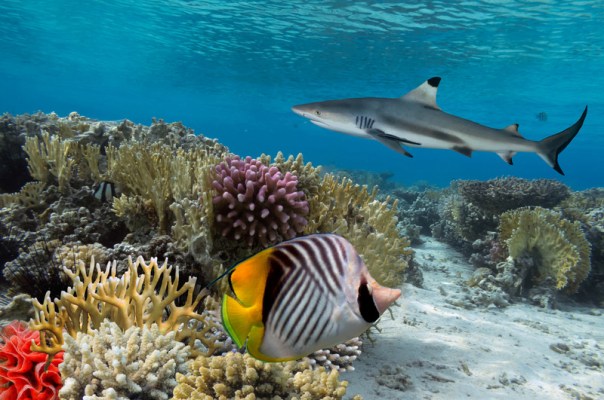 During a research experiment a marine biologist placed a shark into a large holding tank and then released several small bait fish into the tank.
 Len's Oils