A True Story of Strength Lost and Regained
In 1967, Dr. Kenneth H. Cooper, a physician in the U.S. Air Force, was on a mission to study how exercise impacts overall health. At the time, many people believed that too much physical activity could wear out the heart. Dr. Cooper, however, had a different theory—he believed that a lack of exercise was actually the biggest threat to long-term health.
As part of his research, Dr. Cooper monitored highly trained athletes and soldiers, tracking their fitness levels over time. One of the most striking findings came when he observed how quickly fitness could deteriorate in just one week without exercise.
During a study with Air Force personnel, Cooper saw that soldiers who stopped exercising for only seven days experienced noticeable declines in endurance, muscle strength, and even mental sharpness. Their heart rates increased during basic tasks, and their bodies struggled more to perform the same exercises they had done effortlessly a week before.
A similar finding came years later when NASA studied astronauts. After only 10 days of weightlessness in space, astronauts experienced muscle loss and cardiovascular weakening—something that usually takes weeks or months on Earth.
Dr. Cooper’s research would later lead to the development of aerobics—a term he coined in his 1968 book Aerobics. His findings became the foundation for modern fitness programs and helped prove that consistent exercise is essential for maintaining strength and endurance.
The Lesson?
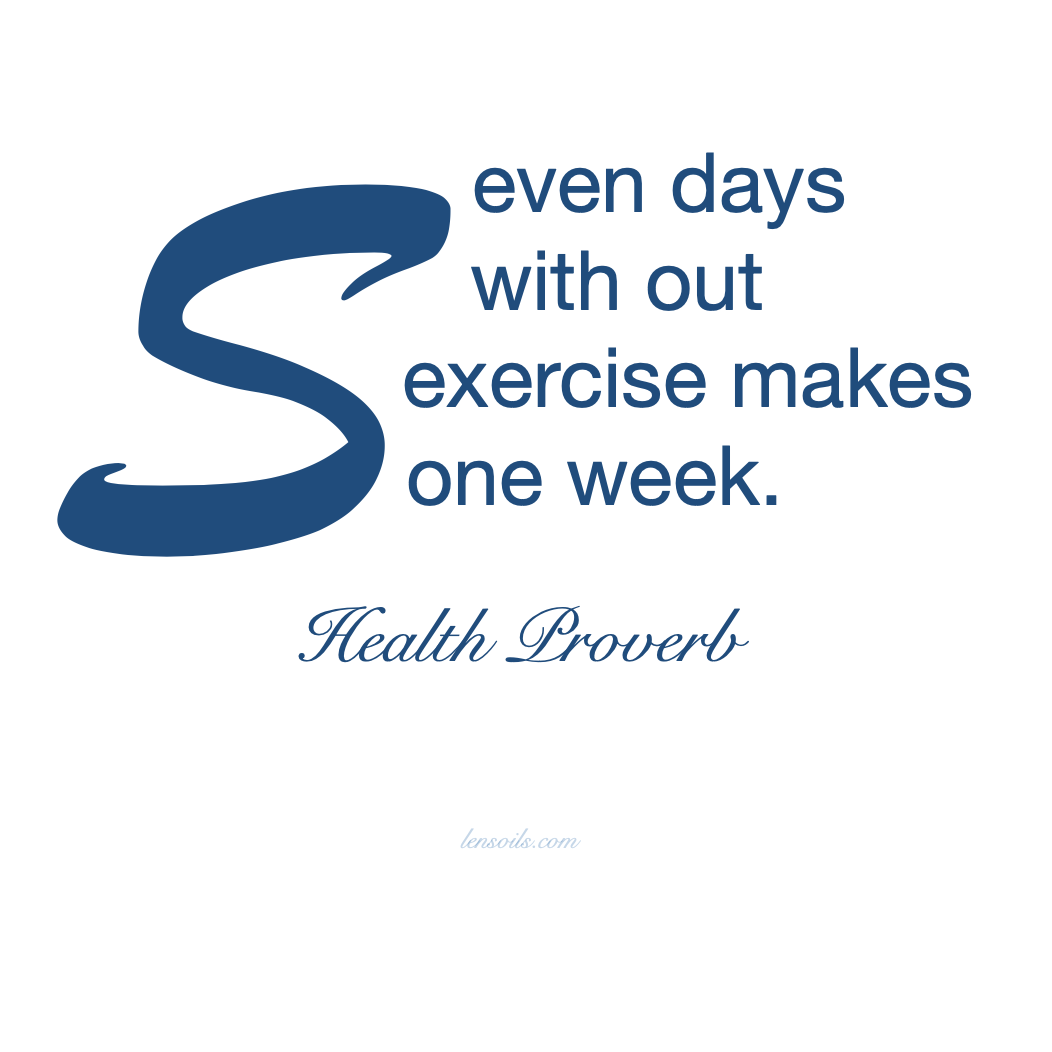
The phrase “Seven days without exercise makes one weak” is not just a catchy saying—it’s backed by science. Even short breaks in physical activity can lead to real losses in strength, endurance, and overall well-being.
 Len's Oils