How the United States Learned to Govern Itself (1781–1789)
Story 1 of 10 — Inventing a Country
Freedom Without Authority
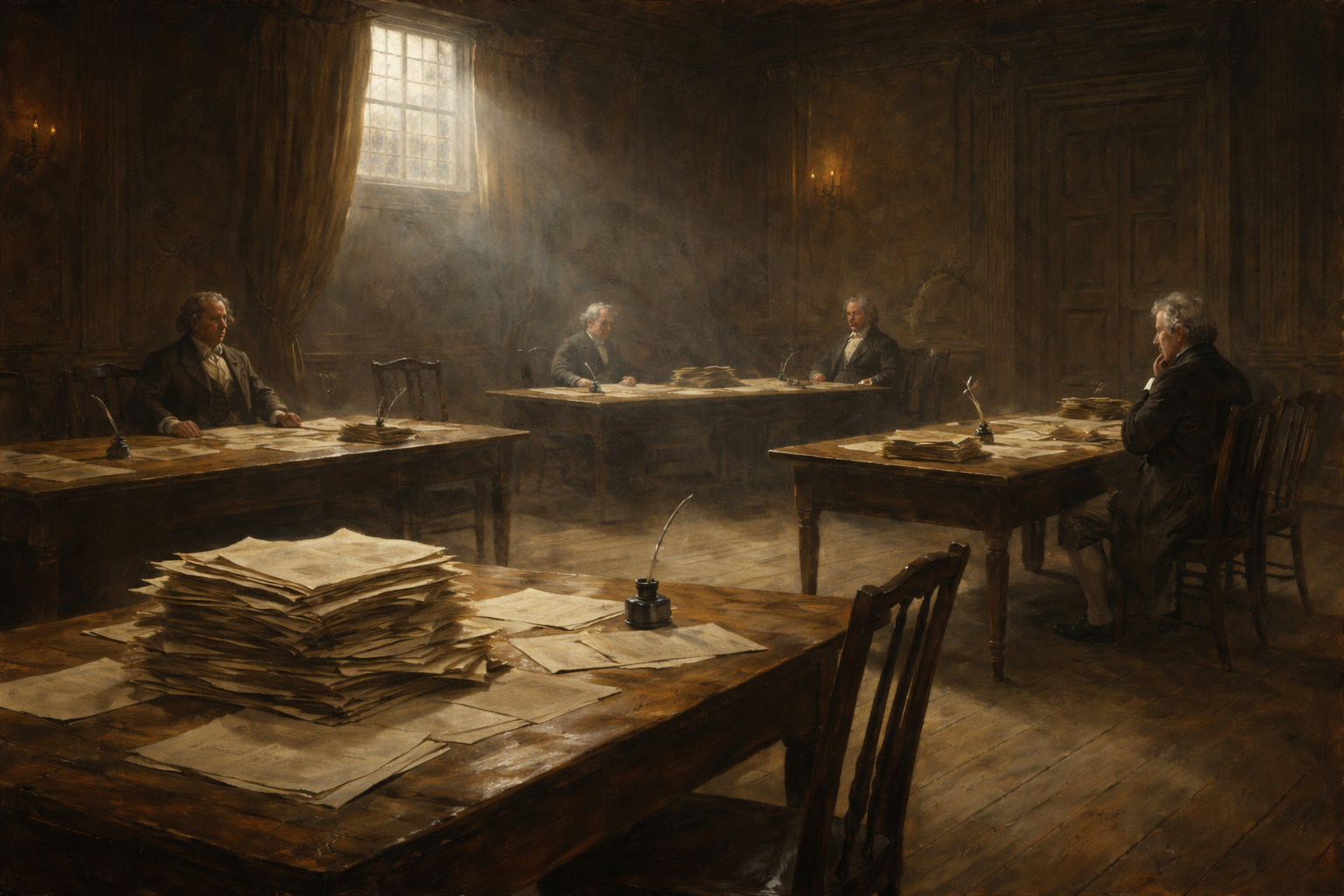
On March 1, 1781, the Articles of Confederation were formally ratified, giving the United States its first national framework of government. Independence had already been declared and defended through years of war, yet the new nation entered this moment with a system deliberately designed to limit central authority. The fear of tyranny shaped every decision, even as the need for coordination grew more urgent.
The Articles created a Congress with responsibility but little power. It could conduct diplomacy, declare war, and negotiate treaties, but it could not levy taxes or regulate commerce. The national government depended entirely on the states for funding and enforcement. Cooperation was assumed, but it could not be required.
This structure reflected hard-earned suspicion. Many Americans believed strong central authority had caused the very abuses they had rebelled against. State governments were trusted more than distant institutions, and independence was understood primarily as protection from concentrated power rather than a plan for effective governance.
As a result, the nation struggled to function as a unified whole. States pursued their own economic policies, currencies, and trade interests. Congress issued requests that were often ignored. Decisions could be debated endlessly, but implementation depended on voluntary compliance rather than shared obligation.
The limitations of the system became clear during the final years of the war. Soldiers went unpaid, supplies ran short, and foreign creditors grew uneasy. Victory remained possible, but survival depended on cooperation that could not be enforced. The gap between independence and stability widened.
Despite these weaknesses, the Articles were not a failure of intent. They represented an honest attempt to balance liberty with collective action. Americans were learning, in real time, what self-government required and where caution had gone too far. The system revealed problems that had to be faced before stronger solutions could emerge.
March 1, 1781 marks the beginning of a difficult lesson. Freedom alone was not enough to sustain a nation. Authority, carefully limited and responsibly exercised, would be necessary to preserve what independence had made possible. Inventing a country would require more than resisting power. It would require learning how to use it.
References
- Journals of the Continental Congress, March 1, 1781
- Gordon S. Wood, The Creation of the American Republic, 1776–1787
- Pauline Maier, Ratification: The People Debate the Constitution, 1787–1788
These stories are grounded in documented historical events and primary sources, with limited interpretive synthesis used to connect facts and reflect lived experience where the historical record does not capture every detail.
 Len's Oils