Tag Archives: Essential Oil history

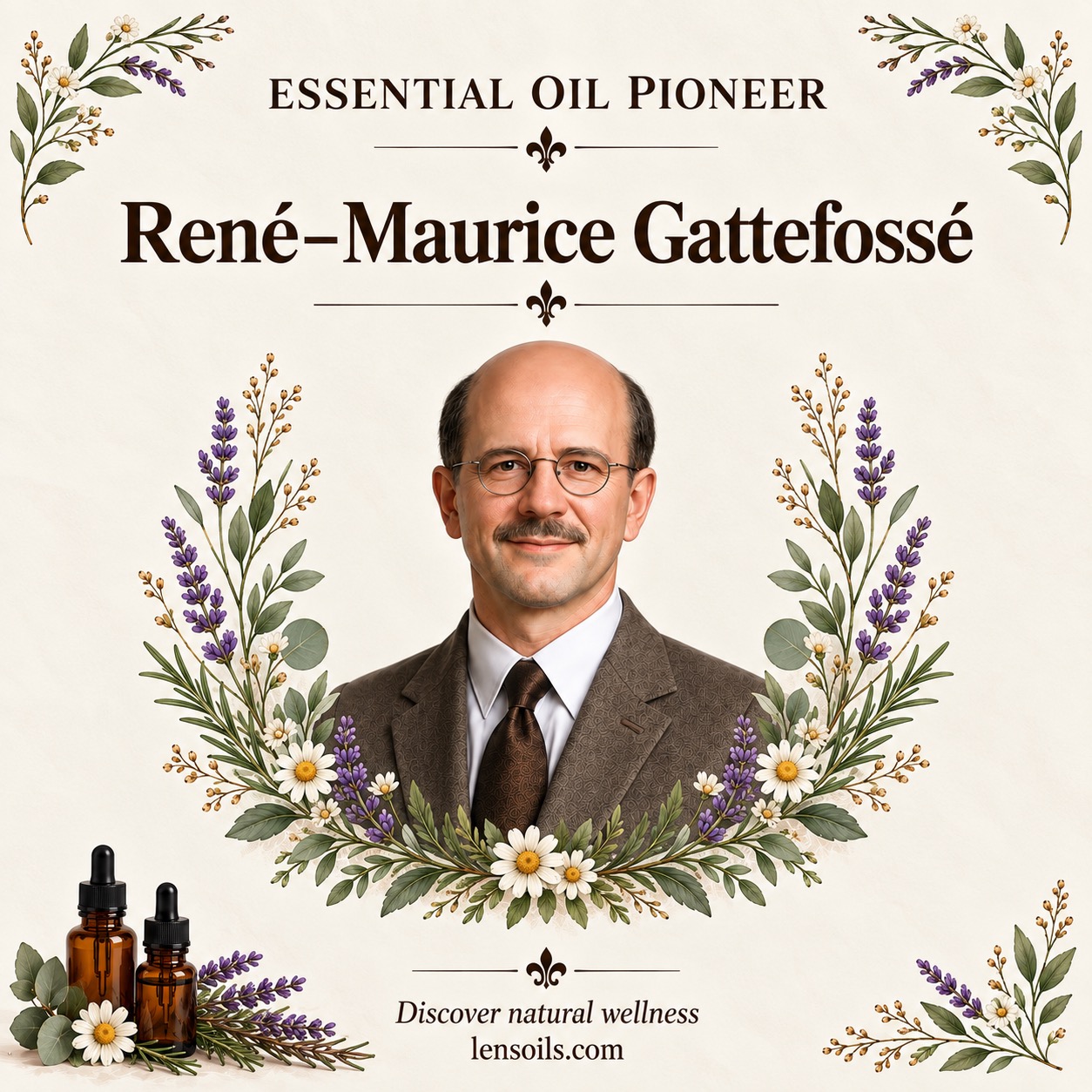
Essential Oil Leader Spotlight: René-Maurice Gattefossé

Essential Oils Heritage Collection cover featuring amber essential oil bottles surrounded by lavender, chamomile flowers, green herbs, and a sliced orange.

Essential Oils Heritage Collection explores the history, uses, and traditions of essential oils through practical guidance, inspiring stories, and thoughtful insights that celebrate nature’s remarkable gifts for everyday living.

Essential Oils Heritage Collection cover featuring amber essential oil bottles surrounded by lavender, chamomile flowers, green herbs, and a sliced orange.

René-Maurice Gattefossé, born in 1881 in Montchat, Lyon, France, was a French chemist whose pioneering work helped lay the foundation for modern aromatherapy. Raised in a family of perfumers, he grew up surrounded by the fragrances and craftsmanship of essential oils. This early exposure sparked a lifelong fascination with chemistry and the remarkable properties of aromatic plants. After earning his degree in chemical engineering, he joined his family’s perfumery business, where he developed a deep understanding of the aromatic compounds that would later define his career.

In the early 1900s, Gattefossé devoted himself to studying essential oils, initially focusing on their role in perfumery. At the time, these oils were prized primarily for their fragrance rather than their potential applications beyond scent. His scientific curiosity, however, led him to investigate their chemical composition and explore how they might be used in new ways. That curiosity marked the beginning of a journey that would influence generations of researchers.

One event became closely associated with his life’s work. In 1910, Gattefossé was seriously burned during a laboratory explosion. According to his own account, he immersed his injured hand in lavender essential oil after the accident. The experience made a lasting impression on him and convinced him that essential oils deserved much deeper scientific investigation. Rather than dismissing the event as an isolated occurrence, he committed himself to studying their properties through careful research.

Following this experience, Gattefossé collaborated with physicians, chemists, and botanists to better understand essential oils. His investigations explored their chemical makeup and documented observations about their potential uses. His work helped bridge centuries of traditional plant knowledge with emerging scientific methods, bringing greater attention to essential oils within the scientific community.

In 1928, Gattefossé introduced the term “aromatherapy,” combining the words aroma and therapy to describe the study and use of essential oils. His landmark book, Aromathérapie: Les Huiles Essentielles Hormones Végétales(1937), became one of the first comprehensive works devoted to the subject. It documented oils such as lavender, rosemary, thyme, and eucalyptus while encouraging further scientific investigation into their properties.

During World War I, Gattefossé continued exploring practical applications for essential oils while working alongside physicians who were interested in wound care and hygiene. These experiences strengthened his belief that essential oils merited continued scientific study and demonstrated their growing importance beyond the perfume industry.

Gattefossé also believed that traditional botanical knowledge and modern science could complement one another. He encouraged researchers to examine essential oils with both curiosity and scientific rigor, promoting a more holistic understanding of plant-based medicine while recognizing the importance of careful observation and ongoing research.

Although many in the medical community remained skeptical during his lifetime, Gattefossé continued publishing his findings, collaborating with researchers, and sharing his work throughout Europe. Over time, his contributions earned growing respect and inspired future scientists, healthcare professionals, and aromatherapists to continue exploring the field.

René-Maurice Gattefossé passed away in 1950, but his influence continues today. His curiosity, scientific mindset, and willingness to question conventional thinking helped transform essential oils from ingredients valued mainly for fragrance into a respected field of study. More than a century later, his name remains closely connected with the development of modern aromatherapy and the ongoing exploration of nature’s remarkable aromatic plants.

Continue exploring the Essential Oil Leader Spotlight series to discover the pioneers, researchers, and educators whose curiosity and dedication helped shape our understanding of essential oils.