
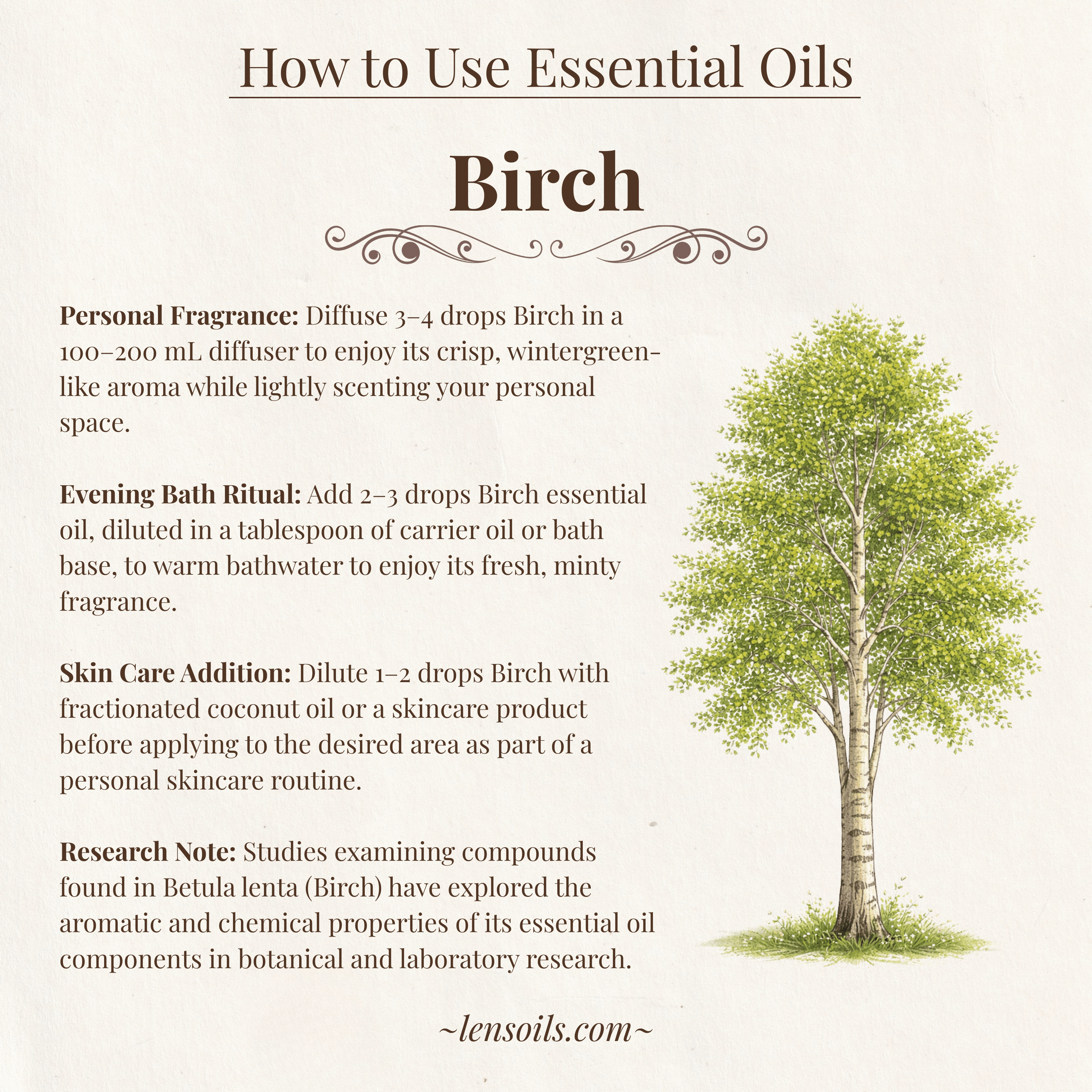
Birch essential oil has one of those aromas that is immediately recognizable. Fresh, crisp, minty, and distinctly wintergreen-like, it brings the character of the outdoors into aromatic routines. Because its aroma is powerful, a little Birch can go a long way.
Birch essential oil comes from Betula lenta, commonly known as sweet birch. One of the most important things to understand about Birch is its chemistry. Authentic sweet birch essential oil is naturally very rich in methyl salicylate, the aromatic compound largely responsible for its characteristic wintergreen-like fragrance.
For aromatic use, Birch can be added to a diffuser by itself or combined with complementary woody essential oils. Its distinctive fragrance means that only a few drops are generally needed to create a noticeable fresh, outdoorsy atmosphere.
Birch can also be enjoyed topically when appropriately diluted. Birch is recommended at a maximum topical concentration of 2.5% because it consists largely of methyl salicylate. For a simple, conservative approach, use 3 or fewer drops in 1 tablespoon of carrier oil. Start with just 1 drop in the tablespoon of carrier oil and apply a small amount to a limited area first to see how your skin tolerates it. If irritation or discomfort occurs, discontinue use.
Birch can also be incorporated into an aromatic bath routine when properly diluted beforehand. Rather than adding Birch essential oil directly to bathwater, first thoroughly mix 1–3 drops with a tablespoon of carrier oil or an appropriate bath base. Keep in mind that carrier oils can make bathtub surfaces slippery.
Because Birch is naturally high in methyl salicylate, it has precautions that don’t apply equally to every essential oil. Extra caution is appropriate for children, during pregnancy, for people with salicylate sensitivity, and for those taking anticoagulant medications.
Birch is a good example of why understanding individual essential oils matters. Each oil has its own chemistry, aromatic personality, appropriate uses, and precautions. Responsible essential-oil use doesn’t mean being afraid of powerful oils. It means starting small, diluting appropriately, paying attention to your body’s response, and respecting the chemistry of the oil you’re using.
Missed last week’s essential oil? Discover how to use Bergamot Mint essential oil here.